Gas or electric water heater for a North Dakota home

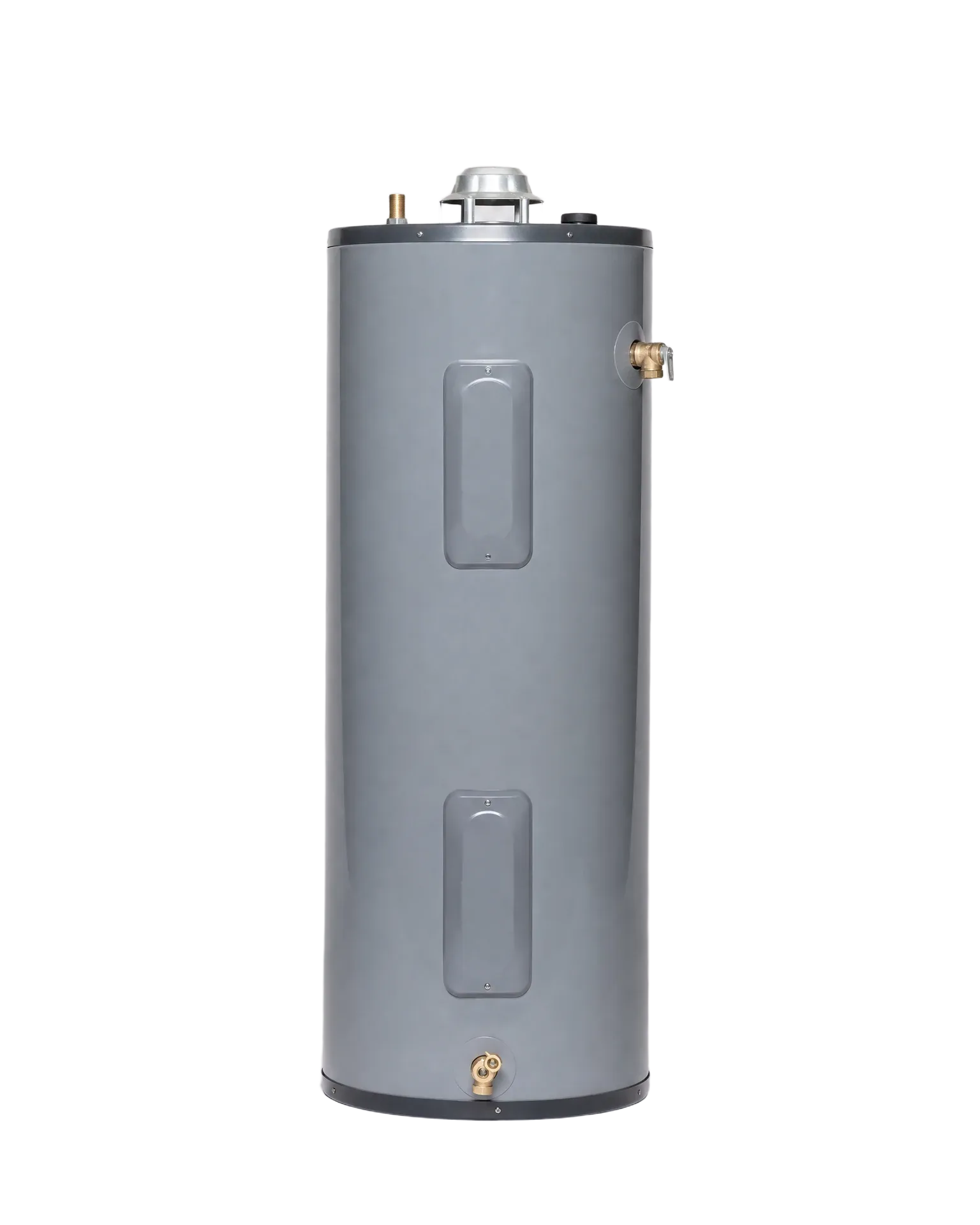
A gray cylindrical water heater with two access panels, a brass side valve, a bottom drain valve, and a metal vent cap on top, photographed against a plain light background.
Hand it off

Most homes in North Dakota heat with gas, and that same choice usually makes the most sense for your water heater. A gas water heater costs less to run here because gas is the cheaper fuel for most households in this state, and it recovers hot water faster, which matters more in winter when incoming water is colder and your household is pulling more hot water for longer showers and extra laundry. Electric still makes sense if your home has no gas line, since running one in just for a water heater is its own project. If gas already reaches your furnace, it almost certainly reaches your water heater's spot too, and installing gas there is usually the simpler job. Either way, the unit has to be sized and vented correctly for a North Dakota winter, and that's where a local installer earns their keep.
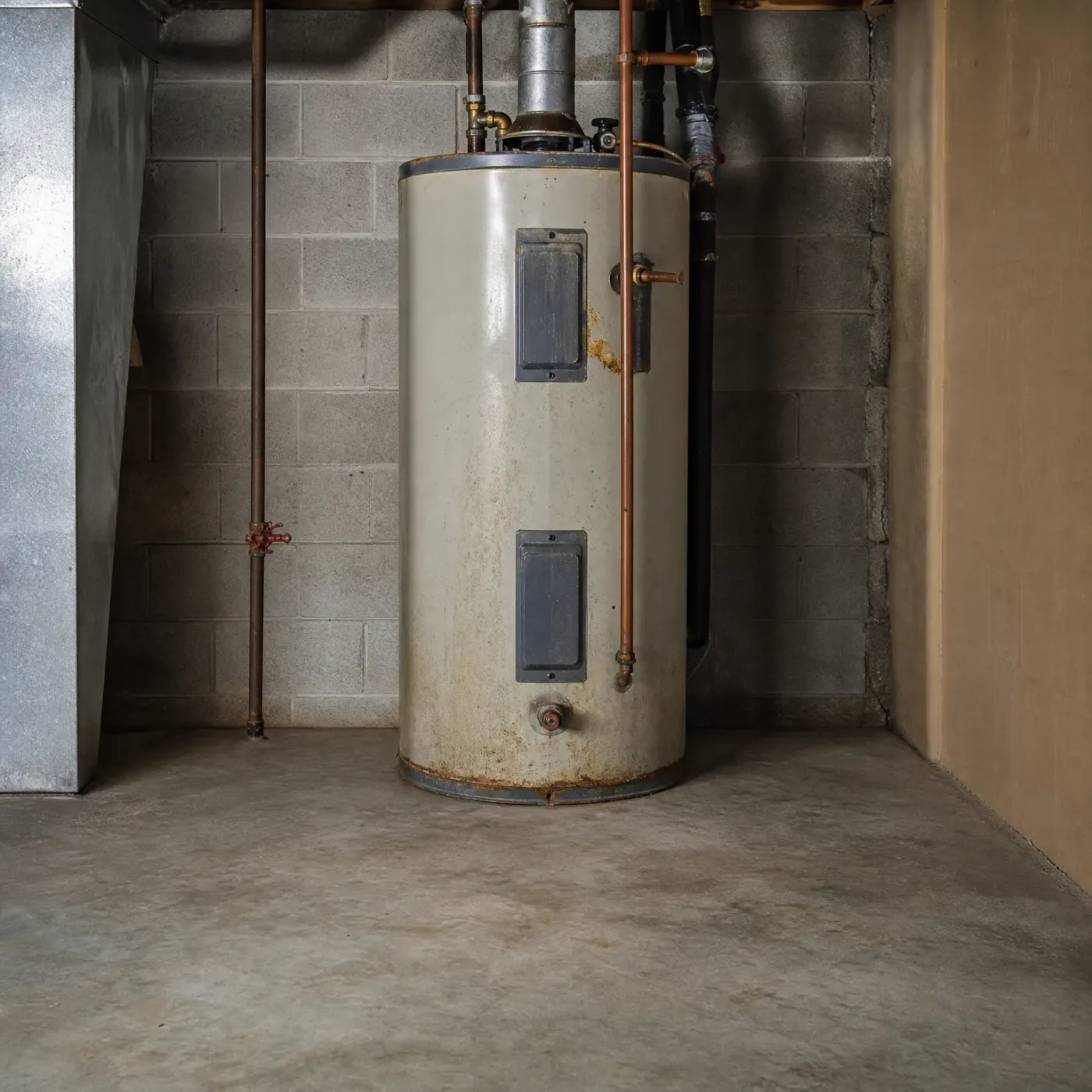
An aging cream-colored water heater with rust streaks and two access panels stands on a concrete floor against a concrete block basement wall, with copper and black pipes running up to the ceiling and a metal duct at left.
Before you get your water heater installation
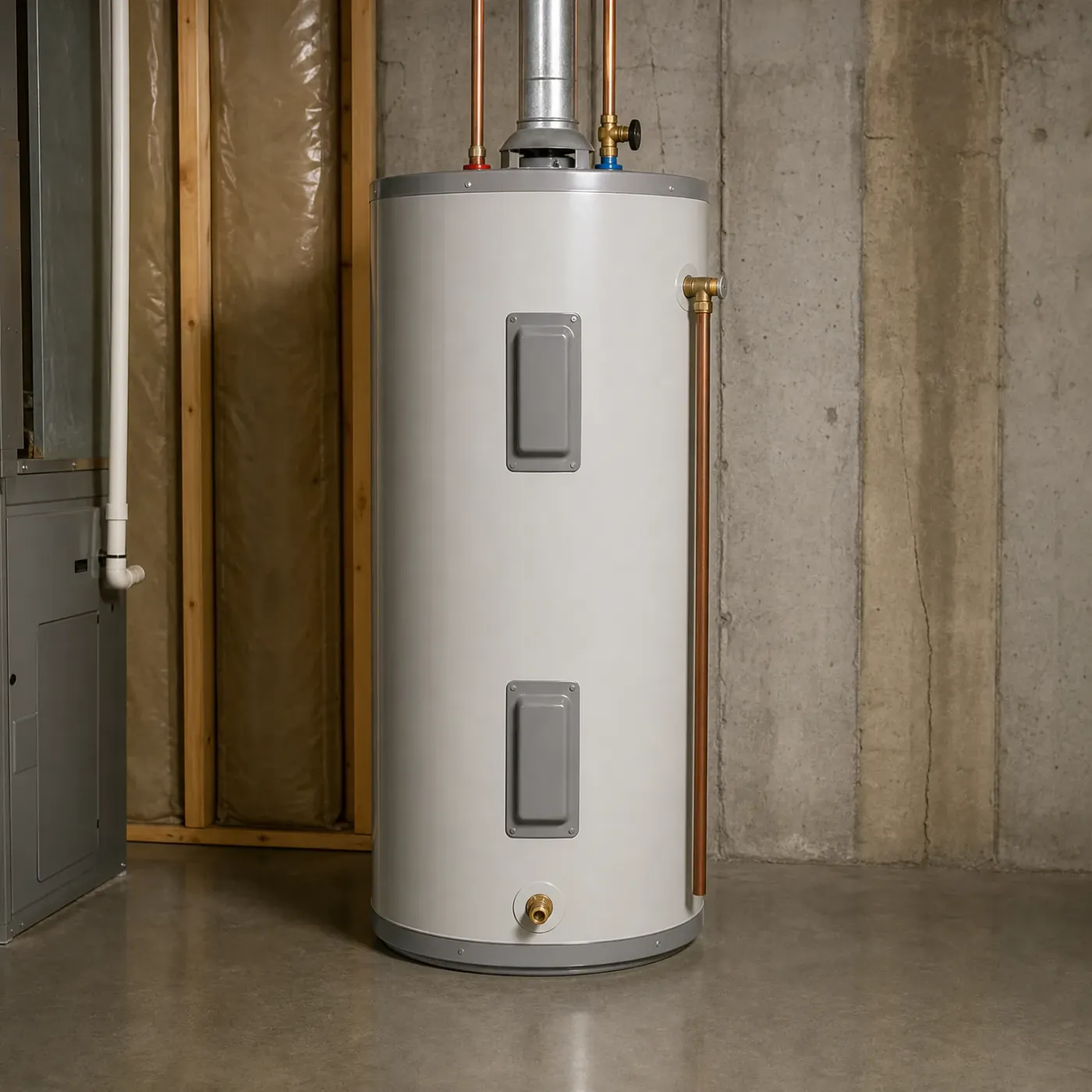
A white cylindrical water heater with two access panels, copper supply pipes and a metal flue, standing on a concrete floor against a concrete wall beside insulated wood framing and a gray electrical panel.
After you get your water heater installation

Gas recovers faster

A gas burner heats a full tank again in under an hour. Electric elements take longer, so a houseful of showers back to back can run you out of hot water.

Reach a local pro

Electric needs no gas line

If your home doesn't have a gas line run to the water heater, electric skips that cost. Worth checking before you decide which way to go.


Reach a local pro
A man in a blue sweatshirt reclines with closed eyes in a brown leather armchair in a living room with a bookshelf, houseplant, sofa, window, and a side table holding newspapers and a dark mug.
A bearded man in a gray pullover reclines with closed eyes on a brown leather sofa in a sunlit room with a window, framed picture, potted plant, and a wooden cabinet holding papers and a dark mug.
A man in a gray sweater leans back with closed eyes in a brown leather armchair beside a wooden side table holding a dark mug and a folded newspaper, with bookshelves and a window seat behind him.
A man in a green sweater reclines in an armchair with his eyes closed and a slight smile, beside a window with plants, a small table holding a mug and folded newspaper, and bookshelves behind him.

If you go with gas

Gas runs cheaper month to month in North Dakota, and that gap shows up most in January and February when the tank is working hardest. You'll want a vent that carries the exhaust outside, so installation involves running that vent through the roof or a wall if one isn't already in place. A power outage won't leave you without hot water either, since a standing pilot keeps burning on its own.

If you go with electric

Electric costs more to run here, since gas is the cheaper fuel for most North Dakota households, and you'll notice it on the bill by the second or third month. Recovery takes longer, so back to back showers on a cold morning can empty the tank before everyone's done. If the power goes out, the heater sits idle until it's back, with nothing like a pilot light to keep it going on its own.

41.3% of homes statewide heat with gas

Gas already runs to most houses in this state, likely including yours, since it's what 41.3% of North Dakota homes use to heat. If a line is already there, swapping in a gas water heater is a straightforward hookup instead of new work.

ACS 2020-2024 5-year B25040

If your home already has gas for the furnace, running a gas water heater on the same line is usually simple, and most homes here are already set up that way.

If your home heats with electric furnace or baseboard, an electric water heater means no new gas line and no vent work, and power here is cheap enough that the monthly cost gap stays small.


An older man with gray hair and a beard leans back on a beige sofa with his eyes closed, in a sunlit room with potted plants, a wicker chair and large windows behind him.
A woman in a cream knit sweater sits in an armchair with her eyes closed and a slight smile, beside an open window showing orange autumn foliage, with a mug, books and a lit candle on a small side table.

It's off your list after this

The pro who reaches out is licensed in North Dakota.

Sending the form costs nothing.

Gas or Electric, Decided

  • Gas is the right call for most North Dakota homes, since it's already the fuel running the furnace in most houses here.
  • A gas water heater recovers faster, which matters most in January and February when the tank works hardest.
  • Electric stays the simpler choice if your home heats with electric furnace or baseboard and has no gas line run to it.
  • A licensed local installer handles the vent work a gas install needs, or the wiring an electric one needs, without guesswork.
  • Your request goes to one contractor who works on these systems all over North Dakota and knows which parts tend to fail first.
  • Either fuel gets your household hot water again; the choice comes down to what's already run to your house.

Most houses in North Dakota already burn gas for the furnace, and that's reason enough to run the water heater on gas too. It recovers faster, and that matters in January and February when the tank is working hardest and cold mornings don't leave room for a slow reheat. If your home heats with electric furnace or baseboard and there's no gas line run to it, electric stays the simpler path, and there's nothing wrong with that choice. The work itself looks different depending on which way you go. A gas install means venting the exhaust outside, done right so it's safe. An electric install means wiring sized for the unit, done so it holds up. Either one is routine for someone who installs these every week across this state, in towns built the same way yours was.

Your request goes to one contractor, not several, so you're not fielding calls from companies competing for the job. That contractor is licensed, works local, and has likely already run into whatever your particular setup throws at them, whether that's an older vent that needs resizing or a panel that's light on capacity. They know what tends to fail first on these installs because they've put in enough of them to see the pattern.

The fuel choice matters less than getting the install done right. Once you send the request, finding the right person for that stops being something you have to sort out yourself.

At dusk, a dark board-and-batten house with a standing-seam metal roof and lit entry walkway of stone pavers, with two large outdoor heat pump units on a stone-walled pad at right and trees and hills in the background.

Water Heater Installation

Stop chasing a water heater pro

Step 1 of 3: Equipment
  • A brown leather and wood armchair with a cream knit throw sits in a corner beside a woven basket holding a dark cushion, under a framed mountain photograph, with a wood-trimmed window showing yellow and green foliage.
    • Get in touch with a local installer about a new water heater.
    • A local installer who puts in water heaters gets your project.
  • A dark wood dresser against a pale wall holds a ceramic vase of eucalyptus branches, a stack of books with a wooden bowl, and a woven basket, with a framed landscape painting above and a woven basket holding a knit blanket on the floor beside a window.
    • After you send the request, you're done searching.
    • Send the request and finding a pro stops being your problem.
  • A window seat with beige linen and brown textured cushions, a chunky knit blanket, and an open book, beside a window showing blurred yellow autumn foliage.
    • Skip collecting and comparing quotes for the new water heater.
    • Skip the round of in-home estimates for a new water heater.
  • A cream upholstered armchair with a rust-colored pillow and knit fringed throw sits beside a window with a ceramic vase of orange-leafed branches on the sill, overlooking autumn trees and leaf-covered ground.
    • Your request stays with one local pro.
    • Your request goes to one pro, not a list of companies.






