Hot water smells like rotten eggs in Fargo, ND

Find a pro near me

That smell means sulfur bacteria in your water heater, usually reacting with the anode rod, and it's common enough in Cass County well and city water both. You want it looked at, not ignored, and you want someone who'll actually show up and know what they're looking at once they do. Finding that person is the hard part. You could spend an evening calling around Fargo, describing the smell twice over the phone, waiting on quotes that don't tell you much, trying to tell which contractor actually works on water heaters versus who just lists it. Skip that. Tell this page about your water heater and your situation, and it matches you with a contractor who covers Fargo and the surrounding area for this kind of repair. They reach out to you directly. No more sorting through names, no more re-explaining the problem to the next person you call. One conversation, with someone suited to the job in front of them.

That rotten egg smell comes from hydrogen sulfide gas forming inside the tank, usually where bacteria react with the magnesium anode rod that protects it from rust. It shows up more in water heaters that sit unused for a while, which is common in spare bathrooms or basements. Fargo and the rest of Cass County see this on both well water and city water, so it's not a sign your house has bad plumbing. The smell itself won't hurt you, but it means something inside the tank needs attention, usually the anode rod needs replacing or the tank needs a proper flush and disinfection. Leaving it alone won't make it go away on its own, and in some cases it points to bacteria that can affect more than just the smell.

What does your water heater have to deal with here?

  • 2.23 people per household on average

    Half the homes in Cass County were built in 1993 or earlier. An older water heater means more years for the anode rod to wear down, which is exactly what feeds that smell.

  • Half the homes here were built by 1993

    Households here average 2.23 people. That's a tank running through daily showers and laundry year-round, not one sitting idle long enough to make the smell worse on its own.

  • 49.4% of homes heat with electricity

    Electricity heats 49.4% of homes in Cass County, more than any other fuel. An electric water heater has its own anode rod too, and it reacts with sulfur bacteria the same way a gas one does.

ACS 2020-2024

A white cylindrical water heater with copper pipes and a metal flue stands in the corner of an empty room with bare concrete floor, wood framing at left, and a plain light-colored wall.

If only one faucet smells

Hot water smelling off at one sink but not another usually points to that fixture, not the tank itself. Check a hot tap in another bathroom or the kitchen. If the smell is only at one faucet, the water heater is probably fine and the fixture or the drain nearby is the source. If every hot tap in the house smells the same way, the tank is where it's coming from.

A white cylindrical water heater with copper and black pipes stands against a plain white wall on a gray floor, beside a concrete wall and metal ductwork.

If it's only the hot side

Cold water that smells clean while the hot water smells like rotten eggs tells you the problem is inside the water heater, not the supply coming into the house. That's the anode rod reacting with bacteria in the tank. A contractor can test the water and the rod itself to confirm it before replacing anything, rather than swapping parts on a guess.

Flush The Tank Or Replace The Rod

Flush the tank

  • A contractor can drain the tank and flush out the sediment where sulfur bacteria tend to build up.
  • This works well if the smell is new and the anode rod itself is still in decent shape.
  • It costs less than swapping the rod, since it's mostly labor and time, not a part.
  • If the water sat for a while before the smell started, a flush alone sometimes clears it.
  • The smell can come back within a few months if the bacteria were never fully cleared out.

Replace the anode rod

  • Swapping the magnesium rod for an aluminum or zinc one often stops the reaction that produces the smell for good.
  • This matters most if your water heater has sat long enough for the rod to wear down heavily.
  • A contractor can check the rod's condition while it's out, since a badly corroded one needs replacing anyway.
  • It costs more upfront than a flush, since you're paying for a part plus the labor to pull the old one.
  • Once the rod is changed, the tank still needs water in it that the new rod can react with normally, so give it time.
  • This is the fix most contractors reach for when a flush alone didn't stop the smell from coming back.
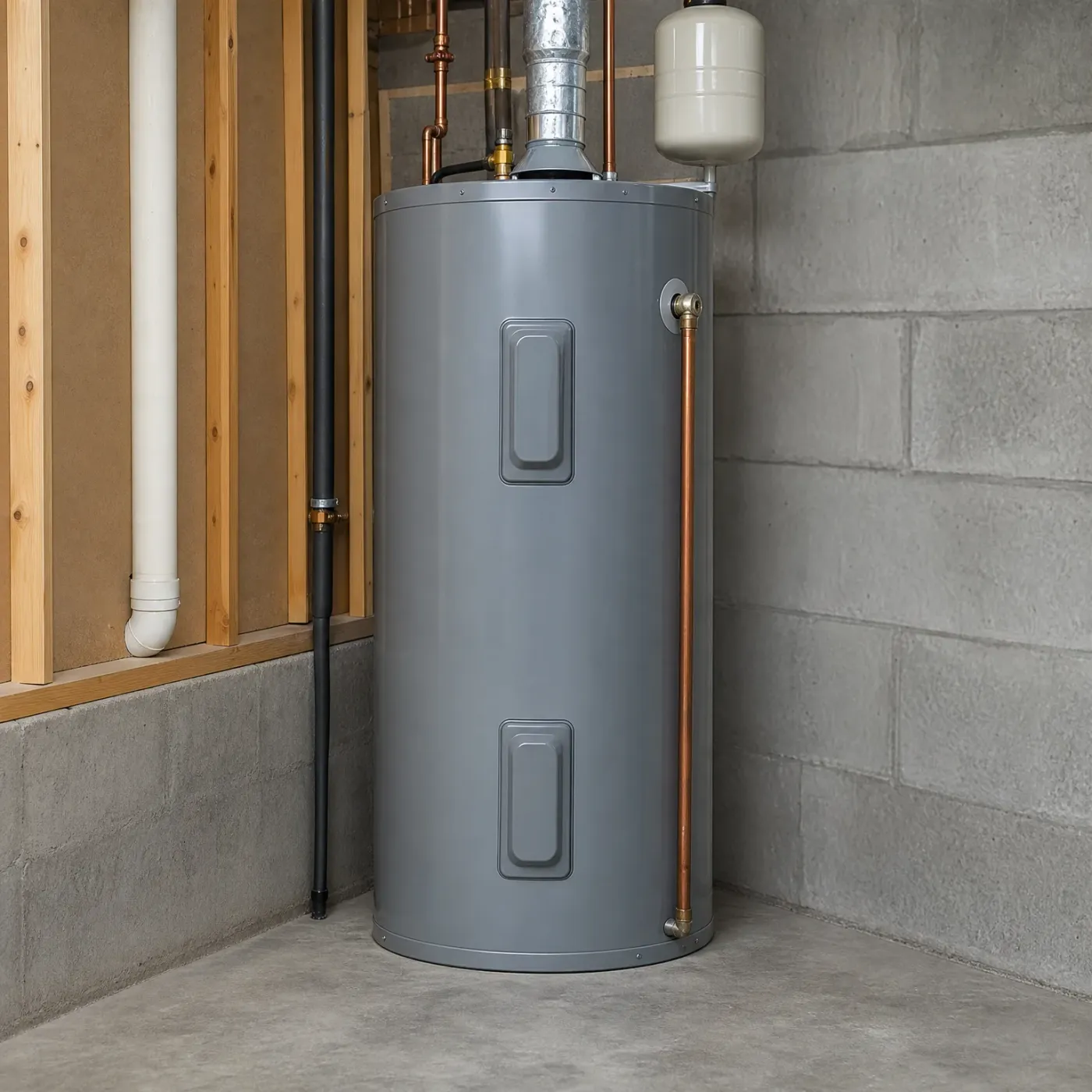
A gray cylindrical water heater with copper piping and an expansion tank stands in a basement corner beside a concrete block wall and exposed wood framing.

Working as it should

This is a water heater with no smell to speak of, electric, tied into copper and PVC lines with an expansion tank above it. Water moves through clean. Whatever anode rod is inside is still doing its job, keeping the tank from rusting without feeding anything else.

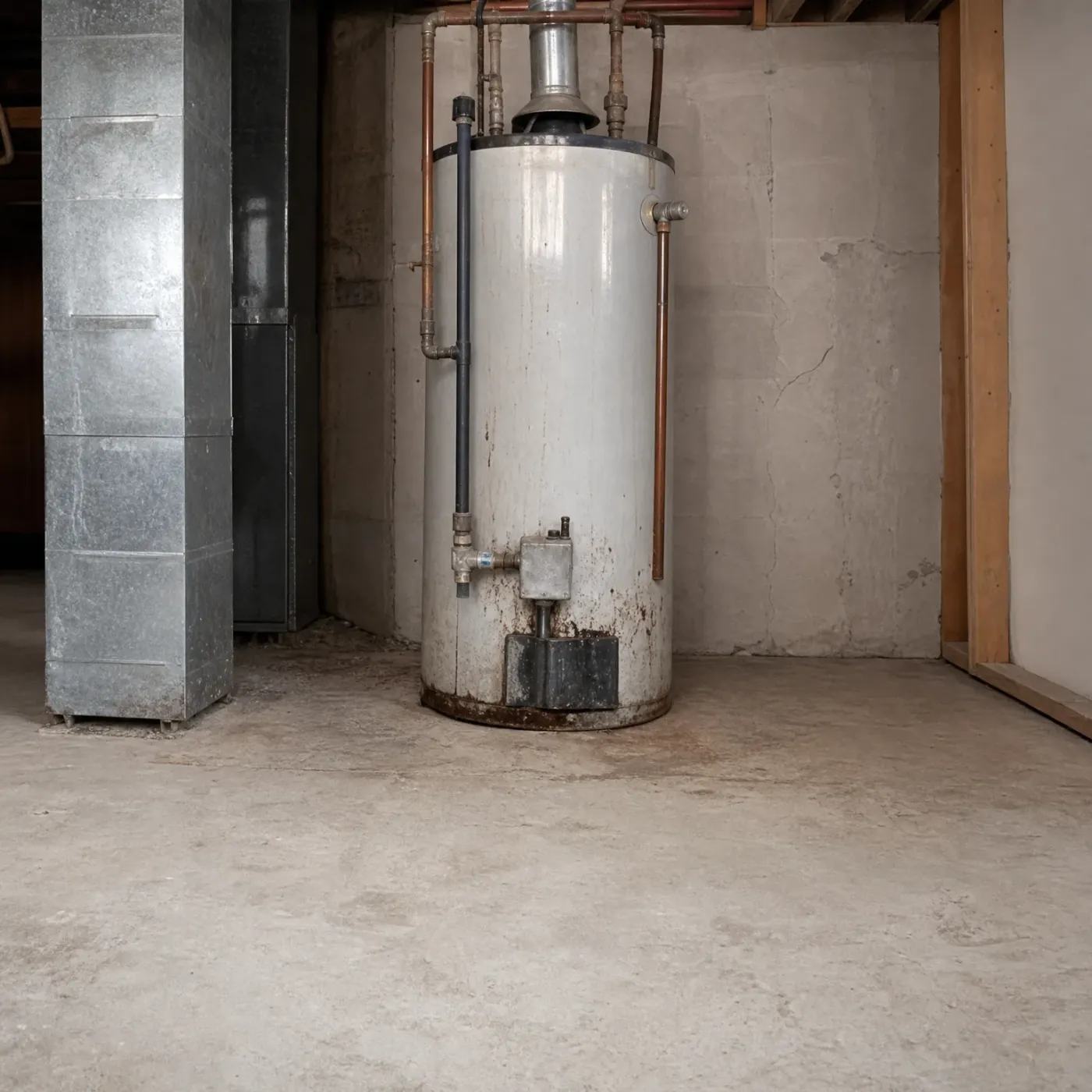
An old rusting cylindrical gas water heater with copper and steel pipes and a flue stands against a concrete basement wall beside metal ductwork on a bare concrete floor.

Rod worn, tank fouled

This tank has been at it a long time. Rust shows on the jacket, mineral deposits cling to the fittings, and a setup like this is exactly where sulfur bacteria take hold inside, usually around a worn-down anode rod. That's the smell showing up at your taps.

A woman with dark hair in a bun wearing a cream knit sweater sits on a gray sofa in a bright living room, looking off to the side.
A woman wrapped in a knit blanket sits on a gray sofa in a living room, looking toward a bright window with houseplants and an armchair in the background.
A woman in a gray cowl-neck sweater sits on a light sofa with cushions, smiling and looking to the side, with a kitchen and window visible behind her.
A woman with dark hair in a bun, wearing a light linen shirt, sits on a sofa and looks to the side, with a window, houseplants and a kitchen with pendant lights blurred behind her.

Get matched with a water heater pro in Cass County

Explain the water heater problem once instead of to every shop in Cass County.

You're not committing to anything by asking.

Why the Smell Forms

  • Bacteria feed on sulfate in the water and the magnesium in the anode rod, and that reaction is what makes the gas.
  • Hot water sitting in the tank for days without running gives those bacteria time to build up, so the smell is often worse after a trip away.
  • Replacing the magnesium anode with one made of aluminum or zinc usually weakens the smell, since it takes away part of what feeds the reaction.
  • Raising the tank temperature to around 140 degrees for several hours kills off most of the bacteria causing the smell.
  • Chlorinating the tank and flushing it out afterward clears bacteria a flush alone can miss.
  • Electric water heaters here tend to run two elements, and bacteria can settle anywhere in the tank, not just near the rod.

The smell comes from a chemical reaction, not dirty water. Sulfate-reducing bacteria live in trace amounts in most water supplies, and they feed on the magnesium in the anode rod, the sacrificial metal that keeps the tank itself from rusting out. That feeding produces hydrogen sulfide gas, and hydrogen sulfide is what smells like rotten eggs. It builds up inside the tank and comes out the tap with the hot water.

Time matters here. Water that sits still for days gives the bacteria room to multiply, which is why the smell often gets worse after a few days away from home, or in a water heater that serves a bathroom nobody uses much. Running the tap more often doesn't fix the cause, but it can make the smell less noticeable day to day.

A contractor has a few ways to deal with it. Swapping the magnesium anode for one made of aluminum or zinc takes away part of what feeds the bacteria, which often weakens the smell without needing anything else done. Raising the tank temperature to around 140 degrees for a few hours kills most of the bacteria outright, though that's a job for someone who can do it safely and turn the temperature back down after. Chlorinating the tank and flushing it afterward reaches bacteria that have settled on the tank walls, not just near the rod, which matters most in homes running two heating elements where bacteria aren't confined to one spot.

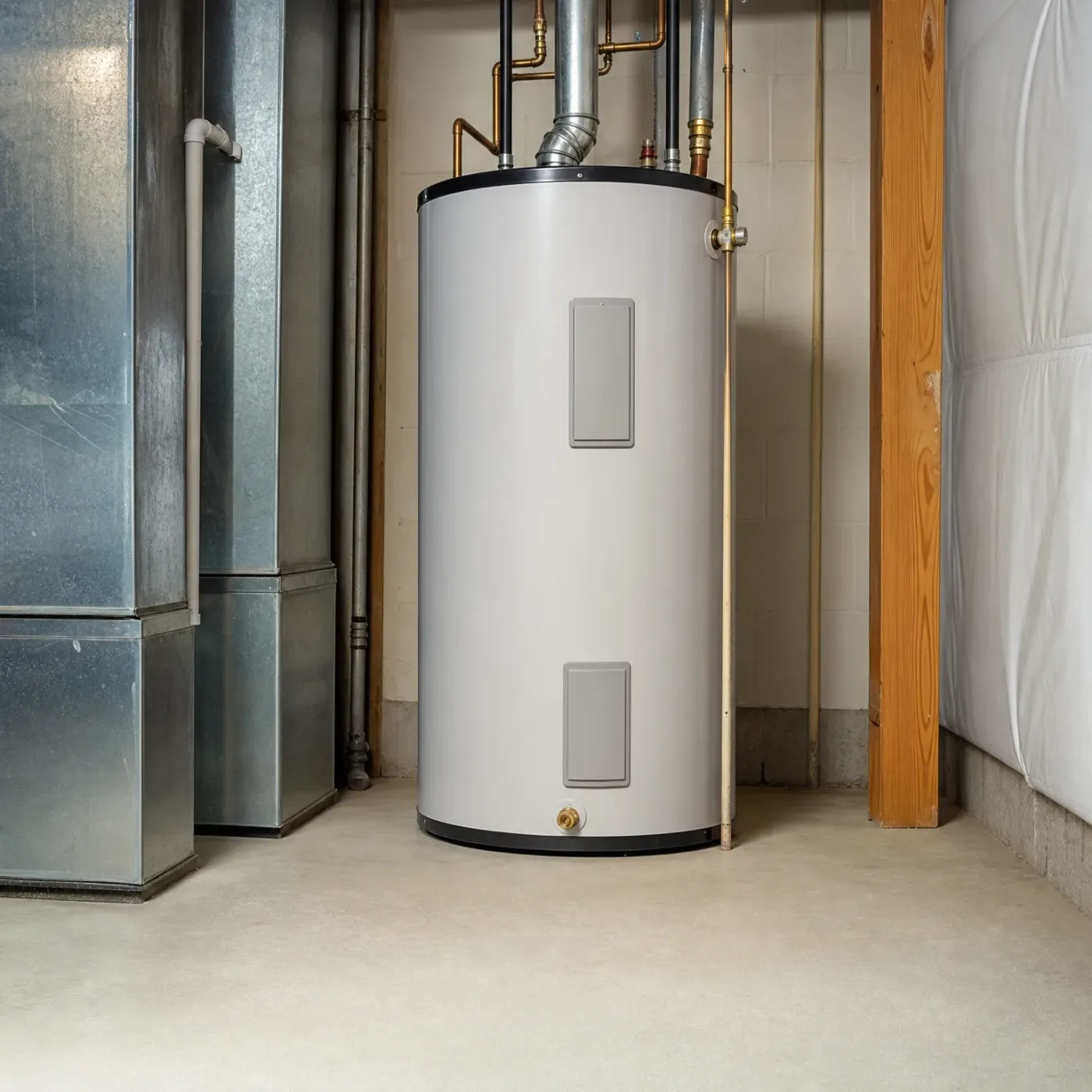
A white cylindrical water heater with two access panels stands on a concrete floor in a basement corner, beside galvanized ductwork, copper and metal pipes, a wooden post, and a concrete block wall.
No smell, water runs clear, and the anode rod inside is doing its job of corroding instead of your tank.
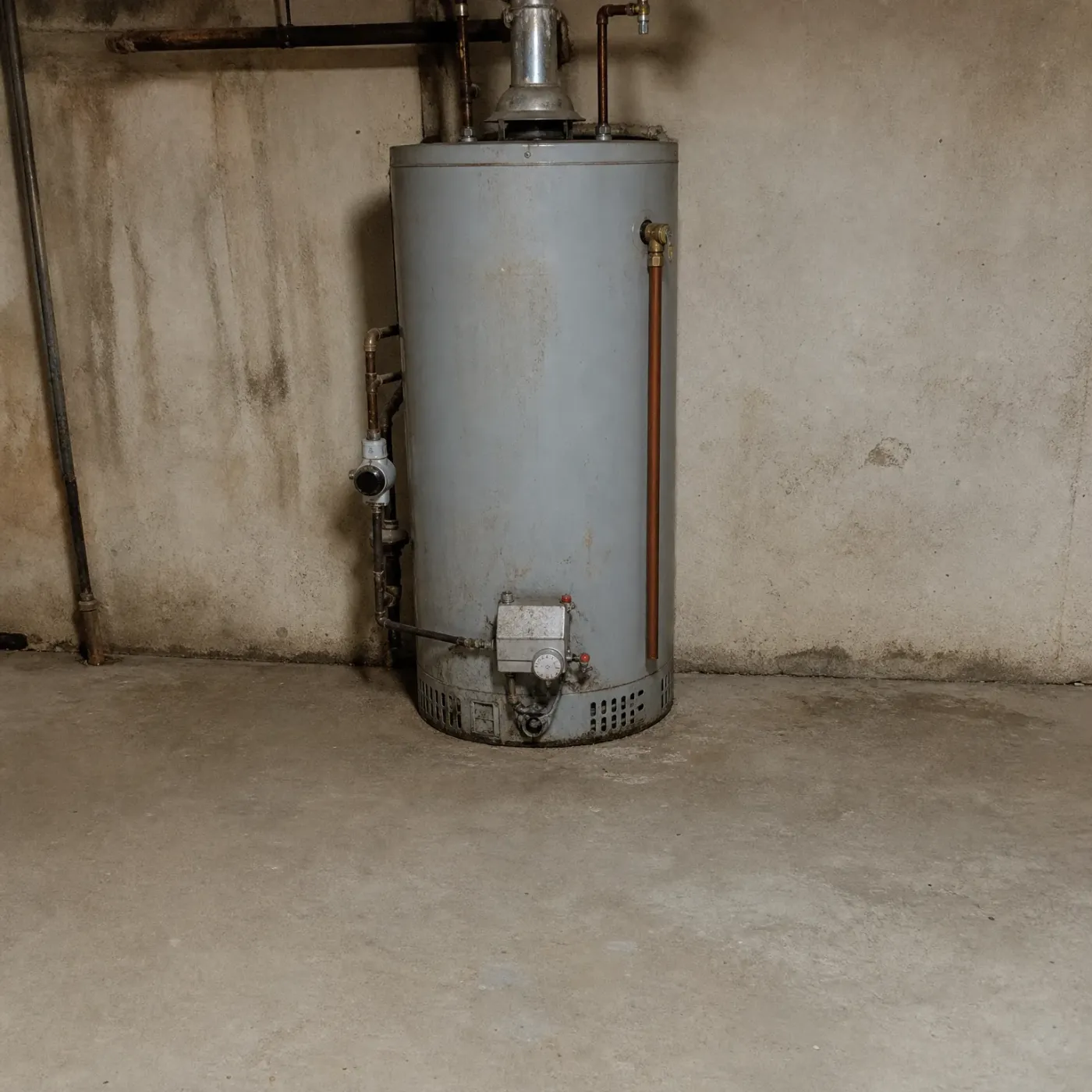
An older gray cylindrical gas water heater with copper and steel piping and a flue, standing on a concrete floor against a stained concrete wall.
Older or left idle too long, this one has given sulfur bacteria the time and the worn rod they need to produce that smell.
A bathroom corner with a gray tiled walk-in shower with a glass door, a recessed niche, and a dark towel hanging on a rail beneath a window.

Monday morning, a little before seven. The shower's been running a minute and there's still no steam on the mirror, just the smell coming up through the stall, that rotten egg smell you've been getting most mornings this week. The towel's on the rail where it always is. You reach in to check the water and it's hot enough, that's not the problem, you just stand there a second deciding if you can live with it today or if you're calling someone before work. Outside it's still dark, the kind of cold Fargo gets used to by January. You step in anyway. The smell follows the steam out into the hallway, and it's still there when you come back to get dressed.


Why does my hot water smell but not the cold?

You'd notice it first thing in the morning, running the shower or filling a pot at the sink, the smell coming up with the steam while the cold tap runs clean. It may fade after the water's been running a minute, or it may hang on the whole time. Some households notice it's worse in a bathroom that doesn't get used every day, or after a few days away from the house. Left alone, the smell itself won't damage anything, but the same conditions that let sulfur bacteria build up are also wearing down the anode rod meant to protect the tank. Once that rod is gone, the tank starts rusting from the inside, and that's a much bigger repair than what's causing the smell now.

An older woman with gray hair in a bun and glasses, wearing a beige knit sweater, smiles while looking to the side in a warmly lit kitchen, with a loaf of bread on the counter in the foreground and a snowy scene outside the window.
A woman and a child wrapped together in a thick knitted blanket on a sofa, both with eyes closed, with a lit table lamp and houseplant in the dim background.

Power here costs 13.26 cents per kilowatt-hour

At 13.26 cents per kilowatt-hour, running an electric water heater here doesn't cost much to keep up. That makes swapping a worn anode rod or flushing the tank an easy call, since the fix is cheap to live with once it's done.

EIA-861 2025

  1. Sulfate in the water feeds bacteria living inside the tank

  2. Bacteria react with the magnesium anode rod as it corrodes

  3. That reaction gives off hydrogen sulfide gas

  4. Gas collects in the tank and rides along with the hot water

A woman stands in the open black front door of a white-sided house with a dark shingled roof while a man in a navy jacket approaches along the walkway, with lantern wall lights, a potted shrub, and flowering garden beds nearby.

So that's the smell, and now you know why

That rotten egg smell is sulfur bacteria reacting with the anode rod in your water heater, and in Cass County that's common with both well and city water. A flush clears it if the rod's still in decent shape. A new anode rod clears it if the rod's the problem. Either way it's a known fix, not a mystery, and at 13.26 cents per kilowatt-hour it won't cost much to keep running once it's sorted.

What's left is finding someone who'll actually look at your tank instead of guessing over the phone. You'd otherwise be the one calling around, explaining the smell to three different people, and sorting through quotes that don't match up. Answer a few questions about your water heater and you'll be matched with a contractor who takes it from there, and they'll reach out to you directly. No more chasing it down yourself.

Interior corner of a dining room with a round wooden table, a ceramic vase holding olive branches, a dark spindle-back chair near a curtained window, and a sideboard with a lamp against beige walls.
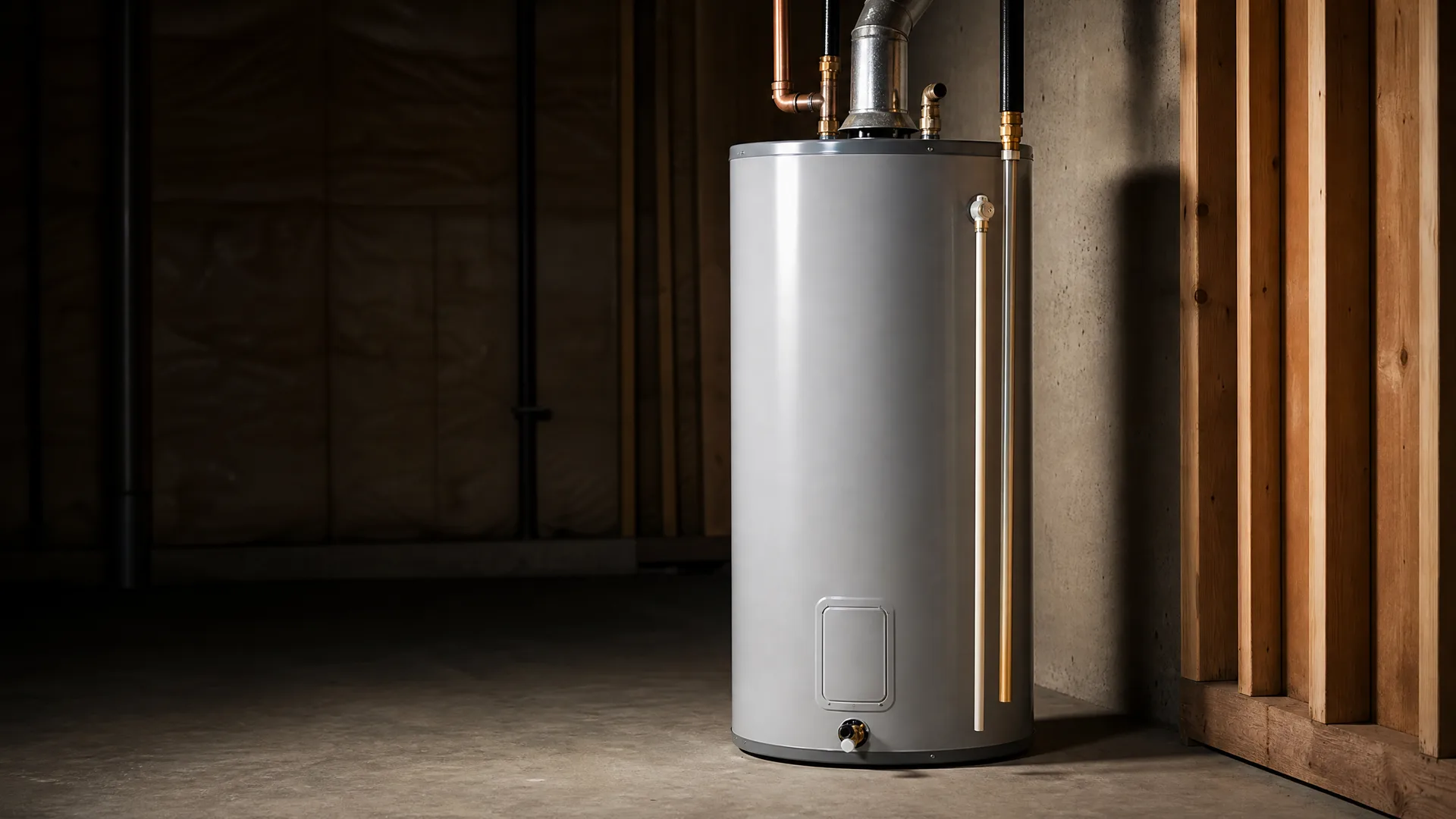
A gray cylindrical tank water heater with copper and metal pipes at its top stands on a concrete floor beside a concrete wall and wooden studs in a dim basement.

Find a water heater repair pro in Cass County

Step 1 of 3: Equipment