Still doing its job
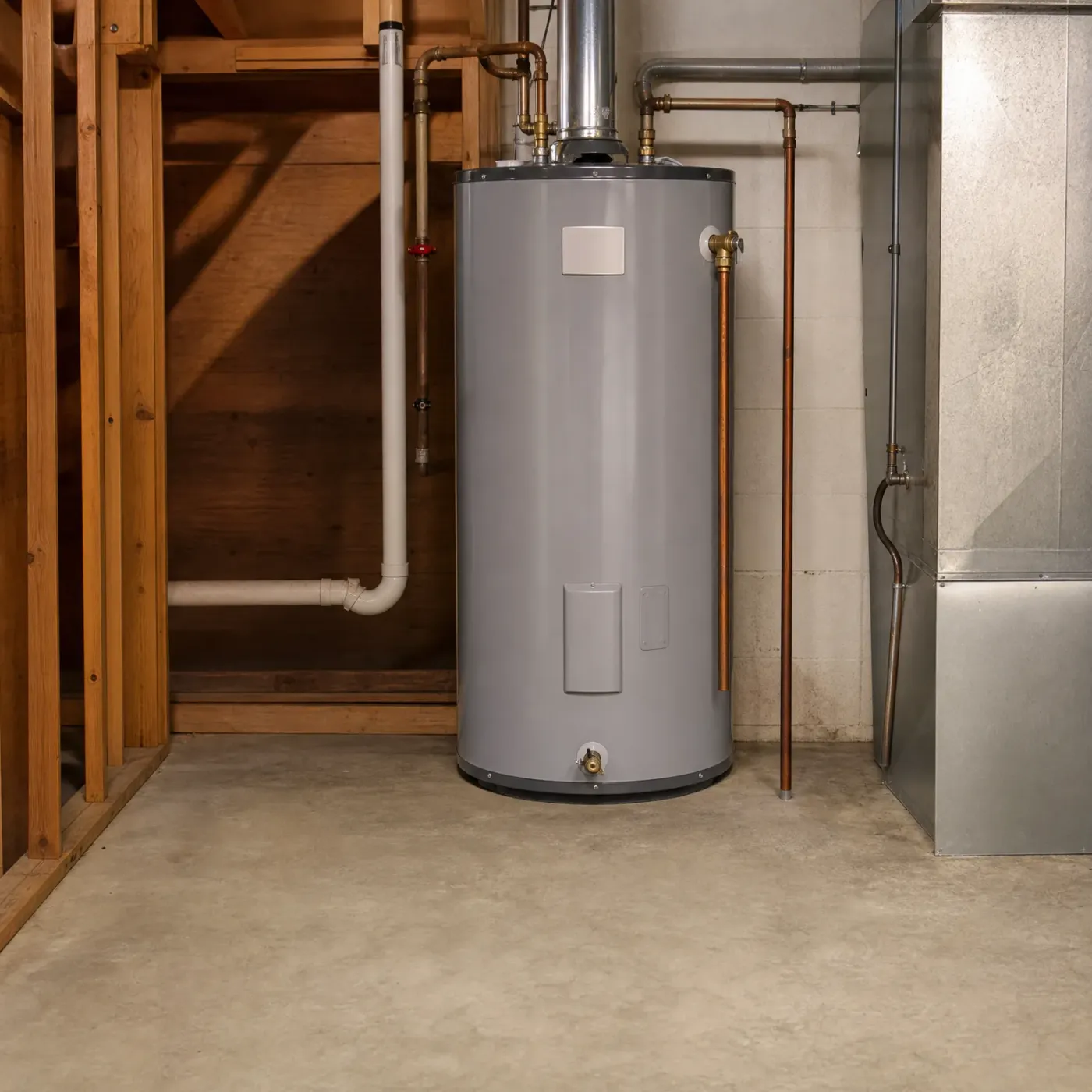
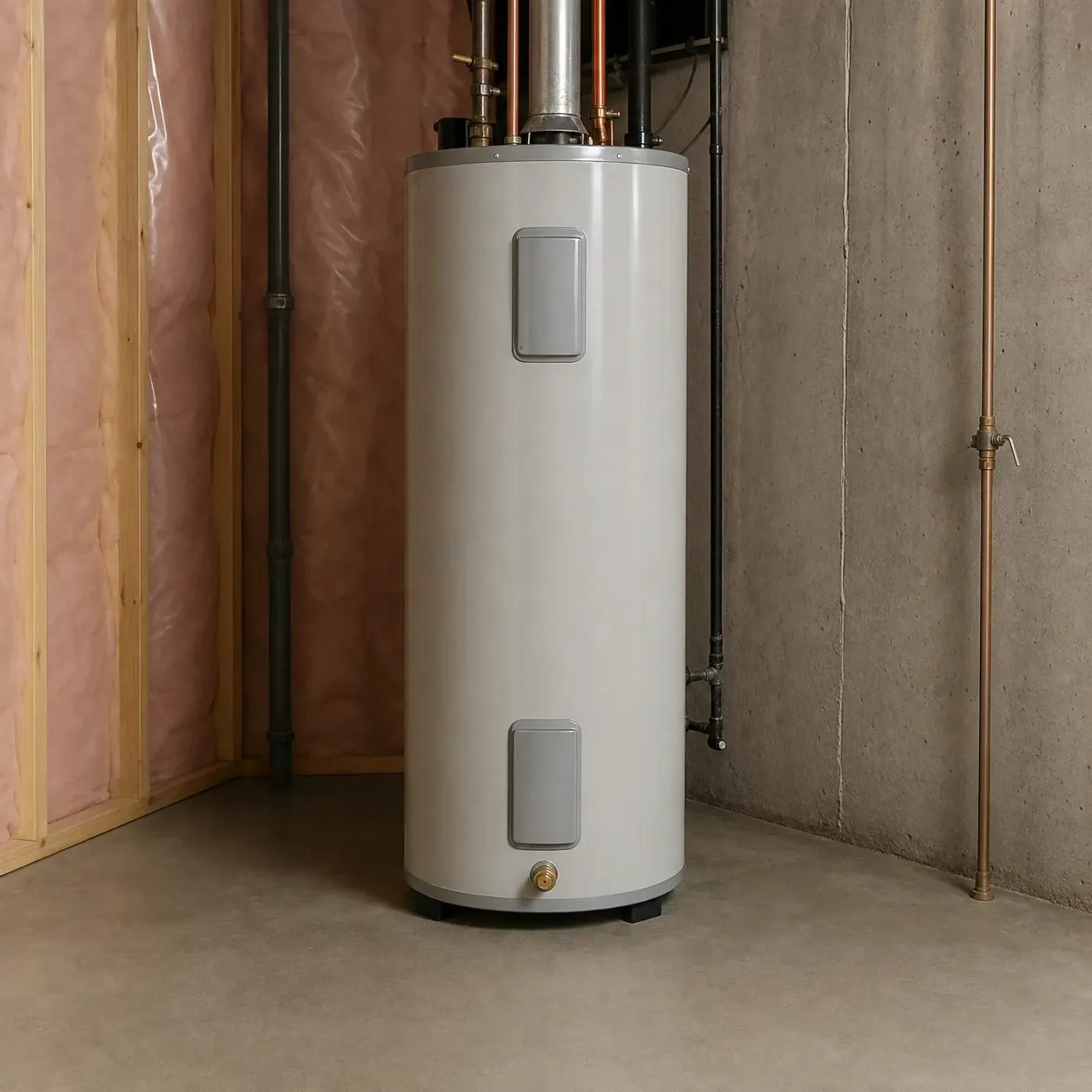
The panels are dry and the tank sits level on the floor. The relief valve and its discharge pipe show no mineral crust, and the flue duct at the top sits tight and solid. Nothing here is telling you to call anyone yet.
 Let a pro reach out
Once you send the form, finding a pro is off your list.
A water heater usually gives you some warning before it quits for good. Rust-colored water, a tank that pops and rumbles, water pooling underneath, a pilot that won't stay lit. If you're seeing any of that, you're trying to figure out whether to wait it out or get it replaced before it fails on a Sunday with no hot water and a mess on the floor.
Most homes in North Dakota run gas water heaters, and when one fails, you're not dealing with a quick fix. A gas water heater involves venting, gas line work, and getting the new unit sized right for your household. That's not something to leave to a weekend project or a contractor who installs them twice a year.
Send the request through this page and the search for a contractor is off your plate. You're not the one calling around, explaining the same problem three times, trying to figure out who's legitimate. One licensed local contractor gets matched to your job, someone who works on water heaters all winter in this state and has seen what tends to go wrong in homes here, from sediment buildup to a thermostat that's finally given out.
That matters more in North Dakota than most places. Winters here are hard, and a dead water heater in January isn't a minor inconvenience. Gas is the common fuel here and power stays cheap, so a new install doesn't change much about your monthly bill either way, but it does mean hot water again, without a string of calls and quotes to get there.
Below, you'll find the specific signs that mean your water heater is on its way out, and what each one actually tells you about how much time you have left.
The clearest sign is age. Most tanks last 10 to 15 years, and once yours gets there, the risk of a leak goes up fast, even if it still makes hot water today. Rust-colored water from the hot tap, especially if the cold tap runs clear, usually means the tank itself is corroding from the inside, not just the pipes. Popping or rumbling when it heats means sediment has built up at the bottom, and that makes it work harder to do the same job. Water pooling underneath is the one that can't wait. That's the tank failing, not a loose fitting, and it won't seal itself back up. Gas models here that won't hold a pilot, or electric ones that trip the breaker repeatedly, are often past the point where a repair makes sense. If your water heater came with the house and you don't know its age, that alone is worth checking before next winter arrives.
Most gas water heaters work the same way underneath the cover. Cold water enters through a dip tube that carries it to the bottom, where the burner heats it before it rises to the top for use. Inside the tank, an anode rod corrodes in place of the steel, protecting the tank for years until the rod runs out. After that, rust starts on the tank itself, from the inside, where you can't see it. Sediment collects on the bottom above the burner, and the burner has to work through that layer to heat the water, which is part of why a tank struggles as it ages. That sediment is also usually behind the popping or rumbling sound a water heater makes, steam forcing its way up through it rather than the tank itself giving out. The flue carries exhaust out of the house, and if the baffle inside it rusts through, that exhaust has nowhere to go but back into the room. A pressure relief valve that drips now and then is working as it should, not a sign something's wrong.




A tank with a cracked dip tube or a dying anode rod does not fix itself, and once you have seen two or three of these signs together, you are no longer deciding whether to replace it, just when. North Dakota winters put real demand on a water heater, and one that is already struggling in October is not getting easier to live with in January. Most homes here run on gas, and that means a specific setup, a flue, a pilot or igniter, venting, that a contractor needs to see in person to size and install right. Sending the request through puts that in front of someone local who installs these year-round and knows which failures show up first in tanks this age. Only one contractor gets your request, so you are not stuck fielding calls from five companies while your water heater is still leaking. That is one less thing to manage while you are already dealing with rust in your water or a tank that will not stay lit.
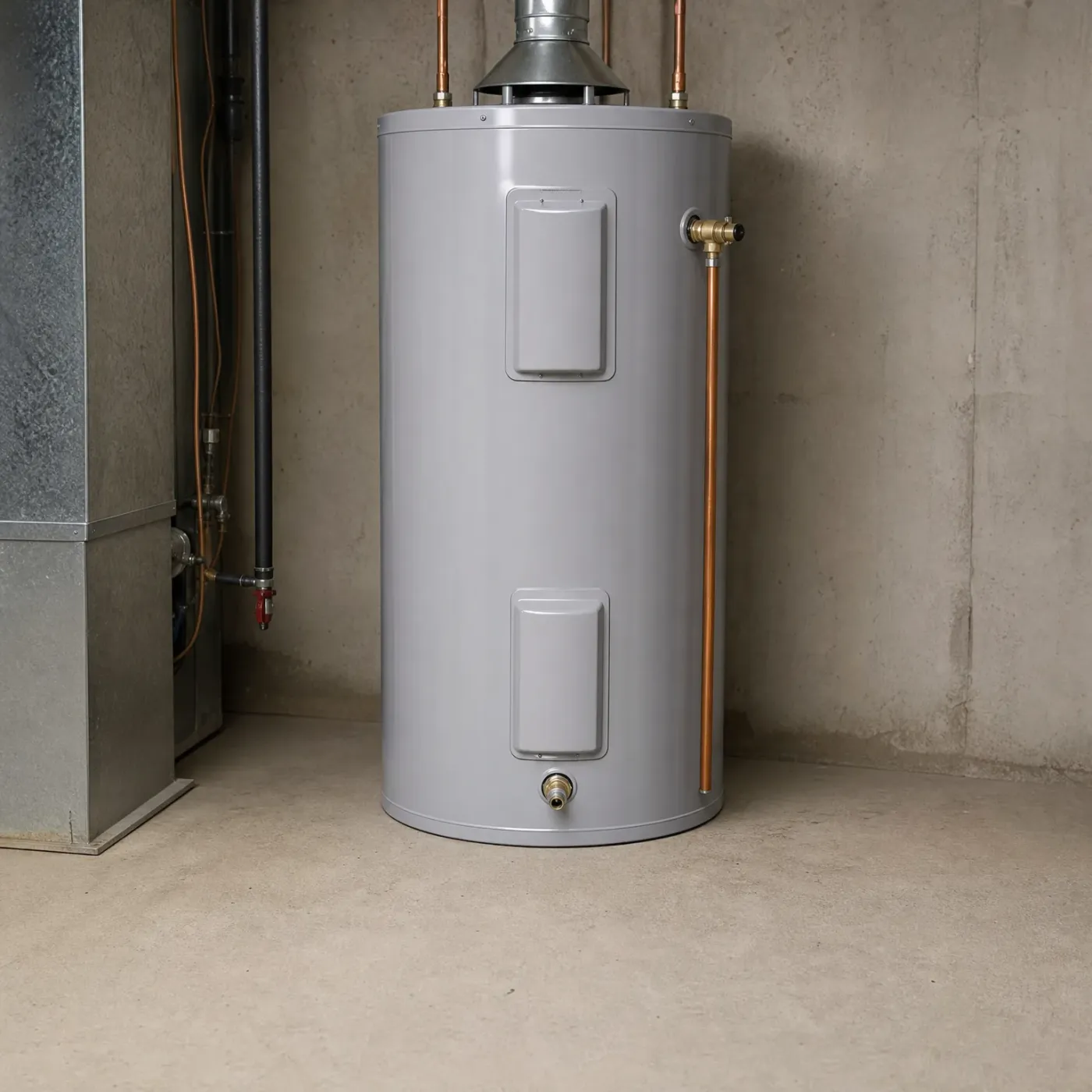
The panels are dry and the tank sits level on the floor. The relief valve and its discharge pipe show no mineral crust, and the flue duct at the top sits tight and solid. Nothing here is telling you to call anyone yet.
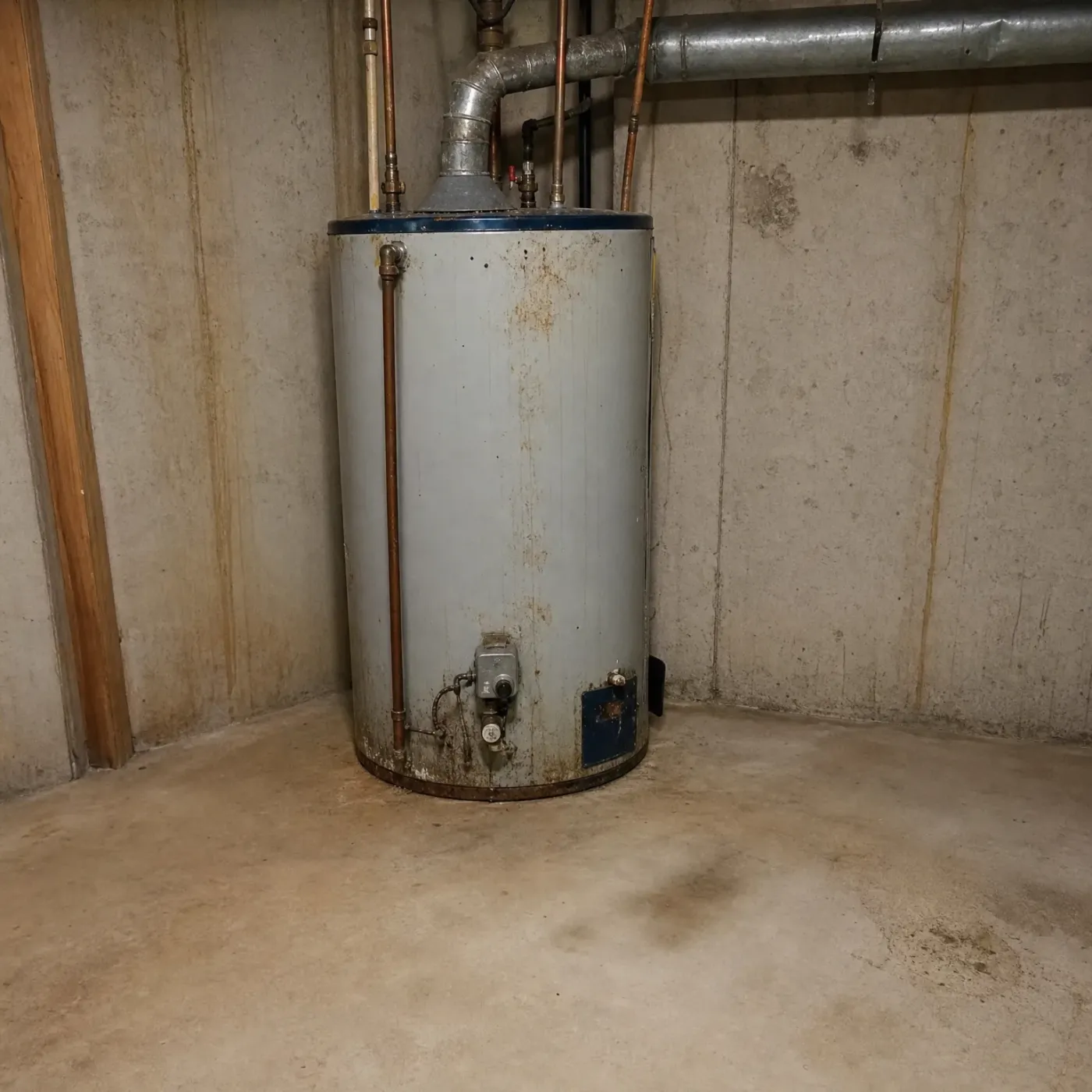
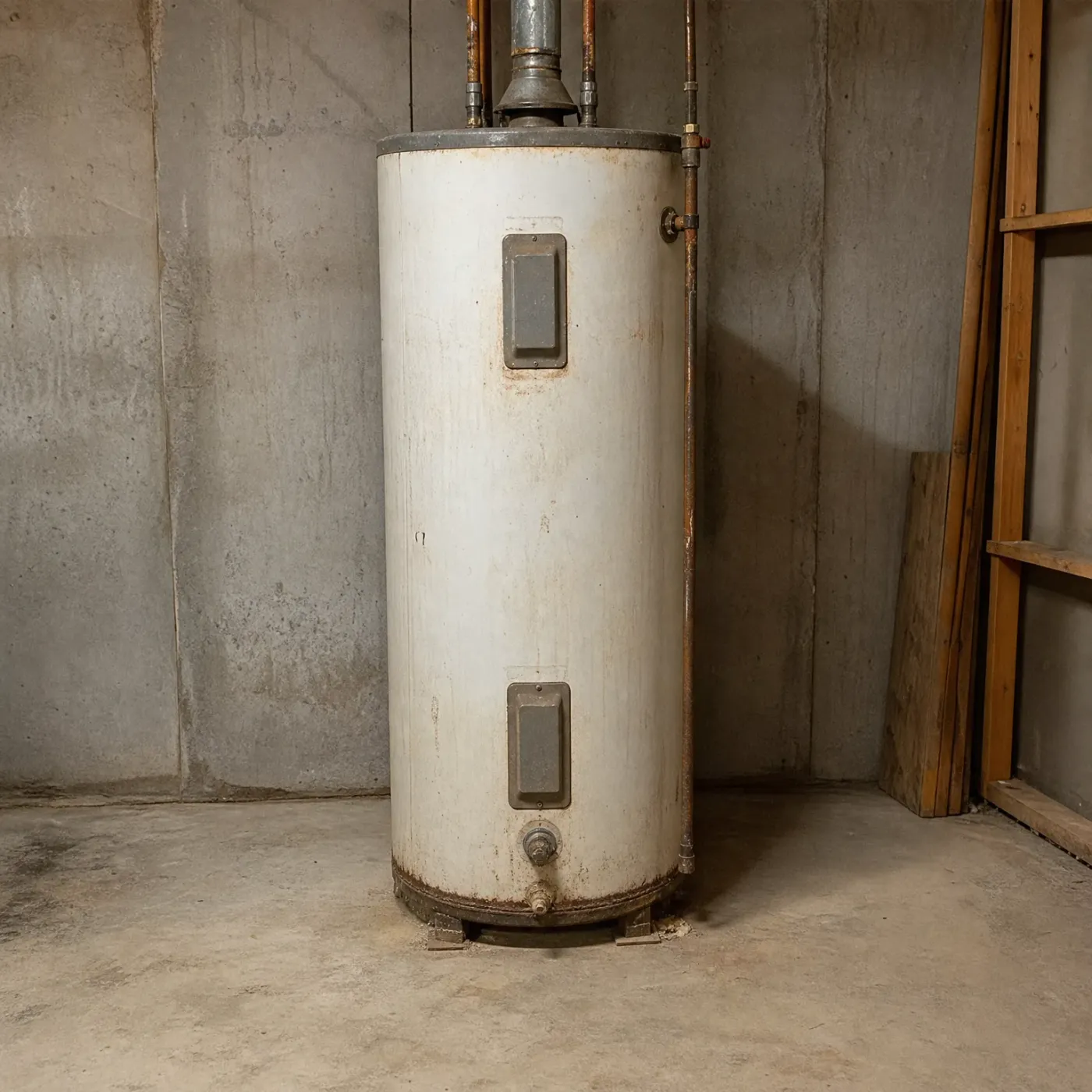
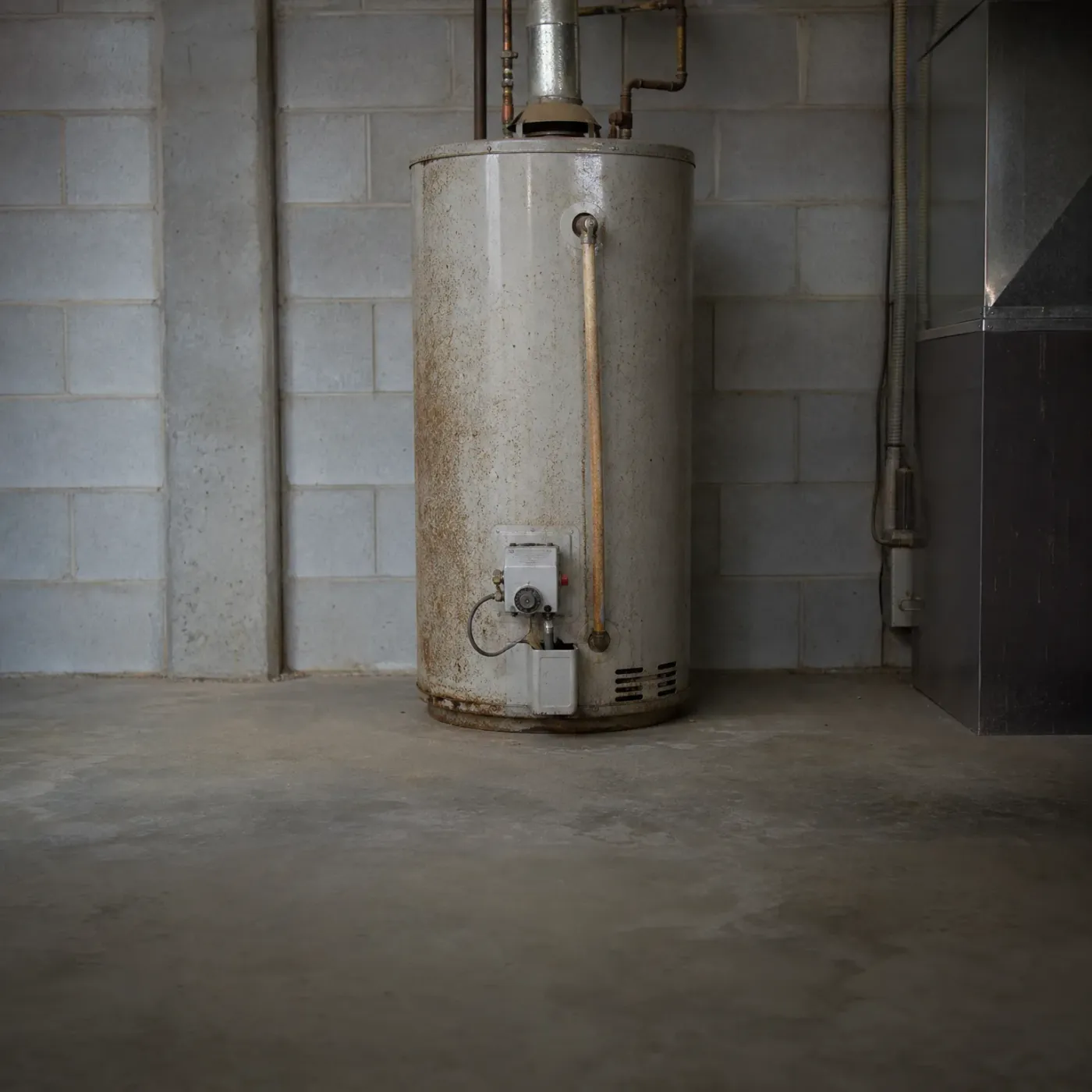
Rust runs down the tank from the fittings at the top and has stained the concrete underneath. The galvanized flue pipe is the kind that rusts through from the inside out. A tank in this shape can fail without any more warning than it's already given you.
Sediment settles and hardens on the bottom of the tank
The burner heats through that layer instead of water
Steel under the sediment overheats and starts to corrode
The anode rod gets used up and stops protecting the tank
Most homes here run a gas water heater, same as yours probably does. That means a pilot or igniter that won't hold, or a burner that won't fire right, points straight at the water heater itself rather than a breaker or a power issue.
ACS 2020-2024 5-year B25040
A water heater rarely fails without telling you first. Age is the starting point. Once a tank passes 10 to 15 years, the steel has usually taken enough wear that a leak becomes a matter of time, whatever the tap is doing today. Past that, the signs point in the same direction. Rust in the hot water means the tank is rusting from the inside, not the pipes. Water under the tank, rust on the outside, or a corroded flue baffle are not things a contractor patches and moves on from, they mean the tank itself has started to fail. A pilot or igniter that won't hold, or a burner that won't fire steady, usually means the unit, not a tripped breaker or a power issue, since most homes here run gas. Popping or rumbling from the tank means sediment has built up on the bottom and the steel under it is taking heat it was not built to take. None of these on its own means replace it tonight. But they stack. One sign is worth watching. Two or three together, especially once the tank is past 10 years old, means you are not deciding whether to replace it anymore. You are deciding when, and with a North Dakota winter ahead, when matters more here than almost anywhere.


One request and it's handed off
Your request goes to one pro, not a list of companies.