Tell us about the job
Takes about a minute. No obligation.
A contractor quoting a water heater installation in Barnes County has to look at the service panel before anything else. Electricity heats more occupied homes in Barnes County, North Dakota than any other fuel, at 46.9% (2020-2024 ACS 5-year). With electricity running the majority of homes here, a new water heater draws from the same panel carrying the rest of the house load, and an undersized circuit or an older breaker box changes what the installer can actually put in. The fuel that dominates here decides venting requirements too, since an electric unit needs none, which removes one variable from the job but sharpens the electrical ones.
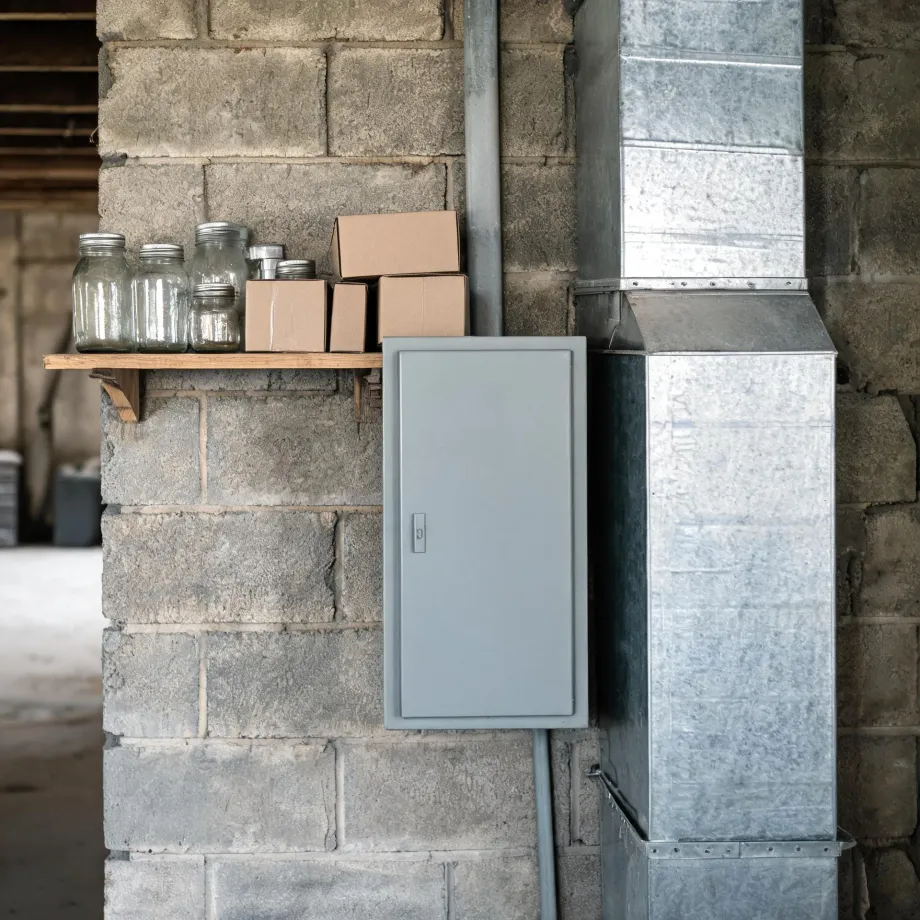
Ductwork laid for one era of equipment does not automatically carry what replaces it. Half the homes in Barnes County, North Dakota were built in 1966 or earlier (2020-2024 ACS 5-year). A contractor installing a water heater in stock that old has to check what the existing runs can handle before the new unit is ever quoted, because the gap between what the house was built around and what now goes into it is where the job either straightens out or gets complicated. Electrical service sized for a lighter load is the other thing that gets opened and measured early.
What a Water Heater Installation Covers
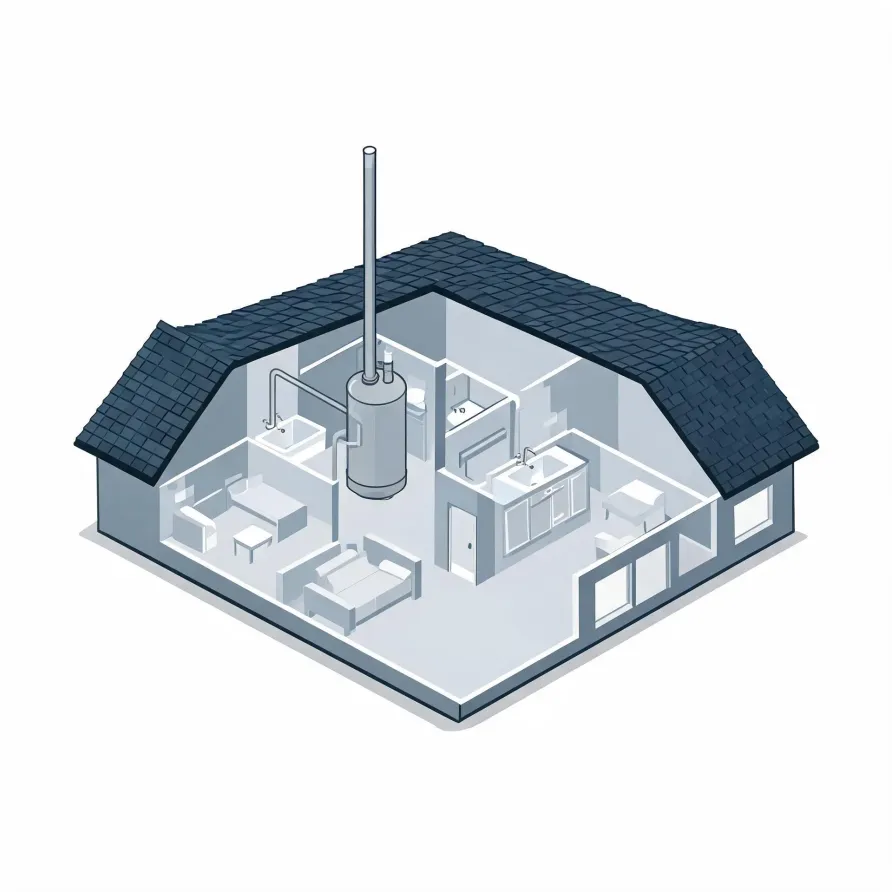
The tank or tankless unit is the piece a homeowner sees first, sitting in a utility closet, basement, or garage. It holds and heats the water that runs to every fixture in the house. A contractor also installs the pressure relief valve on the tank itself, a safety device that opens if pressure or temperature climbs too high.
Supply and outlet pipes connect the unit to the home's cold water line and carry hot water out to the rest of the house. A drain line runs from the relief valve to a safe discharge point nearby. The flue or exhaust vent exits through the wall or roof, carrying combustion gases out of the living space.
The drawing shows a general layout of these components, and a licensed contractor determines exactly what applies to this house.
Find a contractor in Barnes CountyBarnes County, by the numbers
196 severe weather events were recorded in Barnes County, North Dakota between 2015 and 2024.
NOAA National Centers for Environmental Information, Storm Events Database, bulk CSV export, events 2015-01-01 through 2024-12-31.Half the homes in Barnes County, North Dakota were built in 1966 or earlier (2020-2024 ACS 5-year).
U.S. Census Bureau, 2020-2024 American Community Survey 5-Year EstimatesBarnes County, North Dakota holds 5,700 housing units (2020-2024 ACS 5-year).
U.S. Census Bureau, 2020-2024 American Community Survey 5-Year EstimatesOwners occupy 70.8% of the occupied homes in Barnes County, North Dakota (2020-2024 ACS 5-year).
U.S. Census Bureau, 2020-2024 American Community Survey 5-Year EstimatesSevere Weather Events in Barnes County
North Dakota weather puts real demands on water heating equipment, and Barnes County conditions are part of what a contractor has to account for when sizing and installing a system. What holds up here has to hold up against what this place actually throws at it.
196 severe weather events, 2015–2024. Source: NOAA National Centers for Environmental Information, Storm Events Database.