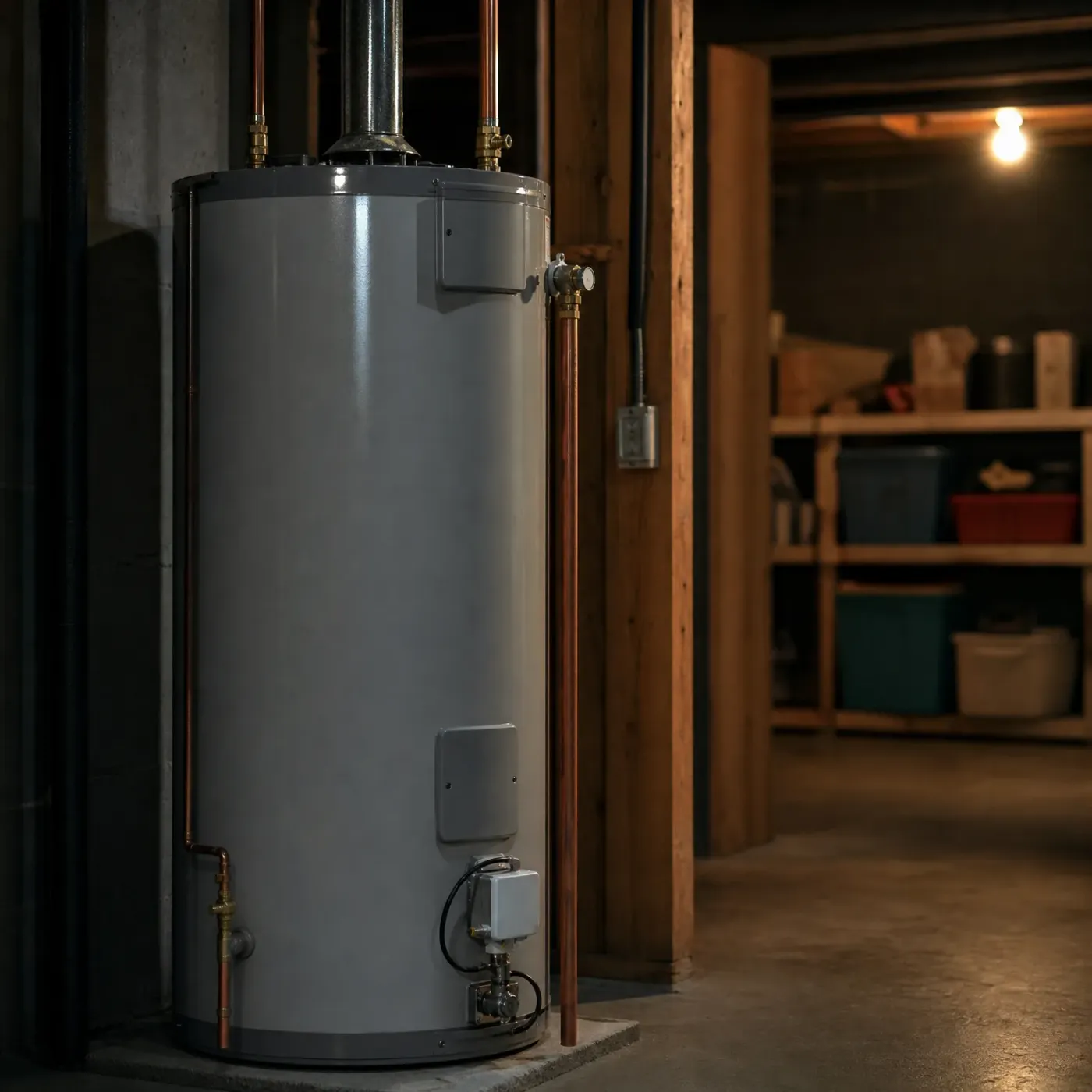
A large gray cylindrical water heater with copper pipes and a metal flue stands on a concrete pad in a dim basement, with wood framing and shelves of storage bins lit by a bare bulb behind it.

A pro who works on water heaters

Water heater pilot light keeps going out in North Dakota

A pilot that won't stay lit usually comes down to one part: a dirty orifice, a bad thermocouple, or a draft finding its way into the cabinet. This page goes through what causes it and what a gas water heater actually needs to hold a flame. If it keeps happening, a licensed contractor in North Dakota who works on these units can take a look.

Match me with a pro

A pilot light that won't stay lit almost always comes down to a thermocouple that's worn out or sitting slightly out of position. That's the part that sits in the flame and tells the gas valve it's safe to keep feeding the pilot. When it wears down or bends out of place, the valve reads it as an unlit pilot and shuts the gas off, even while the flame is right there burning. A dirty pilot orifice can cause the same thing by starving the flame down to almost nothing. Cold air is a factor too. If the water heater sits in a garage or an unheated utility space, a draft finding its way into the cabinet during a North Dakota winter can snuff a weak flame outright. None of this means the tank is failing. It means a part needs replacing or the draft needs sealing, and either one is a straightforward repair once someone's looked at the actual unit.

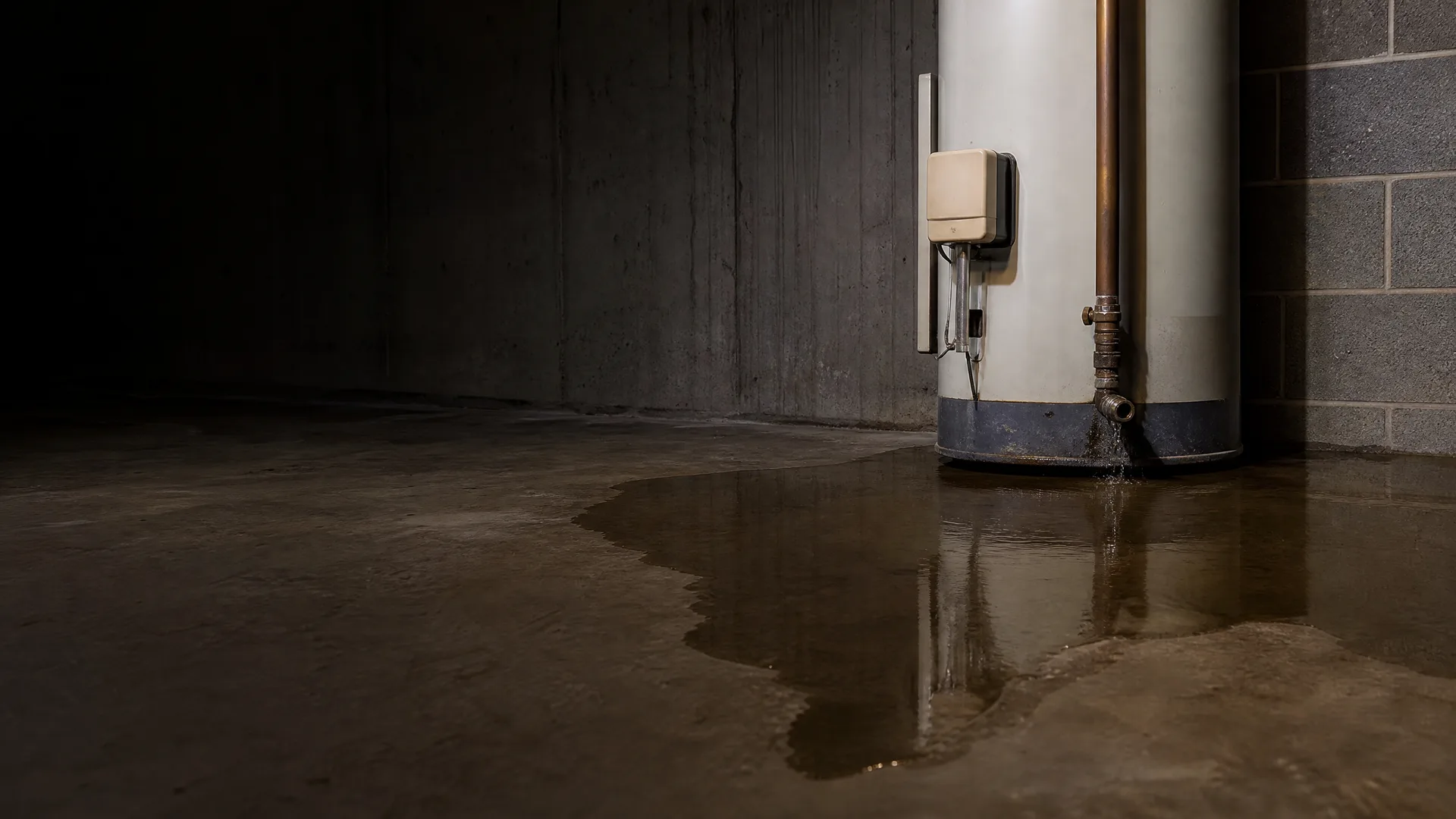
A water heater tank with copper piping and a drain valve stands against a concrete and block wall in a dim basement, with a large puddle of water spreading across the floor.

Saturday morning, and you're down in the basement moving the laundry over when you feel it before you see it, a cold damp patch soaking through your sock. The tank's been doing the thing again, pilot out for the third time this month, and you'd relit it last night without thinking much of it. Now there's a thin ring of water spreading out from the base across the concrete, catching the light from the one bare bulb overhead. Outside it's a mild morning, nothing like the deep cold months still ahead. You crouch down, put a hand near the bottom of the tank, and feel the metal is wet too, not just the floor around it.
Why does your pilot light keep blowing out

You relight it, it holds for a day or two, then you're back down in the basement with a long lighter again. Maybe you've noticed the flame looks weak or yellow instead of a steady blue, or you smell a faint trace of gas when it goes out. Sometimes it's a draft from a nearby vent or a door that gets pulled open and shut. If the tank keeps shutting down through a North Dakota winter, you're left without hot water until someone relights it, and a pilot that won't hold often means the gas isn't burning the way it should.

A gray cylindrical water heater standing in a basement corner against a concrete wall, with copper and black pipes, a metal flue, and ductwork nearby, next to wood framing on the right.

Pilot lit, flame steady

Blue flame, holding without you touching it. The burner fires when a tap runs hot, the flue draws exhaust straight up and out, and the tank goes back to just sitting there, quiet, doing its job between the block wall and the framing.

A gray cylindrical gas water heater with copper and black pipes stands in the corner of a basement with concrete block walls and a bare concrete floor.

Pilot out again

You're crouched at the base of the tank with a lighter, working past the gas valve and the control unit to find the pilot opening. It catches, holds a day or two, then you're back down here doing the same thing.

Fix It Yourself or Call It In

Fix it yourself

  • Cleaning the pilot orifice or relighting the pilot a few times costs nothing but your evening.
  • If a draft from a basement window or a cracked door is blowing it out, sealing that gap might solve it for good.
  • A thermocouple that's just loose can sometimes be reseated by hand if you know where it sits in the flame.
  • You won't know if it's the thermocouple, the gas valve, or a draft problem until you've opened the cabinet and looked.
  • Guessing wrong means you relight it again next week, and the cold water hits you at the worst time.

Call a contractor

  • A licensed local contractor who works on these tanks all year knows which part fails most and checks that first.
  • They'll test the thermocouple's output rather than just looking at it, which tells them if it's actually weak.
  • If the gas valve itself is the problem, that's not something to swap out without the right training.
  • One contractor means one visit and one answer, not a string of calls from companies bidding for the job.
  • Once the real cause is found, the pilot holds without you going back down to the basement every few days.
A woman in a gray turtleneck sweater stands by a window looking outside at snowy ground, with a dimly lit living room containing a sofa, shelves, lamp and a lit candle behind her.
A woman in a cream cable-knit turtleneck sweater stands in a warmly lit living room with a fireplace and shelves behind her, looking out a window toward snow-covered trees and a railed deck.
A woman in a cream knit turtleneck sweater stands by a window looking out at snow, with a lit fireplace, sofa and lamp in the room behind her.
A woman in a gray knit sweater sits by a window looking out at falling snow, with a dimly lit living room containing a sectional sofa, pillows, a lamp and houseplants behind her.

Get your water heater to the right pro

Your request goes to one pro, not a list of companies.

It costs nothing to send, and you don't have to hire anyone.

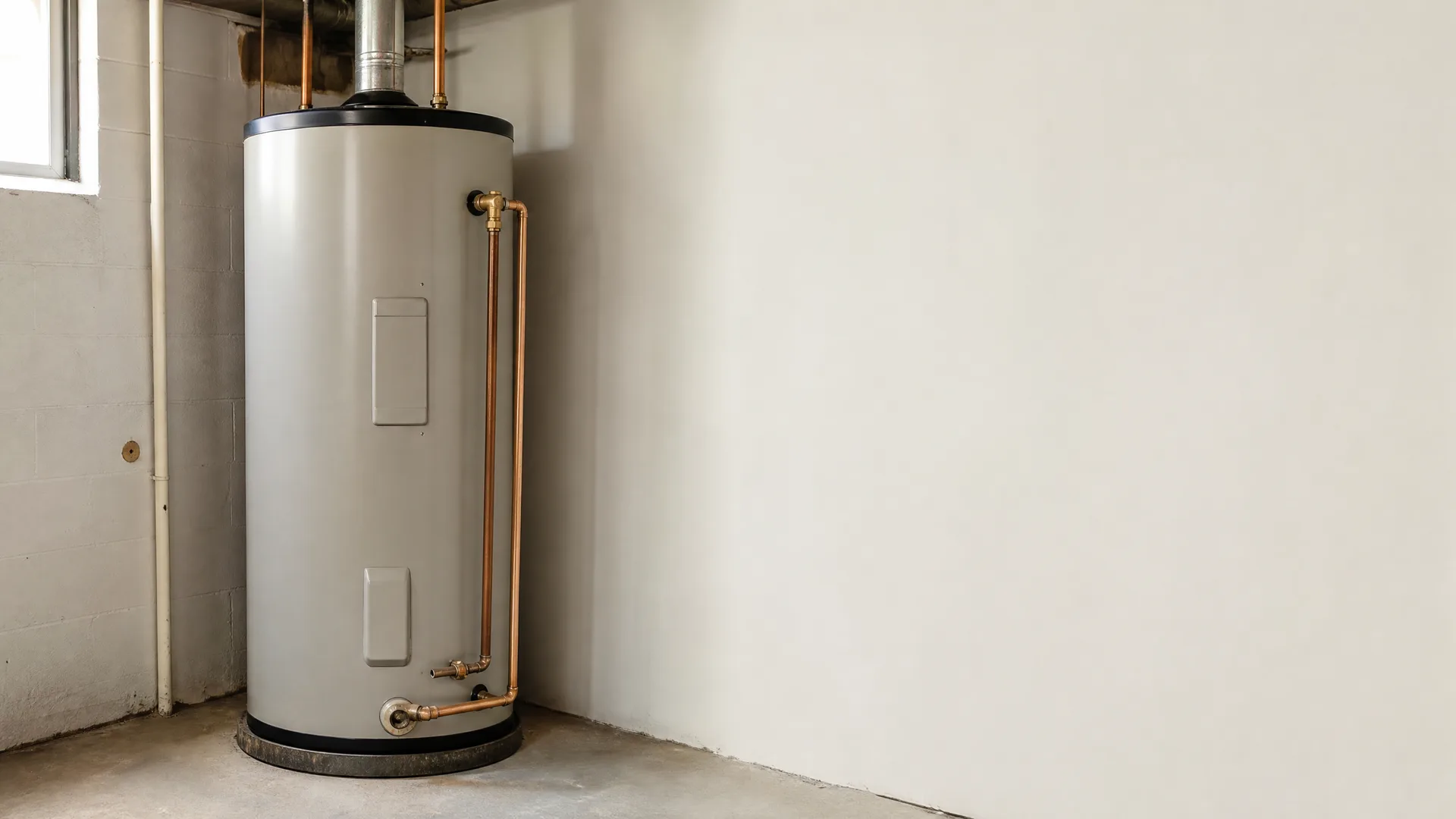
A tall gray cylindrical water heater with copper piping and a flue stands in the corner of an empty basement room with concrete block and painted walls.

What the thermocouple actually does

The thermocouple is a thin copper rod sitting right in the pilot flame. Heat from that flame generates a tiny electrical signal, just a few millivolts, that holds the gas valve open. No flame, no signal, and the valve shuts the gas off within seconds. It's a safety part, not a convenience one. It isn't checking whether you want hot water. It's checking whether there's actually a flame to burn the gas it's about to release.

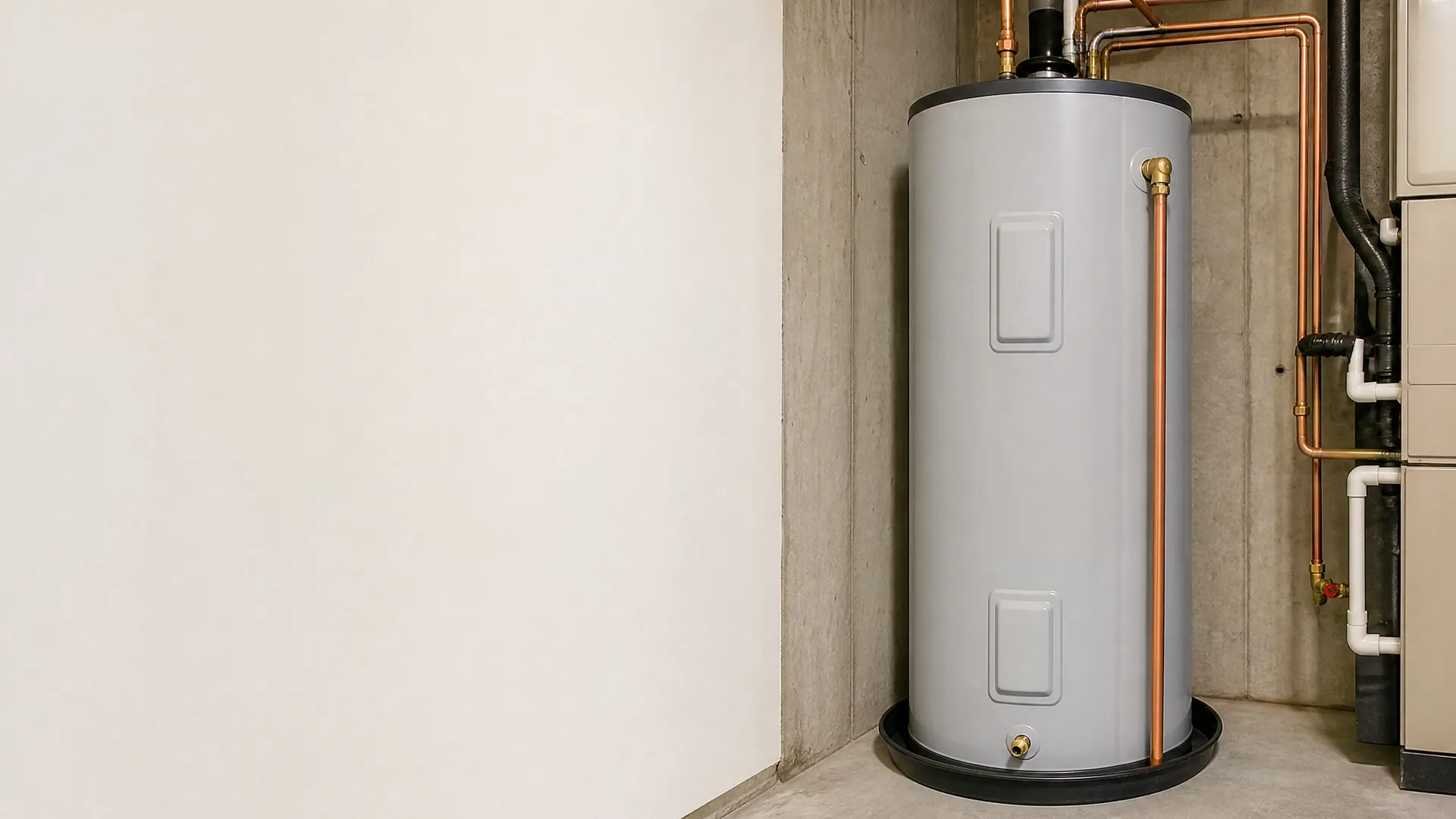
A gray cylindrical water heater stands in a drain pan against a concrete wall, with copper and white pipes running along the wall to the right and a plain light wall on the left.

Why a draft wins so easily

A pilot flame on most gas water heaters is small, often less than an inch tall, because it only needs to heat the thermocouple, not the tank. That size makes it easy to blow out. A basement in North Dakota holds cold air near the floor most of the year, and that cold air moves toward any gap it can find, a loose door, a vent, a crack by the sill plate. The flame doesn't need a strong gust. A steady trickle of air across it is enough.

Why does my pilot light go out more in the winter?

Winter in North Dakota means the basement gets colder than the rest of the house, and furnace or dryer exhaust fans start pulling harder on the air inside. You've noticed the pilot holds fine in warmer months but keeps dying once the cold sets in, and you're trying to figure out if that's really a pattern or just bad luck.

Cold air pulls harder at the pilot, and a weak thermocouple can't keep up

Cold basement air sinks and moves toward any gap it can find, a sill plate, a dryer vent, a door that doesn't seal tight. That draft reaches the pilot more often in January than it does in July. A thermocouple that's still in good shape and sitting right in the flame rides out that draft fine. One that's already worn or bent slightly off position doesn't have the margin for it, so the flame wavers, the signal drops, and the gas valve shuts the pilot down. If your water heater only acts up once it's cold outside, that's usually the thermocouple losing its grip under conditions it used to handle.

A gray cylindrical water heater standing on a concrete floor in a basement corner, with copper pipes and a metal duct running overhead along bare concrete walls.
A steady blue flame, pipes free of rust, and a drain valve you could use today without worry.
A white cylindrical water heater with rust stains and two access panels stands in a basement corner between a painted concrete block wall and a bare concrete wall, with metal pipes running up and alongside it on a concrete floor.
Heavy corrosion like this often means the tank itself is failing, not just the pilot.

41.3% of homes statewide heat with gas

Most homes across North Dakota run on gas, including the water heater down in your basement. That pilot is doing its job for years with no power bill tied to it, but it still needs a clean orifice and a sound thermocouple to stay lit through a cold winter.

ACS 2020-2024 5-year B25040

A bearded man in a plaid flannel shirt stands in a kitchen looking out a window toward snow-covered shrubs, with a steaming mug on the windowsill and potted plants on a shelf behind him.
A smiling man with dark curly hair in a navy t-shirt sits on a gray couch indoors, with a large-leafed plant and a window in the background.
A woman in a cream cardigan and jeans stands with one hand raised facing an open front door of a gray horizontal-siding house, with a black lantern wall light, a potted shrub with yellow flowers, and a stone-faced porch column.

A pilot that keeps going out has a reason behind it

Nine times out of ten it's the thermocouple, a dirty orifice, or cold air finding its way into the cabinet from somewhere in the basement. None of those are mysteries once someone has eyes on the tank. You've already done the part that matters, noticing the pattern instead of just relighting it and moving on.

A local contractor who works on gas water heaters all winter has likely seen your exact tank more than once, the same brand, the same spot in the basement, the same draft off the same kind of window well. Submit your request and you'll be matched with one contractor local to North Dakota, so you're dealing with one call back, not a string of them, from someone who already knows what tends to fail first in a cold basement.

A living room corner with a beige upholstered armchair holding navy and striped cushions, a small round wooden side table with a carved bowl and a potted green plant, a framed landscape picture on a pale wall, built-in shelving, and a curtained window.
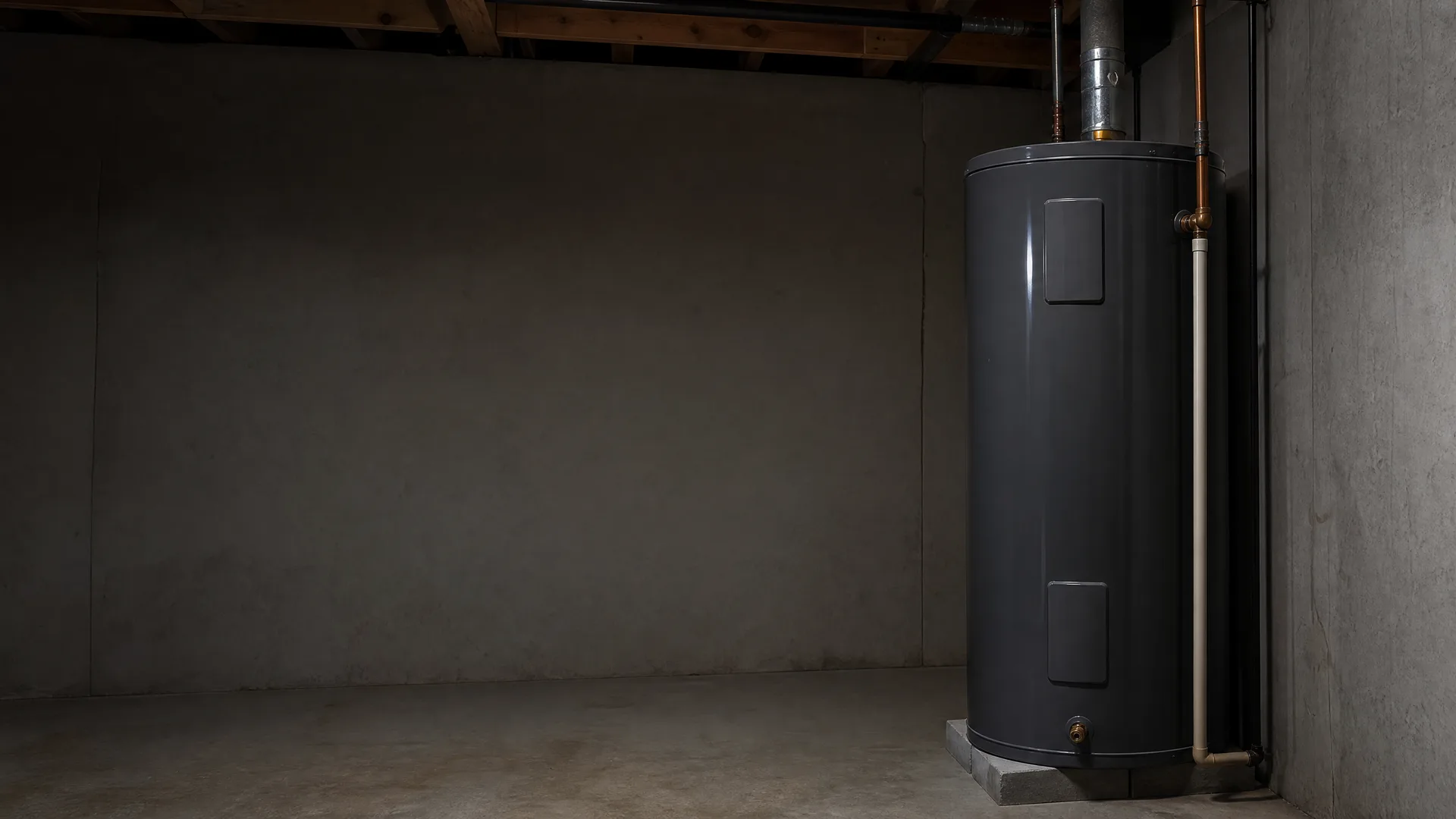
A dark gray cylindrical water heater with copper and metal pipes stands on a concrete pad in the corner of a dim basement with bare concrete walls and exposed floor joists overhead.

The right pro for this job

The pro who reaches out is licensed in North Dakota.

Step 1 of 3: Equipment