



Why your hot water smells like rotten eggs in North Dakota

Tell a local repair pro what your water heater is doing.

Find a water heater pro

That rotten egg smell is hydrogen sulfide gas, and it forms inside the tank when bacteria react with the magnesium or aluminum anode rod that protects the steel from rust. It shows up most in homes on well water, but it can happen with city water too. Gas water heaters run hotter than electric ones, and some of those bacteria thrive in that warmer, low-oxygen environment, which is part of why gas units in North Dakota see this more. The smell usually means the anode rod has broken down enough to feed the reaction, or the water sitting in the tank between uses is giving bacteria time to grow. It will not go away by running the faucet longer. It points to something happening inside the tank itself, and it is worth having looked at before it affects more than just the smell of your water.

A beige cylindrical water heater with copper pipes and a black drain pan stands in a corner of a basement with white walls, a concrete wall and small window at left, and a concrete floor.

The anode rod is the cause

That rod hangs inside the tank and corrodes on purpose, so the steel tank doesn't have to. As it breaks down, it reacts with sulfate-reducing bacteria in the water and gives off hydrogen sulfide gas. A contractor can swap the magnesium rod for one made of aluminum or zinc, which cuts down on the smell since those metals react less with the bacteria.

A gray cylindrical water heater with two black access panels stands on a concrete floor against a white wall, with copper pipes and a flue above it and ductwork to the right.

Why water heaters sit unused

A water heater that sits for days without hot water drawn through it gives bacteria more time to build up in the tank. That happens in a spare bathroom, a cabin, or any line that doesn't get run often. Gas water heaters here recover fast once they're running, but a tank that's mostly idle still needs that water worked through it to keep the smell from settling in.

Is it every tap, or just the hot water

Run the cold water first. If it's clean, then the smell is coming from the tank, not the well or the city line. You'll probably notice it worse after the water heater's sat for a while, like overnight or after a day away. Showers get the smell into the air of the whole bathroom. It can turn up in anything made with hot tap water, including ice from a line that runs warm before it cools. Left alone, the bacteria causing it don't damage the tank itself, but the smell tends to get worse, not better, and it's a sign the anode rod is already breaking down the way it's supposed to, just faster than normal.

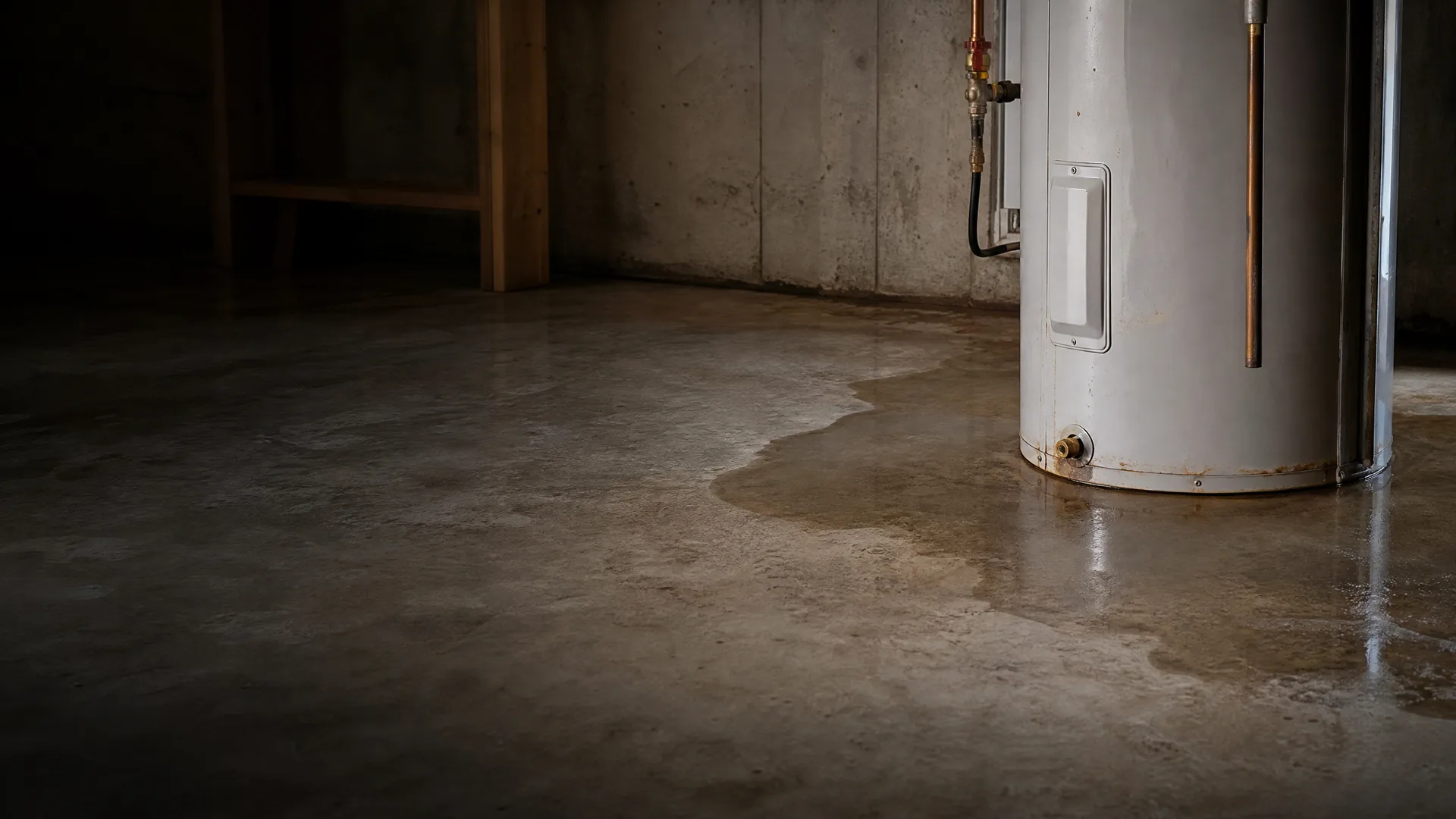
A white cylindrical water heater with copper pipes stands against a concrete basement wall, with water pooled across the surrounding concrete floor.

It is Saturday morning and you are down in the basement, maybe for laundry, maybe just passing through. The smell hits before anything else, that rotten egg smell coming up off the water heater. Then you see it: a small pool of water spread out around the base of the tank, dark against the concrete. You crouch down to check where it's coming from, and your hand finds the floor is cold and wet a couple feet out from the tank in every direction. Outside, North Dakota is having an ordinary warm summer Saturday, nothing unusual about the day except this. You stand back up and look at the tank, trying to decide how long it's been sitting like this.

The right pro for this job

Explain the job once and skip repeating it on every call.

Asking costs nothing, and the choice to hire stays yours.

Well water in the house

Well water carries more sulfate and more of the bacteria that feed on it, so the smell tends to be stronger and shows up sooner after a rod is installed. Flushing the tank helps for a while, but if the well supply is what's feeding it, the smell comes back on its own schedule. A contractor can swap the rod for a different metal that doesn't react the same way, which holds up better against well water than a straight replacement does.


City water in the house

City water is treated before it reaches your house, so the smell usually means something changed inside the tank itself rather than the supply. It can still happen, especially if the water heater sits unused for stretches, like a cabin or a guest bathroom. Since the source isn't the issue, swapping the anode rod for a different type usually clears it for good, and it's less likely to come back the way it can with a well.

A woman in a cream cowl-neck sweater sits by a window with snow outside, in a dimly lit living room with a sofa, lit lamp, mirror, candles and a fireplace.
A woman in a gray turtleneck sweater sits beside a large window looking out at snow-covered evergreen trees, in a dimly lit living room with a lit fireplace, lamps, couch and houseplant.
A woman in a cream turtleneck sweater stands beside a large window with snow-covered ground and bare trees outside, in a dimly lit living room with lamps, a sofa and framed art.
A woman in a grey cowl-neck sweater stands indoors near a window, looking out at falling snow, with a lamp, framed picture and couch in the warmly lit room behind her.
  1. Sulfate-reducing bacteria enter the tank through the water supply.

  2. Bacteria feed on sulfate and multiply in the tank's warm water.

  3. The anode rod reacts with bacteria and releases hydrogen sulfide gas.

  4. Gas builds up in the tank between uses, especially overnight.

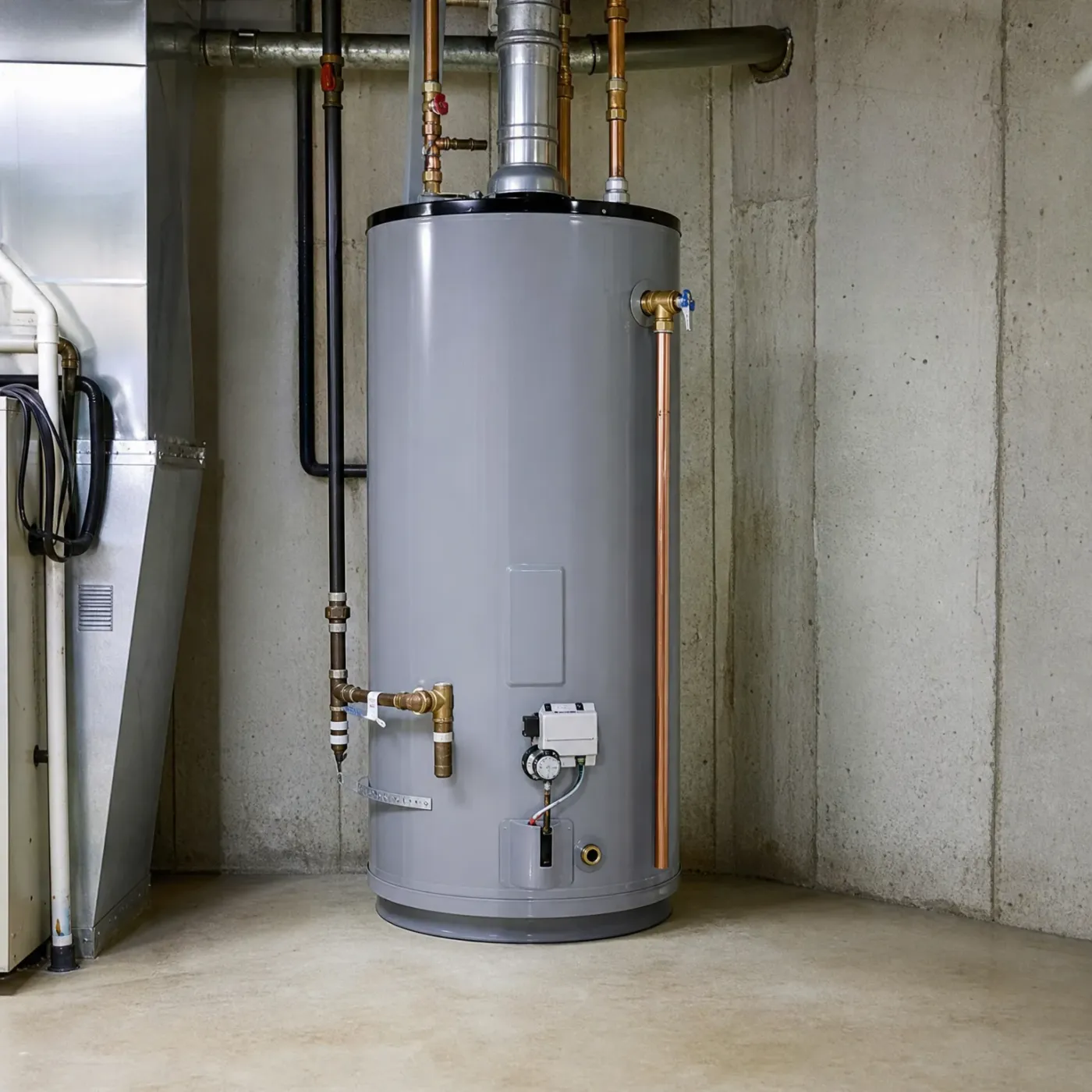
A large gray cylindrical gas water heater stands in a concrete-walled basement corner, connected to copper and black pipes and a metal flue, with ductwork at left.
A working water heater keeps that reaction under control, with the rod doing its job quietly out of sight.
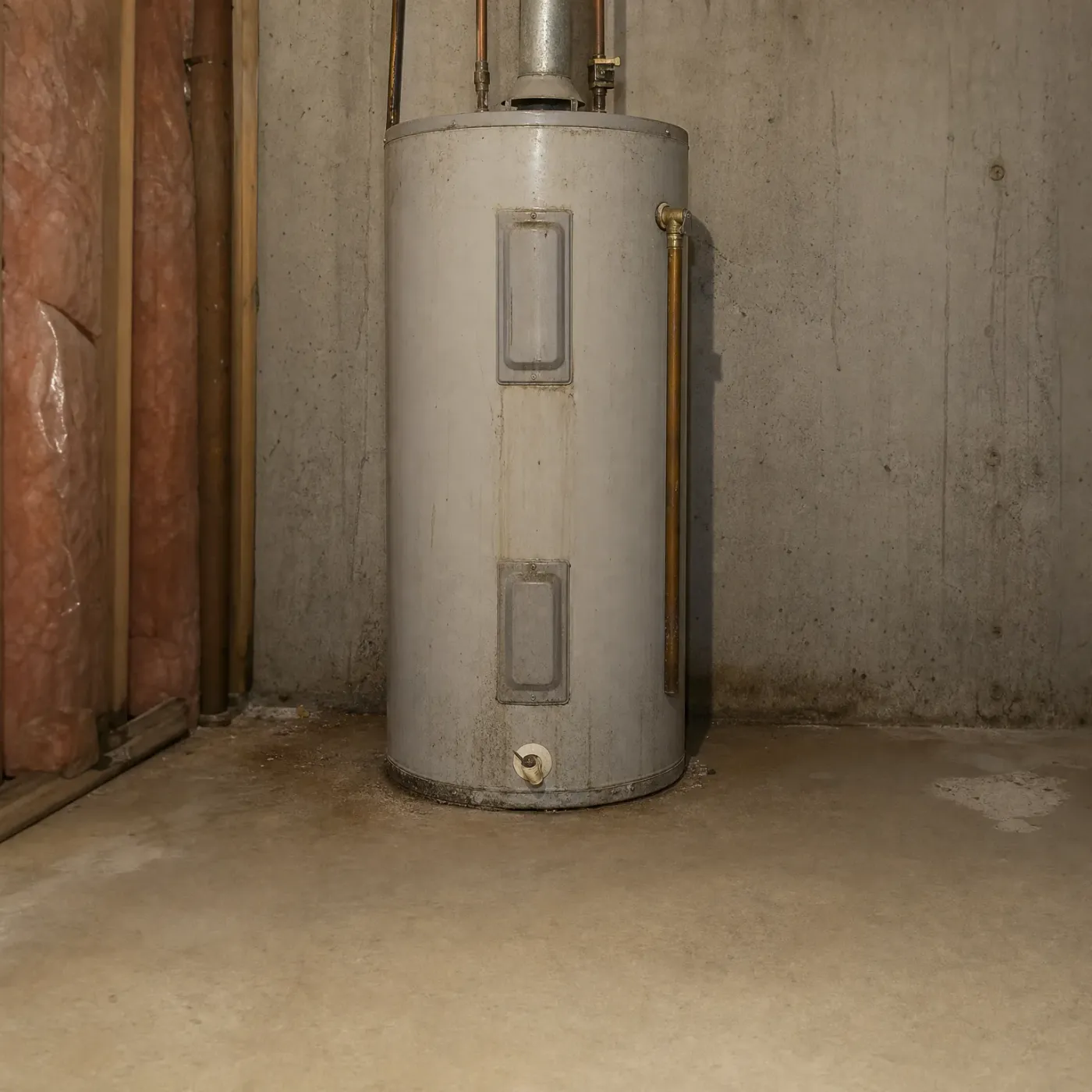
A gray cylindrical water heater with two access panels and copper piping stands in the corner of a concrete-walled basement next to exposed pink insulation.
Rust staining and an aging tank often mean the rod is spent, and the smell is the first sign something needs a look.
A bearded man in a blue and brown plaid flannel shirt stands indoors looking out a window at snow-covered trees, with a ceramic mug on the windowsill.
A man in a blue T-shirt sits on a light gray sofa, laughing while looking at an open laptop in the foreground, with a framed picture, lamp and potted plant behind him.

Swap the anode rod

A magnesium or aluminum rod can be replaced with a zinc or aluminum one that's less likely to feed the bacteria causing the smell, often without draining or replacing the tank itself.

Match me with a pro

Chlorinate and flush the tank

A contractor can disinfect the tank to kill off the bacteria, then flush it clean. This can clear the smell for a while, especially if the rod was replaced too.

Match me with a pro

41.3% of homes statewide heat with gas

Most houses in North Dakota run a gas water heater, so the tank itself isn't the problem. The smell traces back to the anode rod reacting with bacteria in the water, not the gas burner underneath it.

ACS 2020-2024 5-year B25040

A gray cylindrical water heater stands against a concrete basement wall, connected to copper pipes and a metal flue overhead, with a white discharge pipe running down its right side and exposed wood framing to the right.

Tank holding steady

This is what a water heater looks like when the rod is still doing its job. No rust at the base, no sign of strain on the fittings. The smell test comes back clean because the reaction inside is still under control.

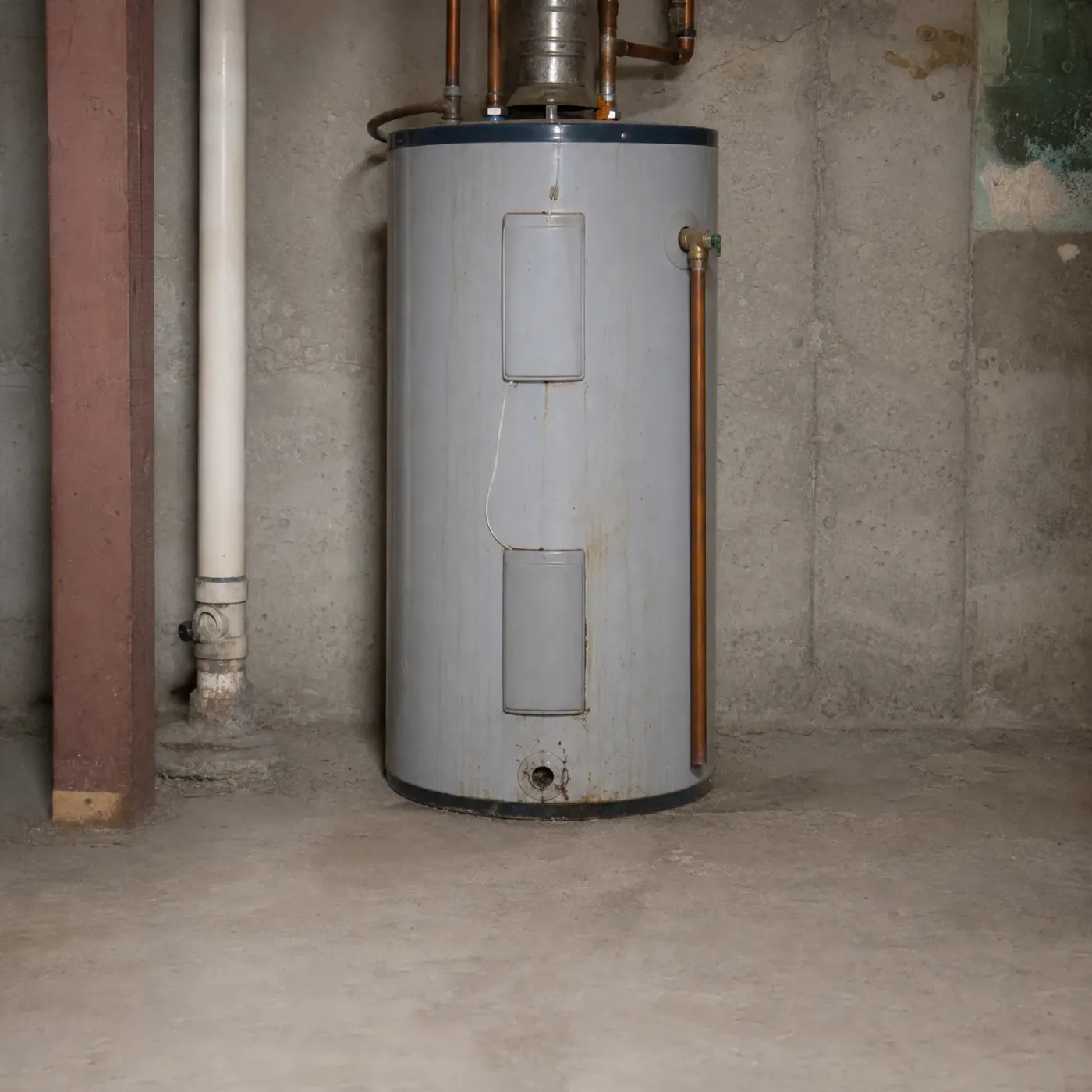
A gray cylindrical water heater with copper piping stands against a concrete basement wall beside a white vertical pipe and a wooden post.

Tank past due

Rust near the base and an aging tank usually line up with a rod that's worn down past the point of protecting anything. Once you see this, the smell is rarely far behind, and it won't clear up on its own.

A man in a dark blue shirt stands in an open front doorway of a stucco and wood-clad house, facing a blond woman seen from behind in the foreground on a stone walkway.

The smell has a cause, and it has a fix

The rotten egg smell comes from the anode rod reacting with bacteria in the water, not from the gas burner or the tank itself. That holds whether the water comes from a well or from the city line. A rod swap, a chlorine flush, or in some cases a new tank settles it, and the smell doesn't come back once the cause is handled.

What's left is figuring out which fix your water heater actually needs, and that depends on things about your setup that are hard to judge from the basement by yourself. A contractor who works on water heaters in North Dakota can look at the rod, the tank, and the water feeding it, and tell you which one of these is going on in your house. Getting matched with one means you explain the problem once, to someone who already knows what questions to ask.

Interior corner with a beige sofa holding a dark green and a light cushion and a textured throw, a potted small-leaved tree beside a white-framed window, and a dark shallow bowl on a wooden coffee table in the foreground.
A modern two-story house with dark siding and stone base at dusk, with lit soffit lights, a path of large rectangular pavers set in dark gravel, planting beds, a lawn, and an orange and blue sunset sky above distant trees and water.

Water Heater Repair

A water heater pro near you

Step 1 of 3: Equipment
  • A ceramic vase holding leafy green branches and a shallow wooden bowl sit on a wooden window ledge beside a sunlit window, with a cream upholstered chair and knit throw in the foreground.
    • Sunlit living room corner with a beige upholstered sofa, a round wooden side table holding a ceramic vase of olive branches, linen curtains at a window, a floor vent in the baseboard, and a woven jute rug on hardwood flooring.
      • Send the request today and stop worrying about who to call.
      • Send the request today and let a water heater pro reach out to you.
    • A wooden side table with a single drawer holds a shallow carved wood bowl and a white ceramic vase of green eucalyptus stems, beside a window and an upholstered chair draped with a cream knit throw.
      • Describe what your water heater is doing once, in one form.
      • Answer a few questions instead of calling shop after shop.
    • Corner of a house with horizontal siding, a white-framed window and stone veneer base, beside a covered entry with wooden steps, a potted plant, mulched beds of green shrubs and a flagstone path.
      • Your request goes to one pro, not a list of companies.
      • The pro who reaches out is licensed in North Dakota.