
Profile view of a bearded man wearing a dark green baseball cap and a dark gray T-shirt against a plain light background.

Why your water heater is leaking in North Dakota

Step 1 of 3: Equipment

A leaking water heater almost always means a crack in the tank or a fitting that's failed, and once the tank itself is cracked, the leak doesn't stop or fix itself. Water heaters hold several gallons under constant pressure and heat, and over the years that cycle wears on the metal and the seams until something gives way, usually at the bottom of the tank or around the drain valve or the fittings on top. Sediment buildup speeds this along, especially with the harder water common in North Dakota, since it collects at the bottom of the tank and eats at the lining from the inside. Sometimes what looks like a leak is actually condensation or a loose fitting that can be tightened, but if water is pooling under the tank itself, the tank is failing. A failing tank needs replacement, not a patch. Left alone, it will keep leaking, and the water can damage flooring, drywall, or whatever's stored nearby.

A gray-haired man in a dark sweater sits on a light gray sofa in a living room, looking toward a sunlit window with trees outside.
A gray-haired man in a dark blue sweater sits on a light gray sofa in a sunlit living room, looking off to the side, with a potted plant, shelving unit, and large glass doors behind him.
A bearded man with graying hair in a dark green sweater sits on a sofa in a living room, looking off to the side, with a sliding glass door and a dim kitchen doorway behind him.
A gray-haired man in a dark knit sweater sits on a light gray sofa in a living room, looking toward a sunlit window, with houseplants, a lamp, and framed art in the background.

Finding a leak starts with finding where the water is actually coming from. The cold inlet, the hot outlet, and the drain valve near the bottom are the usual spots, and a fitting in any of those places can often be tightened or swapped out without disturbing the tank at all. That's the easy case. The harder case is water coming from the tank wall itself, the side or the bottom, which means the steel has rusted through from the inside. There's no sealant that fixes that, because the tank is failing, not just leaking. The relief valve on top can also drip on its own, and when it does, it's usually telling you the pressure inside the tank is higher than it should be, not that the valve itself is bad. Sediment sitting at the bottom plays a part too, holding heat against the steel and speeding up the rust that eventually breaks through. And not every puddle under the tank means the tank is the problem. Condensation or a nearby line can leave the same kind of water on the floor.

Where the Leak Is Coming From

  • Leaks around fittings usually come from the cold water inlet, the hot water outlet, or the drain valve near the bottom of the tank.
  • A loose or worn fitting can be tightened or replaced without touching the tank, so that kind of leak is often a quick repair.
  • A leak coming from the side or bottom of the tank itself means the steel has rusted through, and no sealant or patch stops that for good.
  • The temperature and pressure relief valve can leak on its own, usually a sign the tank pressure is building higher than it should.
  • Sediment that settles at the bottom of the tank traps heat against the steel and speeds up the rust that eventually cracks it.
  • Water pooling under the tank doesn't always mean the tank is bad, since condensation or a nearby supply line can look the same at first.
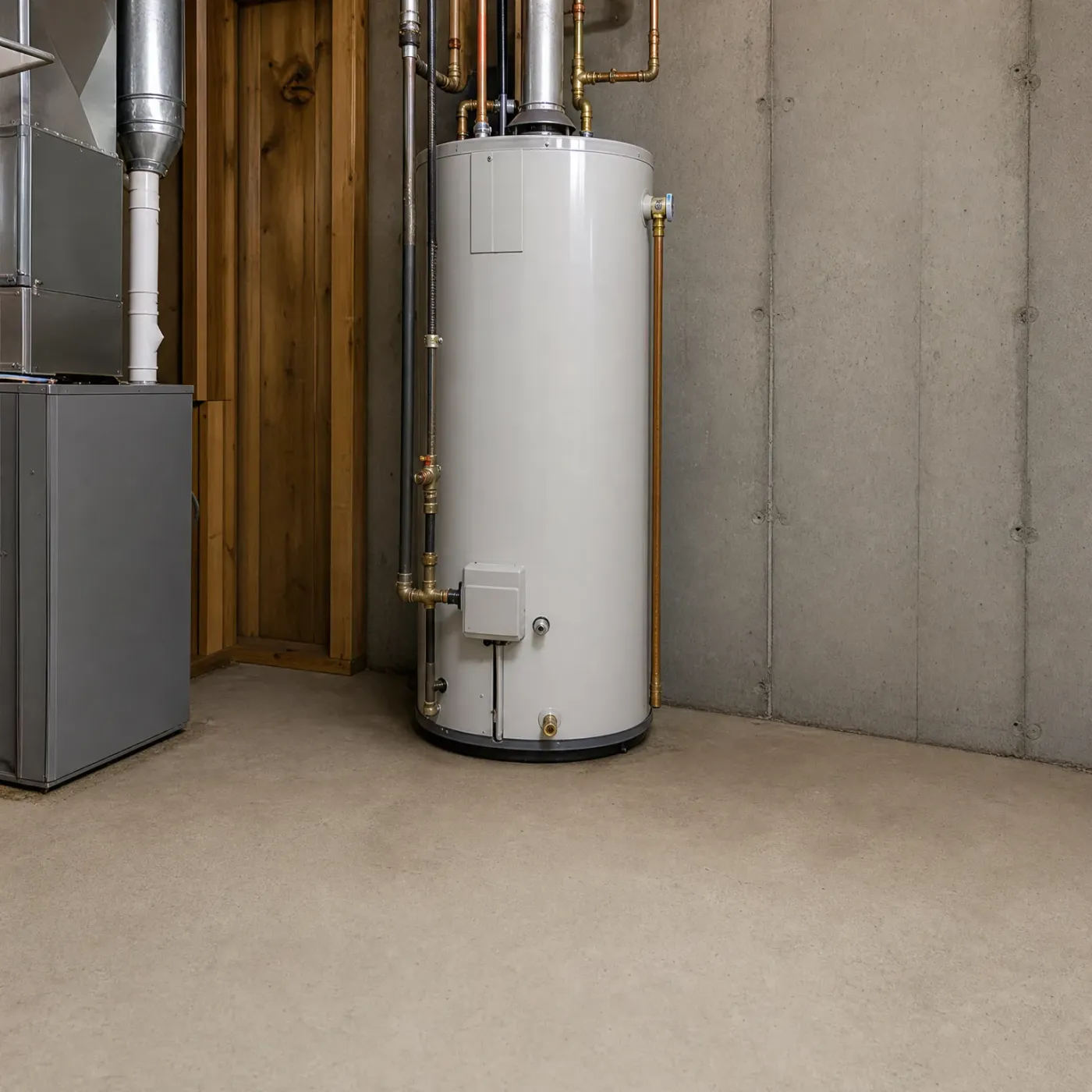
A white cylindrical gas water heater with copper and steel pipes stands against a concrete basement wall beside a gray furnace and wood-paneled wall.
Here the tank is sound, the fittings are tight, and the gas line and vent run up clean to the ceiling the way they should.
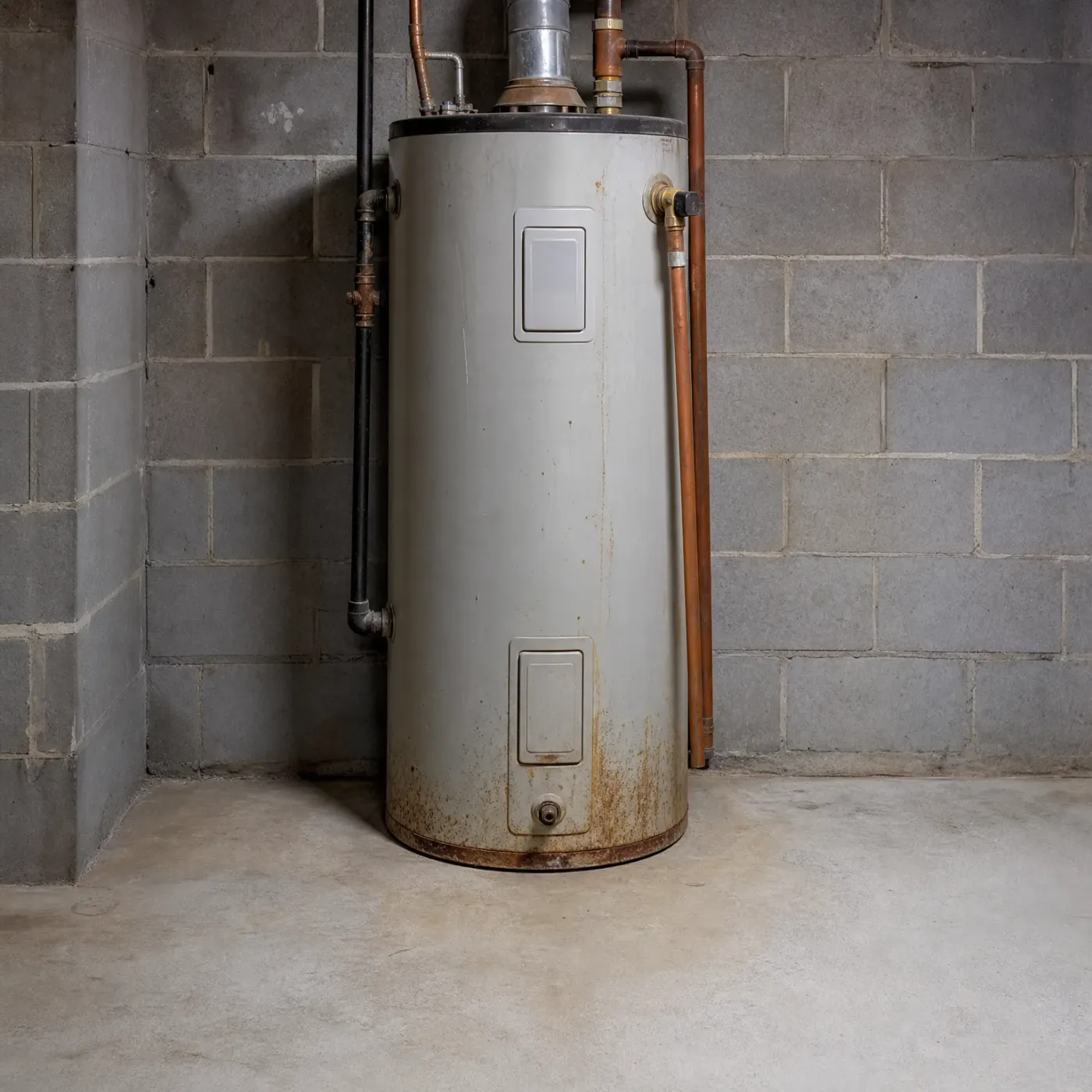
A rust-streaked cylindrical water heater with copper and black metal pipes stands in a concrete-block basement corner on a bare concrete floor.
Rust has worked through the base and along the seams of this one, and a tank in that shape isn't getting fixed, it needs replacing.
  1. Sediment settles at the bottom of the tank and traps heat underneath it.

  2. The steel wall under that sediment overheats and weakens over time.

  3. A pinhole opens in the tank wall or along a seam.

  4. Water seeps out slowly at first, then runs steadily as the hole widens.

What's that puddle under your water heater?

You probably noticed a damp patch on the floor near the tank, or water pooling in the drain pan underneath it. Sometimes it shows up first as a musty smell in the utility closet, or rust-colored water instead of clear. You might hear a faint hiss or drip even when no one's running hot water. If the leak is coming from the tank itself, it won't seal up on its own, and left alone it can soak subfloor, warp cabinets nearby, or short out anything electrical sitting close to it. A gas water heater leaking near the burner or vent is worth checking on sooner rather than later, since that affects how safely it vents.

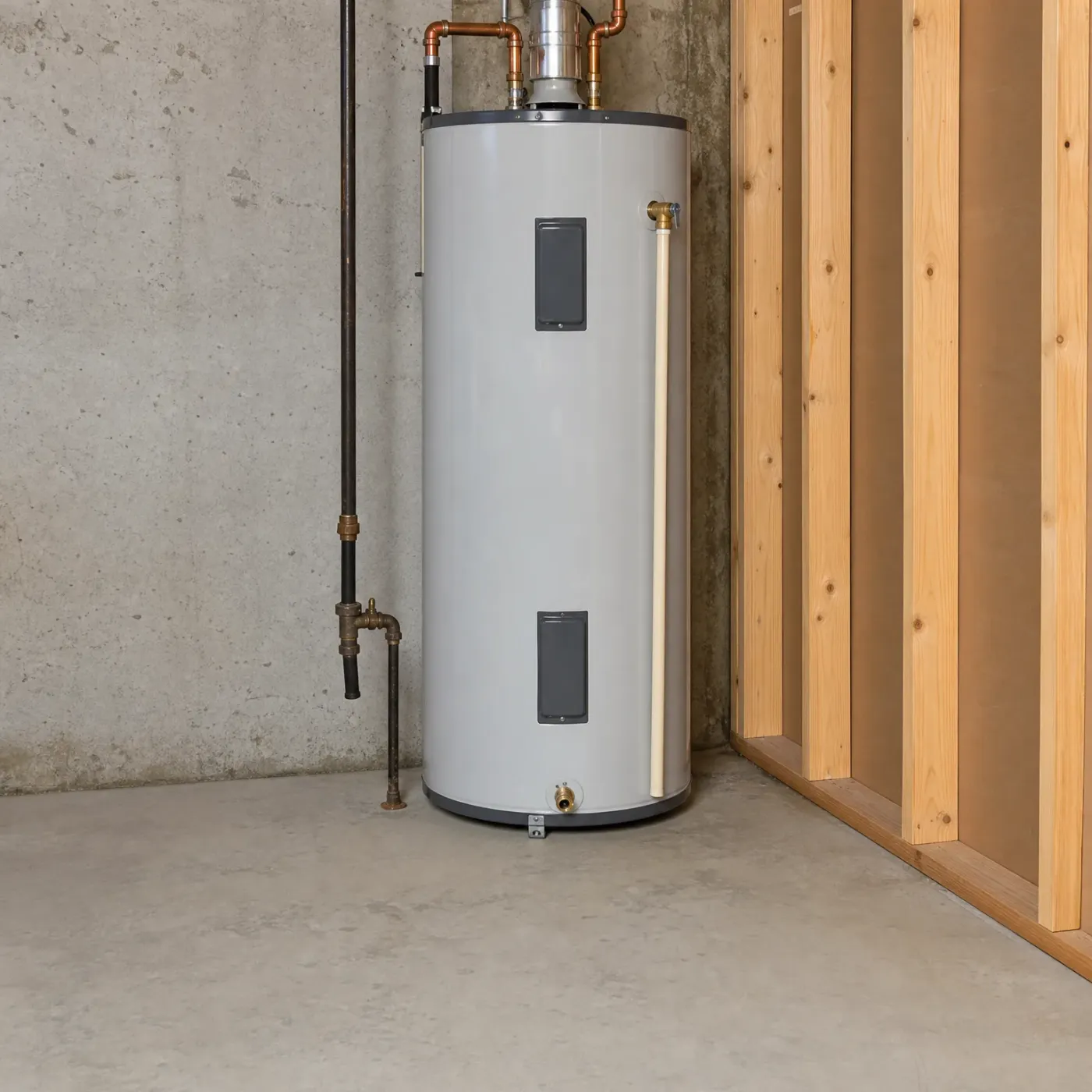
A light gray cylindrical water heater with two access panels stands on a concrete floor against a concrete wall, with copper and black pipes beside it and an unfinished wood stud wall to the right.

Working as it should

No rust on the tank, no water at the base. The relief valve and its discharge tube are dry, the drain valve at the bottom is tight, and the supply pipes at the top show no green or white buildup where they connect. A tank in this shape just needs its fittings checked now and then.
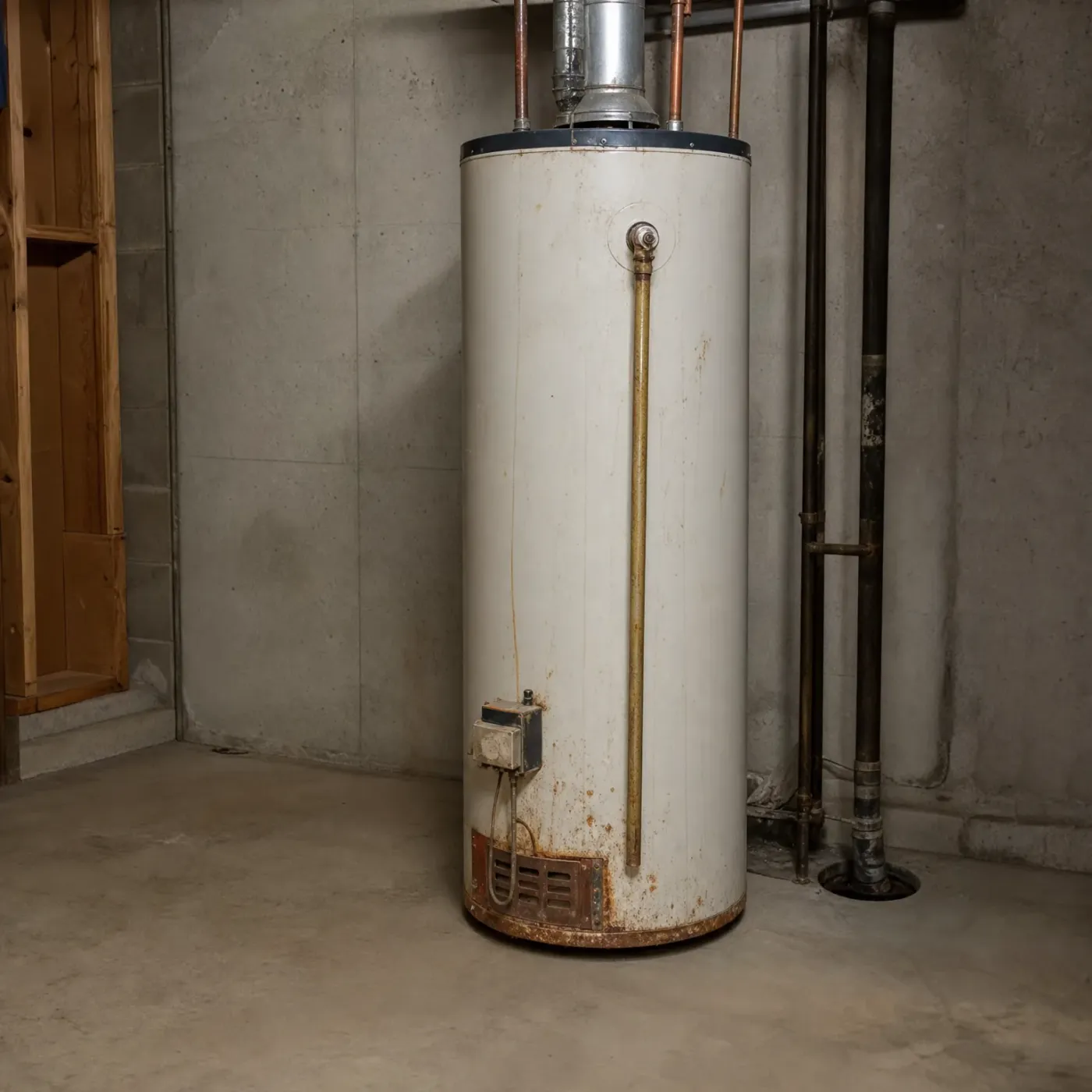

An older white gas water heater with rust staining and an exposed vertical pipe stands against a concrete block basement wall, with a metal flue above and black vertical pipes to the right.

Rusted through

The lower section and base have gone orange with rust, and that kind of corrosion doesn't stay on the surface. It means the steel underneath has thinned enough to weaken, and a tank that's rusted through the base isn't a fitting repair. A contractor looking at this one is sizing up a replacement, not a patch.

A middle-aged woman with shoulder-length dark hair, wearing a gray cardigan over a cream top, sits in an upholstered armchair and looks toward a sunlit window, with a shelf holding framed pictures and a plant behind her.
A woman with her hair in a bun holds a sleeping young child against her chest, both wrapped in a textured beige knit blanket on a sofa in a dimly lit room with a lamp, framed picture, and bookshelf behind them.
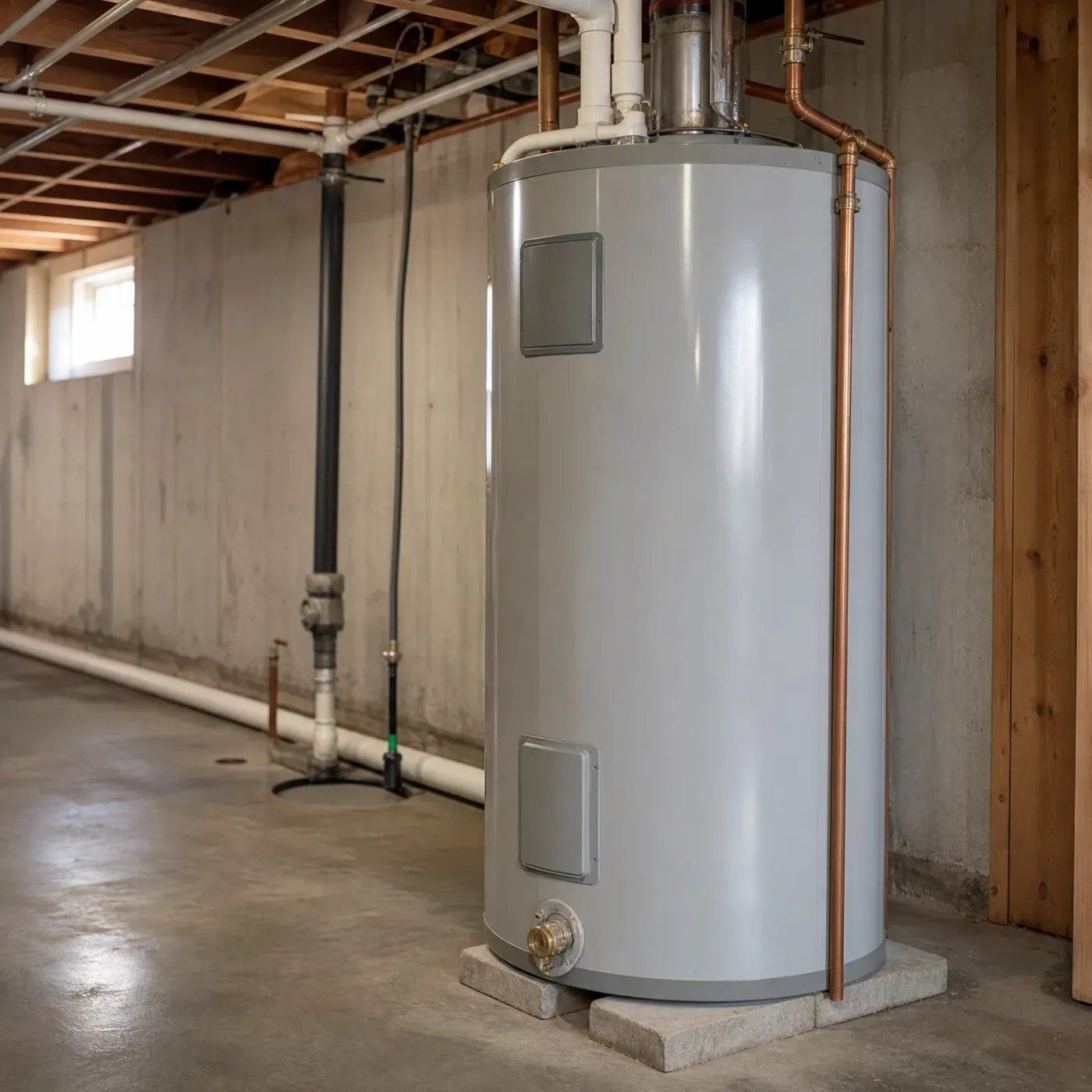
A large white cylindrical water heater on concrete blocks in a basement with poured concrete walls, exposed joists, copper and PVC piping, and a small window.

No phone calls to make

Your request stays with one local pro.

Describe your water heater job once, to one pro.

Fill out one form

You only hire the pro if you want to.

A closed laptop and a cream mug of coffee on a coaster sit on a dark wooden table, with a potted plant at left and a kitchen counter, tiled backsplash and shelf of ceramics in the background.

What a leak like this means for your house

A water heater is usually tucked in a basement or a utility closet, and that's exactly where a slow leak does the most damage before anyone notices. Water finds the drywall, the subfloor, the boxes stored nearby. In a North Dakota winter, a tank that fails outright can leave you without hot water while temperatures outside are well below freezing, which turns a repair into something urgent fast.

Finding someone to deal with it is its own chore. You'd normally be calling around, explaining the same leak to three different companies, waiting on quotes, trying to judge who actually knows tanks versus who just lists it on their website. This connects you with one licensed plumber local to North Dakota, someone who works on water heaters all year and knows the difference between a fitting worth tightening and a tank that's done. No juggling calls, no repeating yourself.

Interior corner of a room with a window and sheer curtain at left, a gray upholstered sofa with a cushion at right, and a round wooden table holding stacked books and a round vase with an olive branch.
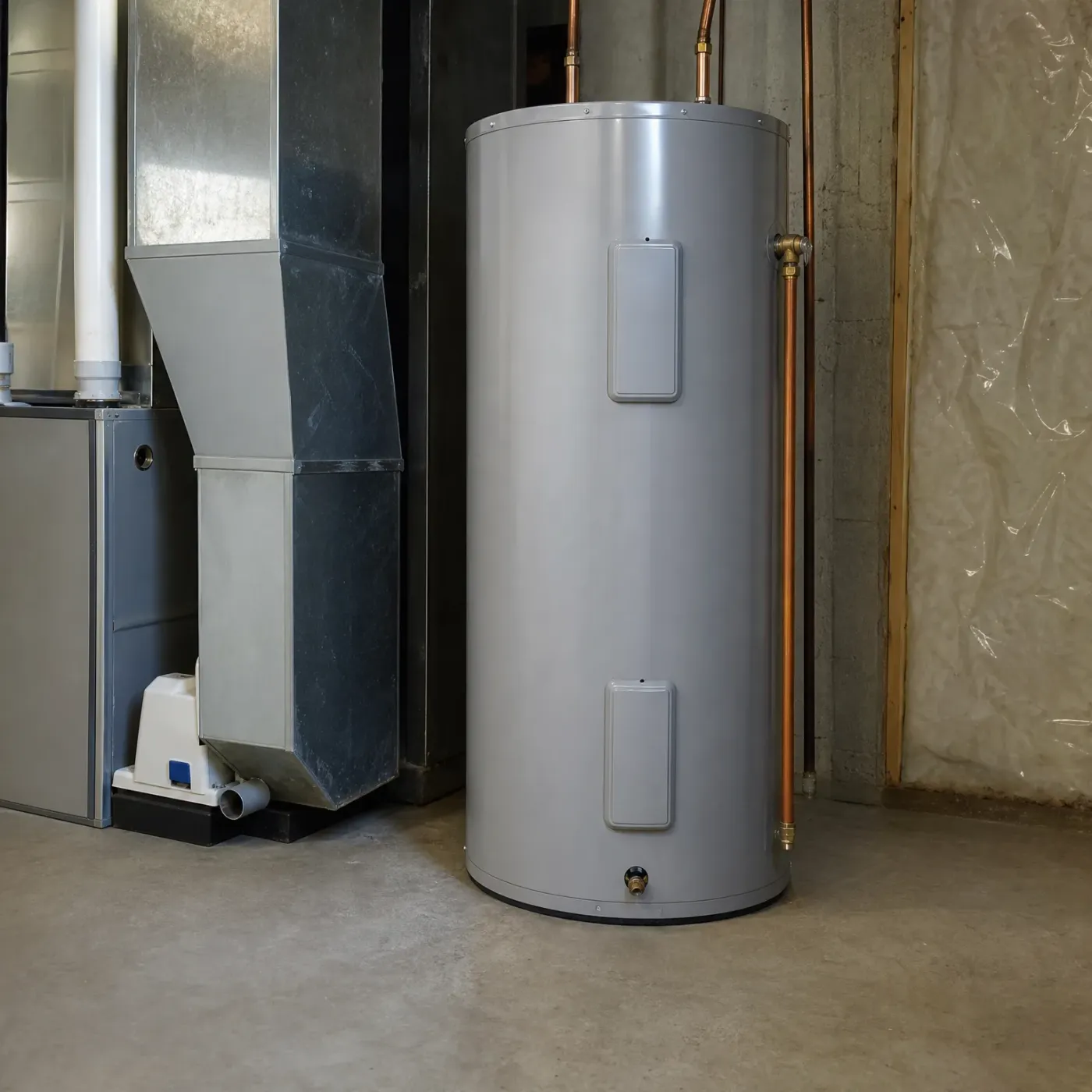
A gray cylindrical electric water heater with two access panels stands on a concrete floor in a basement, with copper pipes above and behind it, sheet-metal ductwork and a furnace to the left, and a plastic-covered insulated wall to the right.

No rust, no sign of trouble

This electric water heater sits on a dry concrete floor, copper lines running clean into brass fittings. No streaks down the side, no pooling at the base. A tank holding up like this just needs the fittings checked now and then.
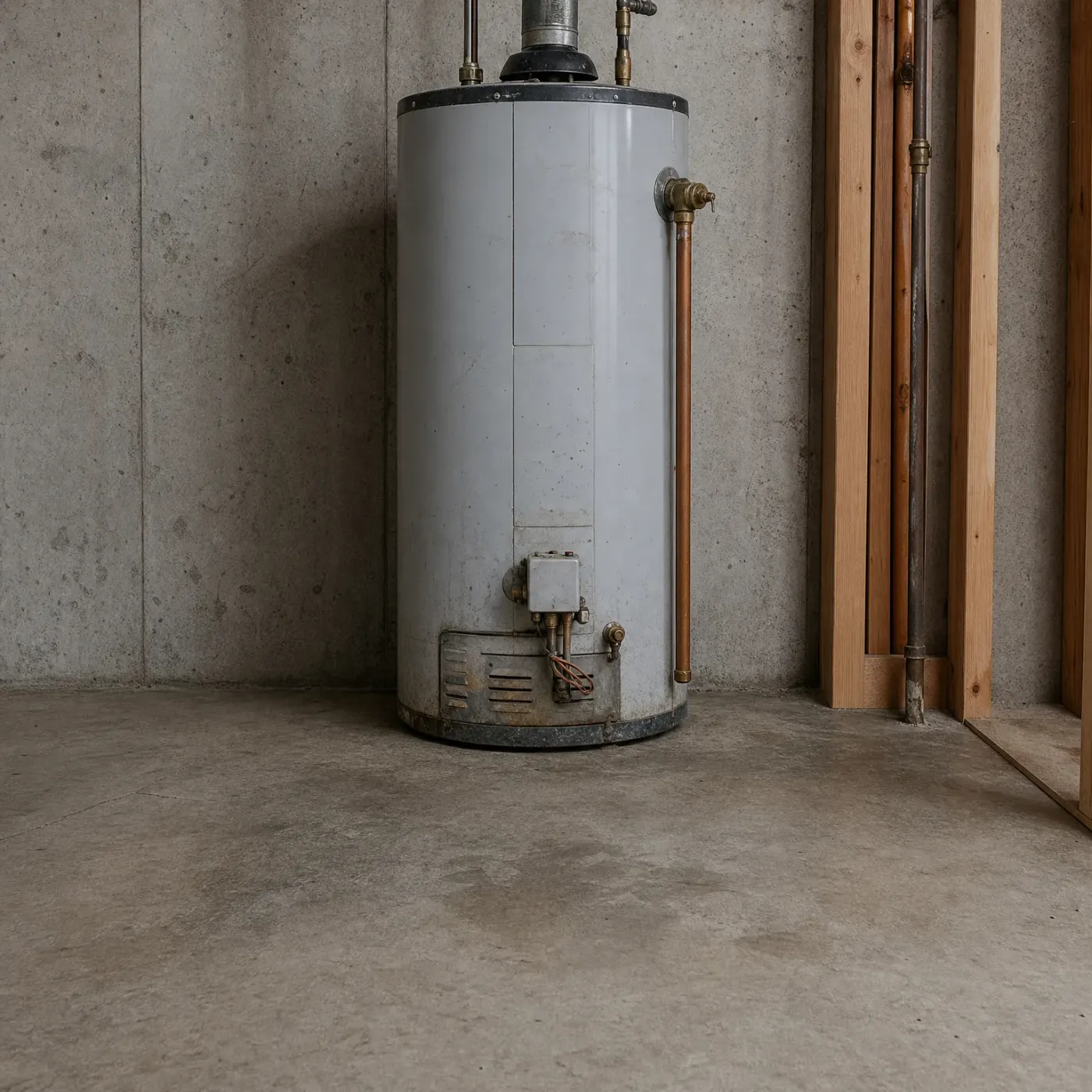
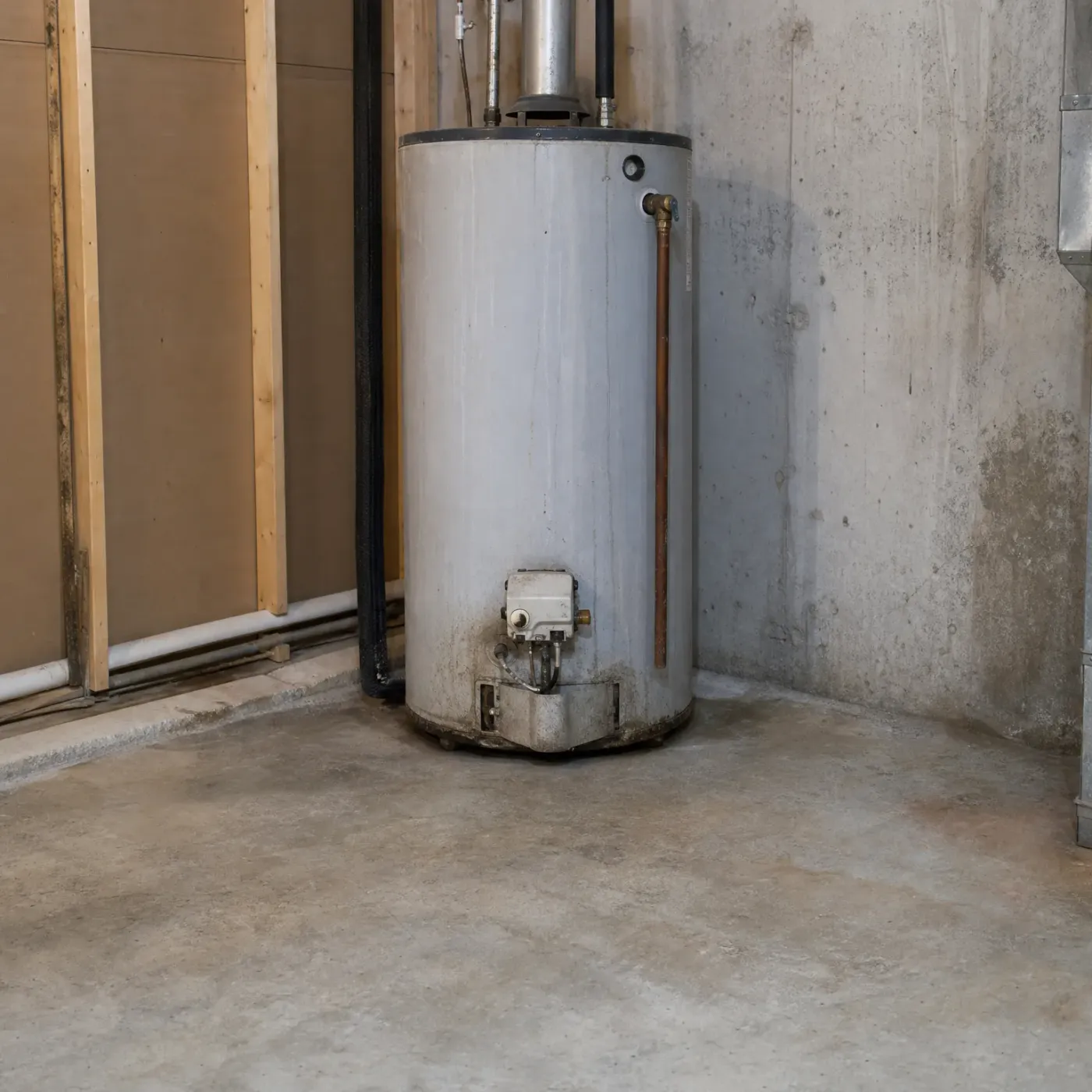
An older gas water heater with a copper pipe and flue stands on a concrete floor in a basement corner between a bare concrete wall and an unfinished wood-framed wall.

Age and rust catching up with it

This one's been in the corner a long time. Rust has built up around the base and the burner assembly underneath, and grime has settled in where the flue meets the top. A gas tank in this shape is closer to replacement than repair.

41.3% of homes statewide heat with gas

Most houses in North Dakota run their water heater off the same gas line as the furnace. If yours does, a leak at the tank is a plumbing problem, not a gas problem, but a licensed contractor should still check the gas connection and vent before anything gets replaced.

ACS 2020-2024 5-year B25040

An older gray gas water heater with copper and brass piping stands on a concrete floor against a concrete wall, beside exposed wooden wall framing and vertical pipes.
Before you get your water heater repair
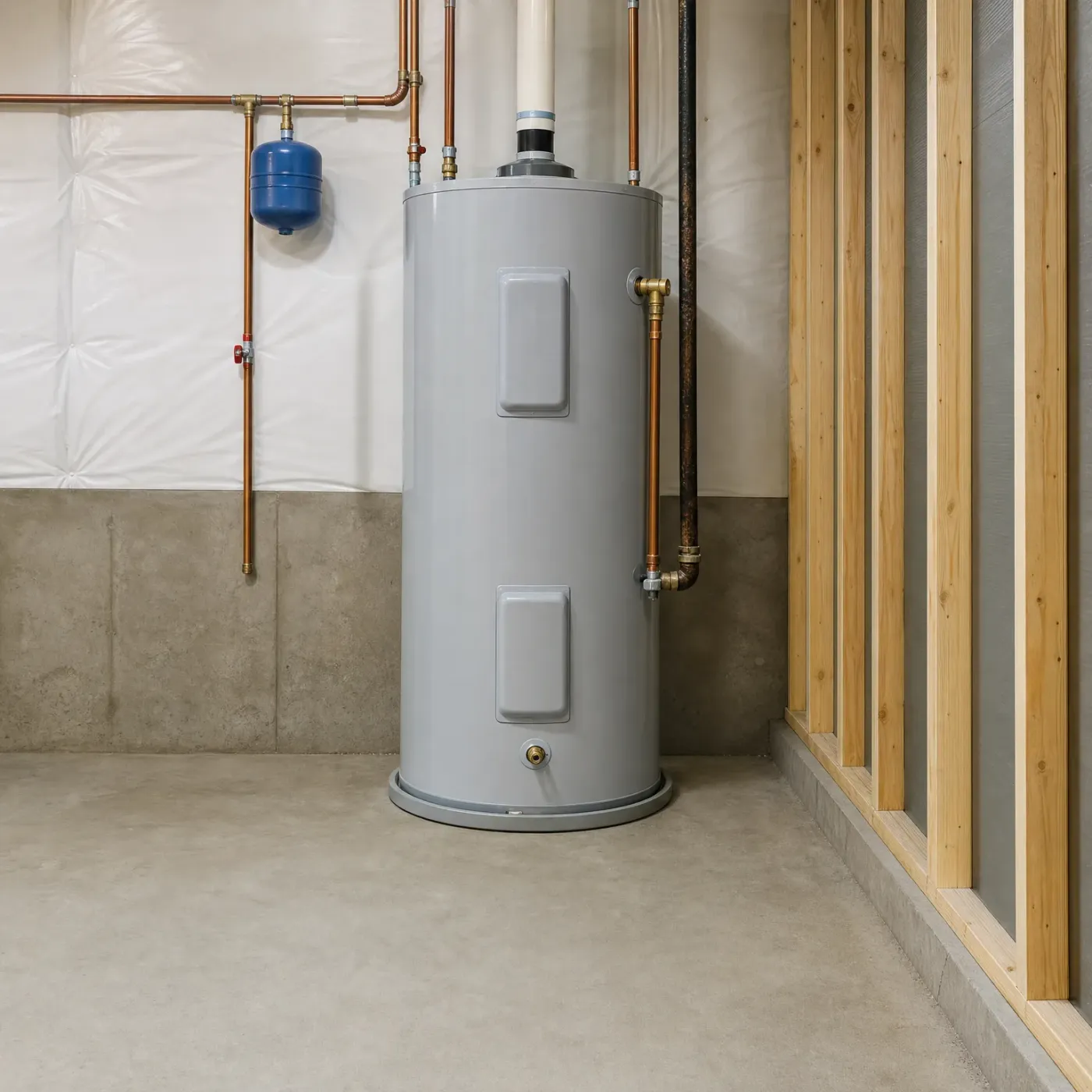
A gray cylindrical water heater stands on a concrete basement floor against a plastic-sheeted insulated wall, with copper supply pipes, a blue expansion tank, a black vertical pipe, and exposed wood wall framing at right.
After you get your water heater repair

What to do about the leak

  • A tank that's cracked or corroded through needs replacing, not patching, and a loose fitting usually just needs tightening or swapping out.
  • Sediment buildup at the bottom of the tank is what wears a hole through the steel over years, not something that happens overnight.
  • Checking the gas line and vent connection matters even when the leak itself is a plumbing issue, not a gas one.
  • A contractor who works on water heaters all over North Dakota every week has seen this exact failure before and knows what to check first.
  • You get matched with one licensed local contractor, not a handful of companies competing for your callback.
  • Catching the leak now, before it reaches the subfloor or the walls nearby, is the difference between a repair and a bigger job.

A leaking water heater comes down to one of two things. Either a fitting worked loose and needs tightening or swapping out, or the tank itself has corroded through and needs replacing. There's no in between. Sediment sitting at the bottom of the tank is usually behind the second kind, and that damage takes years to build, not days, which is why a tank that was fine last winter can start leaking this one. Either way, the gas line and vent connection near the tank are worth a check too, even though the leak itself is almost always a plumbing problem and not a gas one.

Finding someone to look at it is its own chore, normally. Calling around, explaining the same leak to three different companies, waiting on quotes, trying to tell which one actually knows water heaters and which one is guessing. That part goes away here. You get matched with one licensed contractor local to North Dakota, someone who works on tanks like yours every week and has already seen whatever this leak turns out to be. No pile of callbacks to sort through, just the one contractor who knows what to check first.

A slow leak left alone reaches the subfloor eventually, or the drywall behind it. Caught now, this is a repair. Caught later, it's a bigger one.

Kitchen corner with cream upper cabinets, oak lower cabinets, white marble-look countertop, beige tile backsplash, a ceramic vase of greenery, a wooden cutting board and bowl, and a black-framed window at right.
Interior corner of a room with a white-framed window and wide sill, beige walls with panel molding, a wooden cabinet holding a ceramic vase with a green leafy plant, and blurred shrubs and trees outside.
A wood-framed armchair with beige cushions and a woven lumbar pillow sits in a corner beside a large window overlooking green trees, with a tall ceramic vase holding leafy branches on the left and plaster walls and wood flooring.
Interior corner with a white-framed window above a sill, beige walls with baseboard molding, a greige shaker-style cabinet with brass knobs and a potted plant on top, light wood flooring and a woven jute rug.
A dark-framed six-pane window with white trim and sill set in gray horizontal lap siding, with hydrangea shrubs below and a white column and shingled roof section at left.

One form, no calling around

Your request goes to one pro, not a list of companies.

Skip the search

Asking costs nothing, and the choice to hire stays yours.