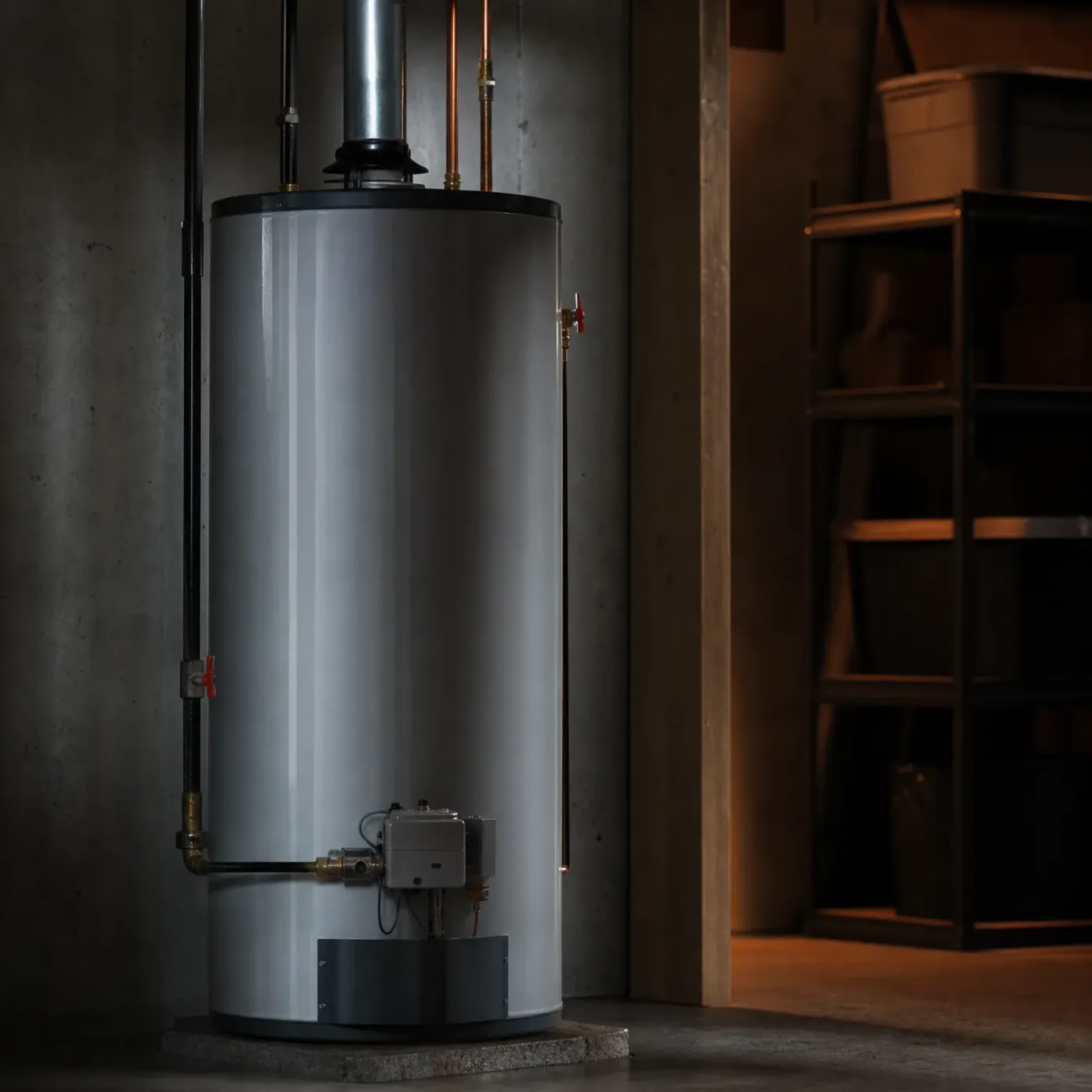
A large gray cylindrical gas water heater with copper and black pipes and a flue stack, standing on a concrete pad against a concrete wall, with a dark metal shelving unit in the background.

Skip the search

Why your water heater is slow to recover in North Dakota

A slow-to-recover water heater usually comes down to one part doing less than it should, whether that's a gas burner not putting out the heat it used to or a heating element on its way out. This page gets into what to check and what it means for your tank. Skip the search for a plumber in North Dakota, the calls, and repeating the same story twice. One licensed local who works on these tanks every season takes it from here.

Describe it once

A gas water heater that takes longer to bring a tank back to temperature usually has a burner that isn't putting out full heat anymore, often from a clogged orifice or a dirty burner assembly that can't draw air the way it should. Sediment sitting on the bottom of the tank does the same thing, since it sits between the burner and the water and soaks up heat that should be going into your shower. On an electric unit, the lower heating element is the usual cause, worn down enough that it still works but slower than it used to. None of this fixes itself. A tank that's slower every month than it was last winter is telling you a part has worn down, and left alone it keeps costing you hot water until someone who works on these units regularly looks at the burner, the element or the tank itself.

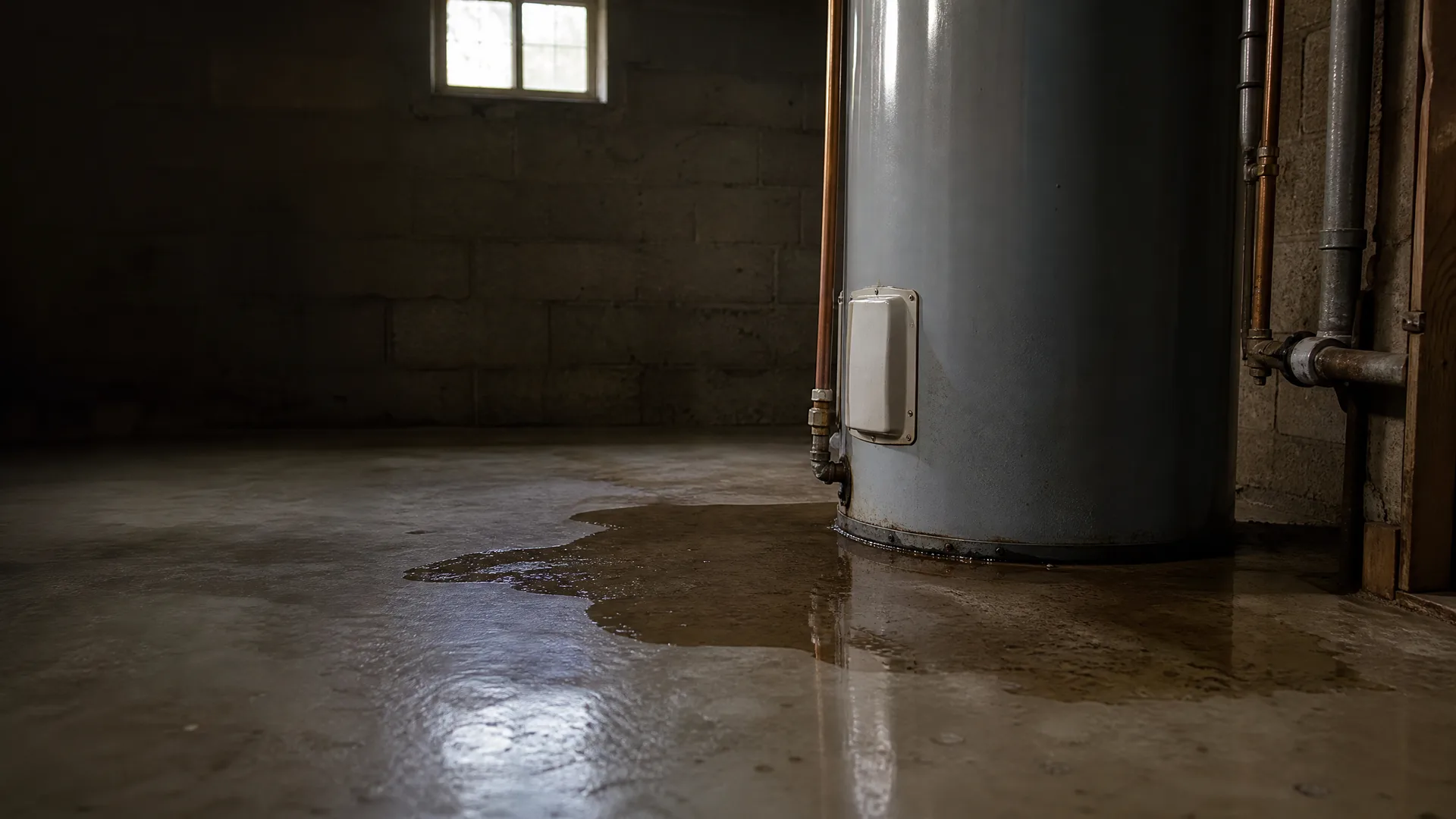
A gray cylindrical water heater stands in a dim basement with concrete block walls, copper and metal pipes along the wall, and a pool of water spreading across the concrete floor.

It's a Saturday morning in February, the kind where the ground outside has been frozen for months and the basement is the only place you've been avoiding. You go down to switch a load of laundry and your sock is wet before you notice why. A pool of water has spread out from the base of the tank, catching the light from the small window well. You crouch down and touch the floor near the burner access panel, and it's warm there, dry a few feet off, wet closest to the tank. The washer keeps running upstairs like nothing happened.

How long should it take my water heater to heat back up?

It's a Saturday morning in February, the kind where the ground outside has been frozen for months and the basement is the only place you've been avoiding. You go down to switch a load of laundry and your sock is wet before you notice why. A pool of water has spread from the base of the tank, and the floor around it is cold to the touch.

About an hour for a full tank, start to finish

A gas water heater with a healthy burner brings a 40 or 50 gallon tank back up to temperature in roughly 30 to 40 minutes once it kicks on, and most households don't drain the whole tank at once, so the gap between showers closing feels shorter than that. If you're waiting an hour or more and still getting lukewarm water, or the burner is cycling on and off without ever catching up, something downstream of the gas valve isn't doing its job. That's worth having a contractor look at directly rather than guessing, since a burner running weak now usually means it keeps getting weaker.

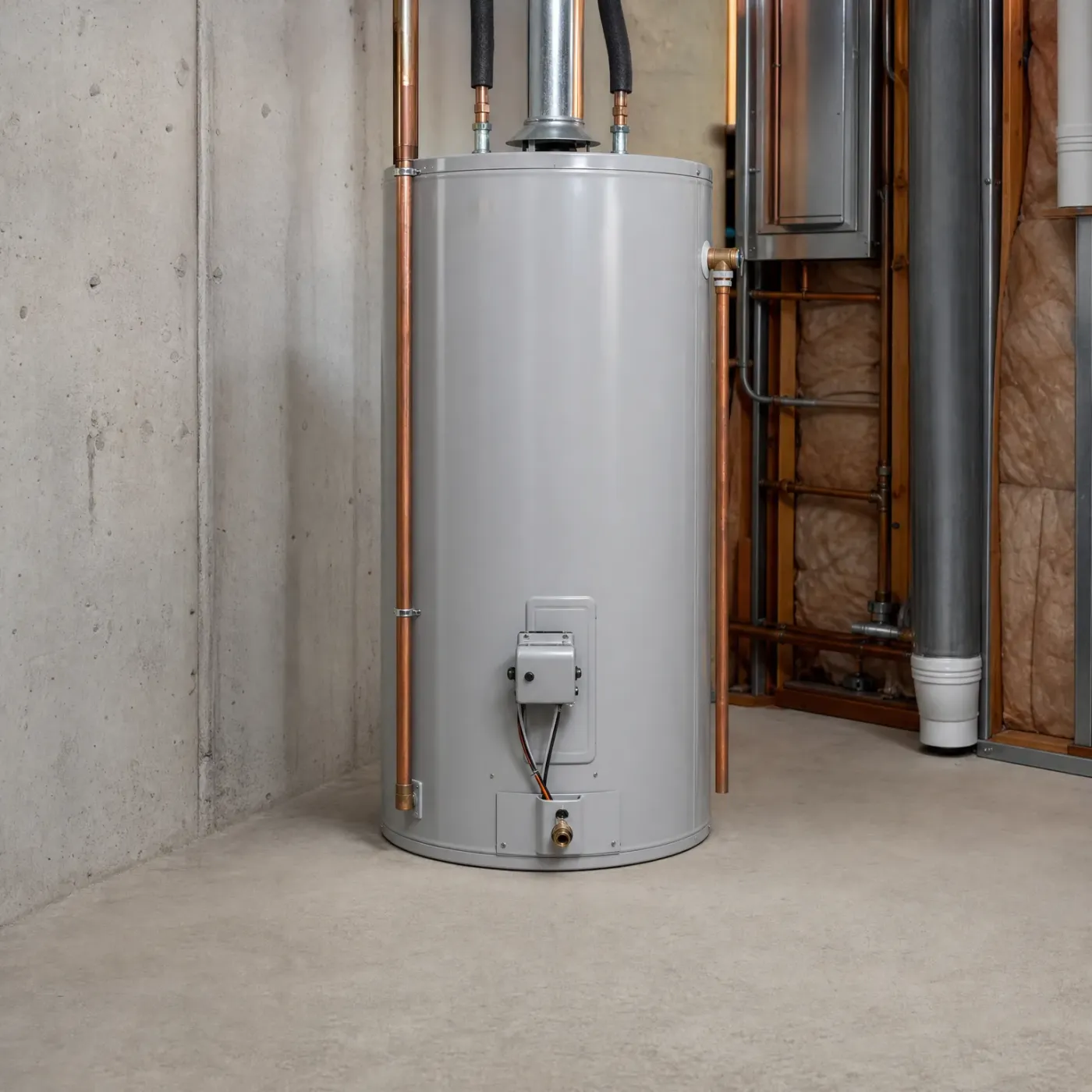
A gray cylindrical water heater stands in a basement corner against a concrete wall, with copper pipes, insulated flex lines, a metal flue, and insulated wall framing with ductwork to the right.

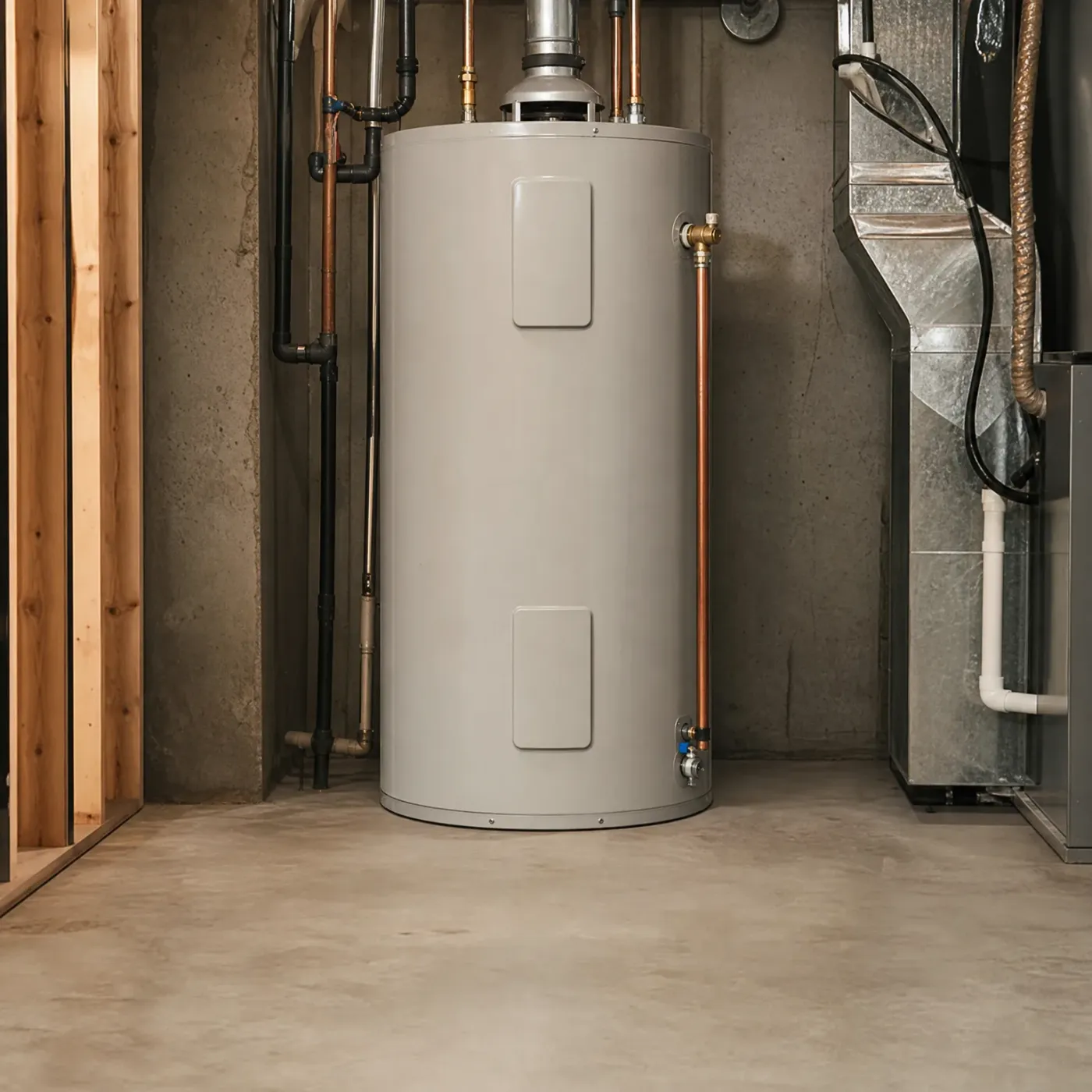
Working the way it should

A gas water heater like this one should bring a full tank back up to temperature at a steady pace, burner firing clean and the flue drawing it off without trouble. The copper lines run warm within reason after a draw, and the burner cycles off once the thermostat is satisfied.
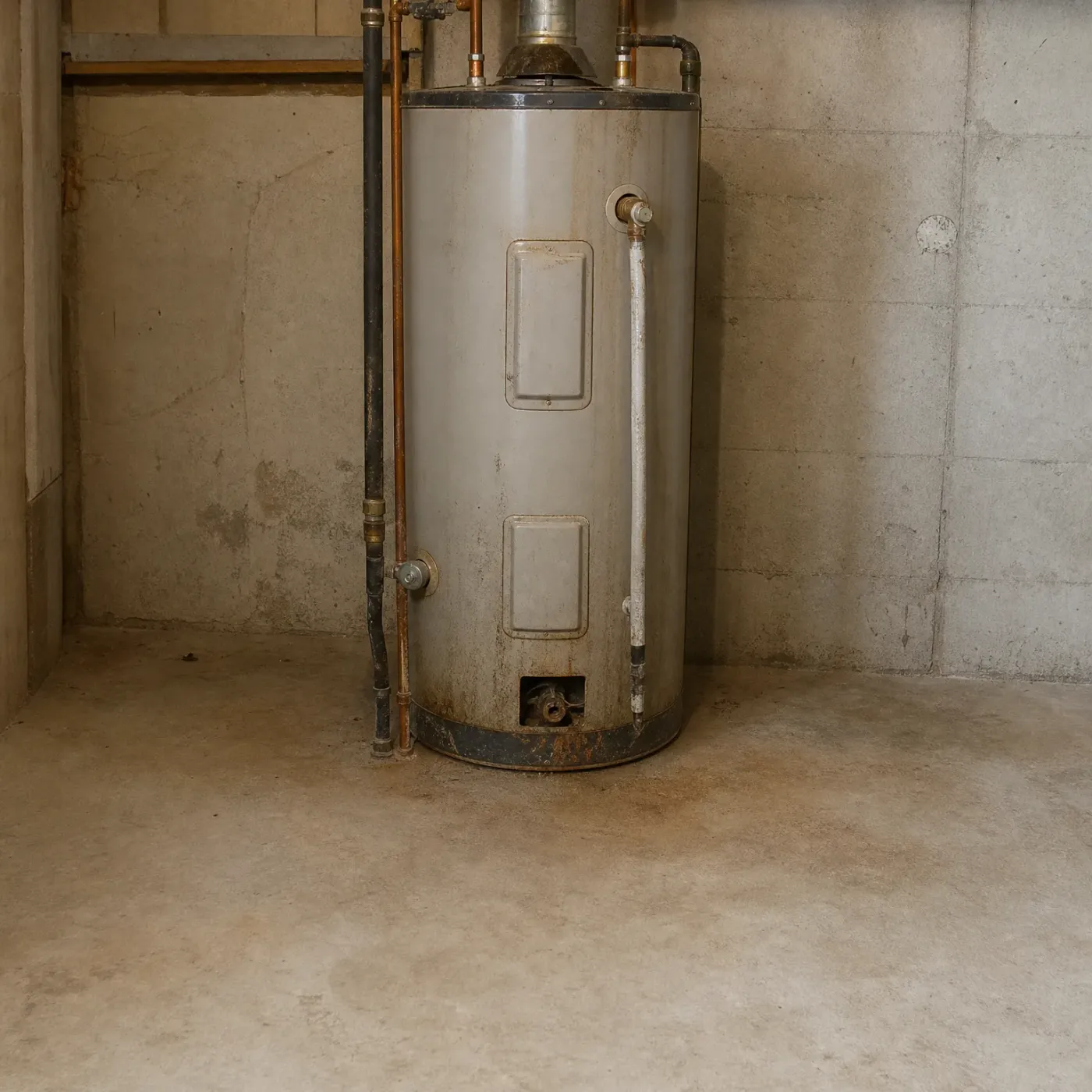

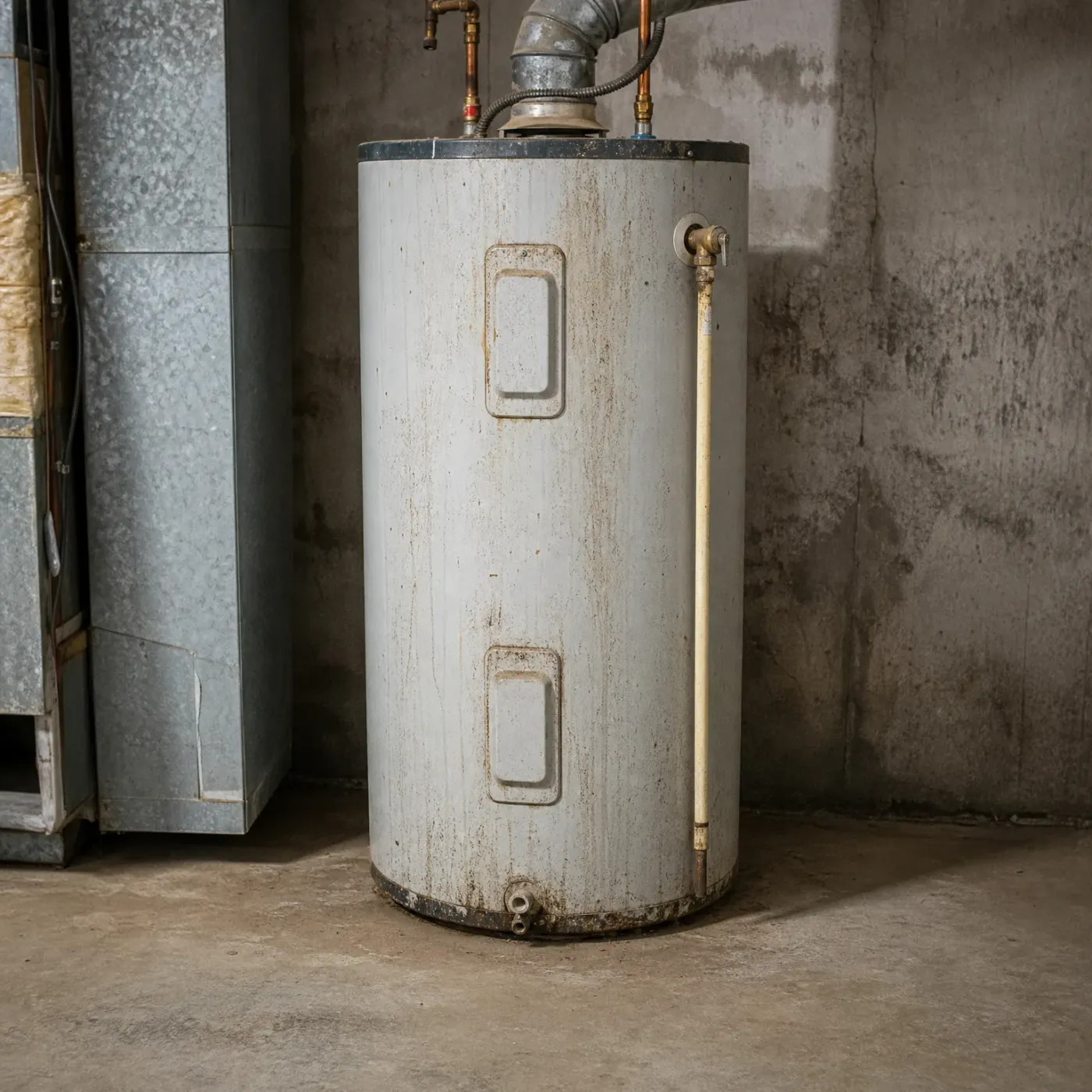
A rusting gas water heater with copper and steel pipes stands against a concrete block wall on a bare concrete floor.

Rust at the base, slow to recover

Corrosion like this at the base often shows up alongside a slower recovery, since a tank eating through from the inside isn't holding heat or transferring it the way it used to. An electric unit with a failing element can run longer and longer each cycle before it ever gets water hot.

What are you noticing with your hot water?

You run the shower after someone else and it turns cool faster than it used to. Dishes in the sink need a second kettle. The tank seems to be working, the burner lights, you hear it running, but the water coming out doesn't match. Some households notice the recovery getting longer over a few months rather than all at once. If the tank is also ticking or rumbling while it heats, or taking noticeably longer after every draw, that's sediment or a burner losing efficiency, not just a fluke morning. Left alone, a burner straining to heat a full tank burns more gas to do less work, and a tank working harder than it should wears out its own parts faster.

A gray-haired man in a dark long-sleeve shirt sits on a gray sofa in a living room, looking toward a sunlit window with sheer curtains.
A gray-haired man in a dark green sweatshirt sits on a sofa in a living room, looking toward a bright window, with a houseplant, lamp, fireplace and framed art behind him.
A gray-haired bearded man in a dark green collared sweater sits on a sofa in a living room with a window, houseplant, floor lamp and bookshelves, looking off to the side.
A gray-haired man in a dark green sweater sits on a sofa in a sunlit living room, looking off to the side, with a framed landscape painting, dining table and shelving behind him.

Explain it one time

Only one pro gets your request, so you hear from one company.

No charge to send it. You decide if you hire them.

Sediment acts like insulation

A gas water heater heats the tank from a burner underneath it, and that heat has to pass through the steel bottom to reach the water. Sediment settles right on that surface, and it doesn't conduct heat the way water does. Even a thin layer slows the transfer enough that the burner runs longer to do the same job. Groundwater here carries enough minerals that this buildup happens in most tanks over time, not just old ones. Once the layer is thick, the steel underneath it can run hotter than it should, which is part of why neglected tanks develop leaks at the bottom seam.

A thermocouple that's failing slowly

On older gas water heaters with a standing pilot, the thermocouple is what tells the gas valve the pilot is lit and safe to keep the main burner supplied. When it starts to go, it can still hold the pilot but react slower than it should, so the burner cycles on and off more than it needs to during a draw. That shows up as a tank that never quite catches up when you're running hot water steadily. It's a small part, and testing it is straightforward for someone who works on these systems regularly, which is most of what separates a quick fix from a guess.

A gray cylindrical gas water heater with copper and black pipes stands in the corner of a basement with concrete block walls and a bare concrete floor.
Before you get your water heater repair
A gray cylindrical water heater standing in a basement corner against a concrete wall, with copper and black pipes, a metal flue, and ductwork nearby, next to wood framing on the right.
After you get your water heater repair
A gray cylindrical water heater standing on a concrete floor in a basement corner, with copper pipes and a metal duct running overhead along bare concrete walls.

Working the way it should

An electric water heater like this one heats on a schedule you can set your watch to. The element draws power, the thermostat cuts it when the tank hits temperature, and the next draw of hot water comes back fast. No rust streaking down the tank, no water pooling at the base.

A white cylindrical water heater with rust stains and two access panels stands in a basement corner between a painted concrete block wall and a bare concrete wall, with metal pipes running up and alongside it on a concrete floor.

Running on borrowed time

Rust like this on the tank shell tells you the steel underneath has been giving way for a while. An element working through that kind of corrosion, or sitting in a tank with sediment built up on the bottom, takes longer to bring water back up to temperature and won't hold out much longer.

A woman with shoulder-length dark brown hair in a cream knit cardigan sits in an upholstered armchair beside a window, looking off to the side, with a white bookshelf and potted plant blurred behind her.
A woman and a child wrapped together in a knitted gray blanket on a couch, with the child's head resting on her shoulder and a lit table lamp and houseplant in the background.
A gray cylindrical water heater with copper piping and access panels stands against a concrete basement wall beside ductwork and vertical pipes.
An electric water heater in good shape like this one keeps its tank, fittings, and relief valve clean and tight, so recovery stays quick and predictable.
An old rust-streaked cylindrical water heater with two access panels, copper pipes and a flue at the top, and a discharge pipe along its side, standing on a concrete floor beside galvanized ductwork against a bare concrete wall.
Rust across the tank and fittings like this means the steel is breaking down, and an element working through that corrosion can't bring water back up to temperature like it used to.

41.3% of homes statewide heat with gas

Most houses in North Dakota run on gas heat, and gas is also the most common way to heat water here. That means the burner under your tank, not an electric element, is usually what's behind a slow recovery. A qualified technician who works on gas water heaters regularly will know what to check first.

ACS 2020-2024 5-year B25040

A closed silver laptop and a ceramic mug of dark coffee sit on a wooden table in front of two chair backs, with a kitchen counter, tiled backsplash, wooden cutting boards, a vase of greenery and a potted plant by a window behind.

A slow recovery has a cause, and it can be found

A gas water heater that's slow to come back up to temperature is telling you something specific. A burner that's lost its full heat, sediment sitting between the flame and the water, a flue that isn't drawing right. None of that fixes itself, and none of it means a new tank. It means someone needs to look at the burner assembly and the bottom of the tank and tell you which one is doing this.

That's the part that takes the most time if you're on your own with it. Finding a technician in North Dakota who actually works on gas water heaters, not just installs them, calling around to see who can come out, explaining the same thing about your cold showers to three different people before you get a straight answer. One licensed local contractor gets the full picture once. Someone who's been inside tanks like yours all winter knows what a slow burner looks like before he's halfway through checking it.

A living room corner with a beige sofa and cushion, a round wooden coffee table holding a pale ceramic vase of eucalyptus stems and a wooden bowl, and a curtained window with a potted plant above a latticed radiator cover in the background.
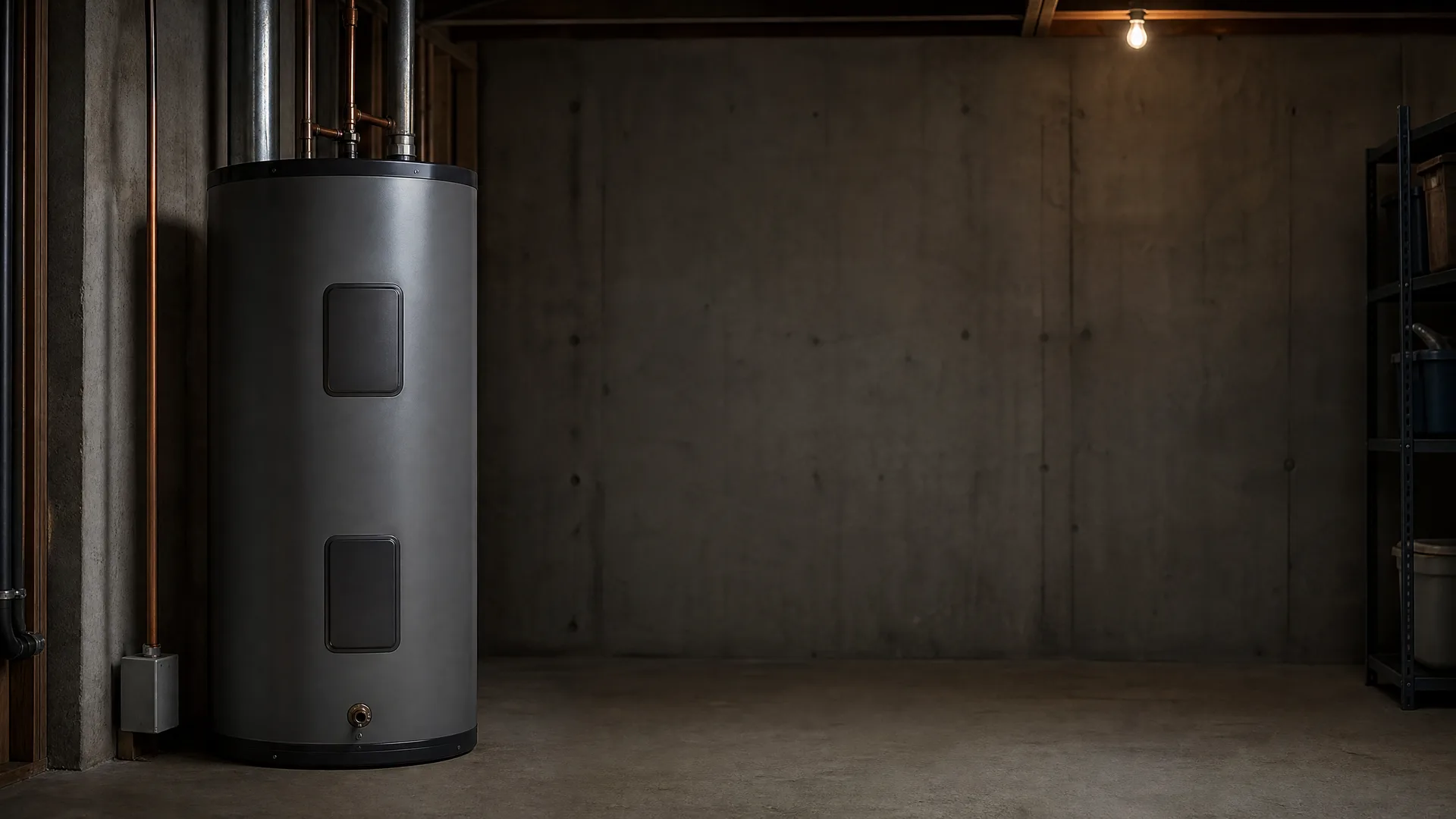
A gray cylindrical water heater with copper pipes stands against a concrete wall in a dim basement, with a bare hanging light bulb and a metal shelving unit at right.

Skip the calls to every shop

Your request stays with one local pro.

Step 1 of 3: Equipment