Tell us about the job
Takes about a minute. No obligation.
A water heater replacement in Bottineau County starts with a fuel question, and the answer shapes everything from the flue configuration to the circuit run. Electricity heats more occupied homes in Bottineau County, North Dakota than any other fuel, at 59.2% (2020-2024 ACS 5-year). That share means a contractor quoting a replacement here is almost always specifying an electric unit, which draws a dedicated circuit at a load the existing panel has to be confirmed to handle before any equipment gets ordered. Venting drops off the scope, combustion air stops being a variable, and the service panel moves to the front of the job.
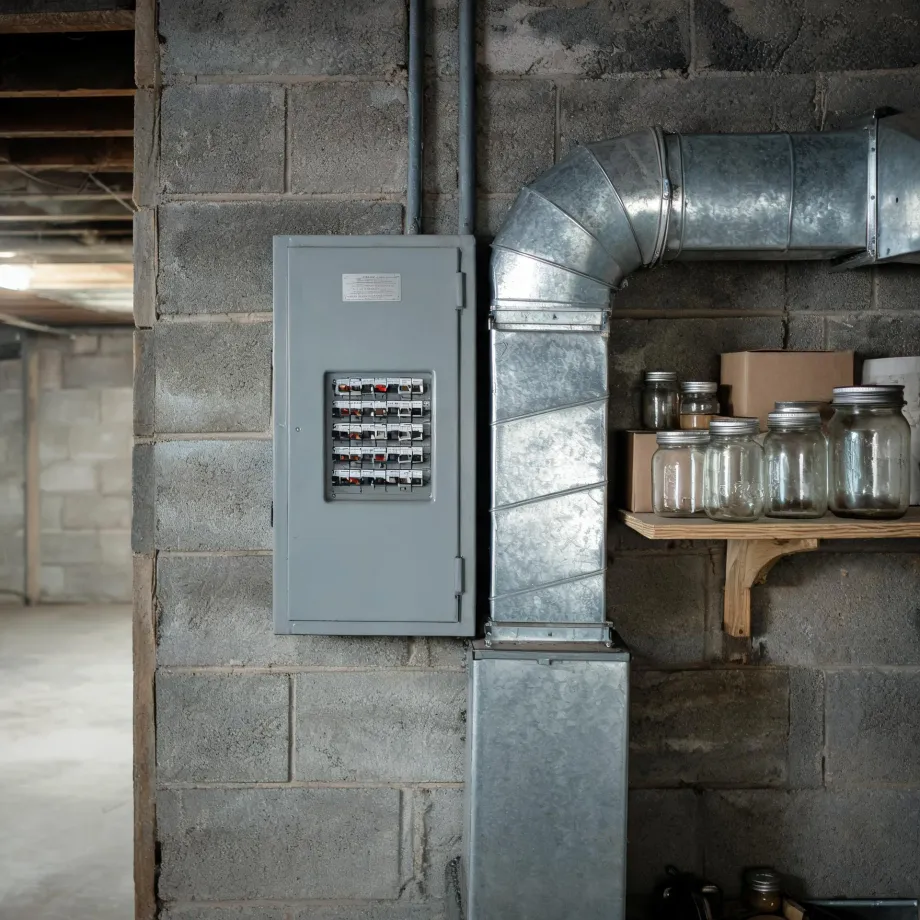
Older electrical service is the variable that decides how a water heater installation goes in this county. Half the homes in Bottineau County, North Dakota were built in 1976 or earlier (2020-2024 ACS 5-year). A home built in that era was wired for the loads of its time, and a contractor quoting a new unit has to confirm the panel can handle what that unit draws before any other number on the quote means much. If the service is undersized, the panel work comes before the heater, and that changes the job's scope entirely.
What a Water Heater Installation Covers
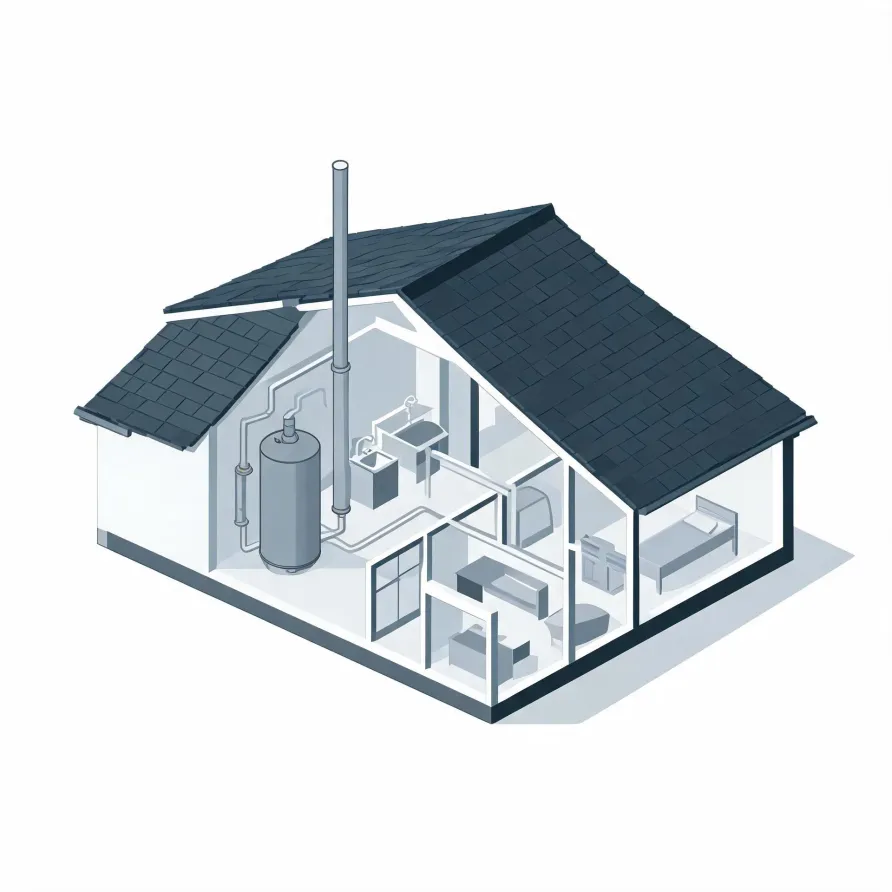
The tank is the piece most homeowners recognize first. It sits in a utility room, basement, or closet and holds the water that gets heated for use throughout the house. On a gas unit, a burner assembly sits at the base of the tank. On an electric unit, heating elements run through the tank wall.
The flue or exhaust vent runs from the top of the unit to the outside, carrying combustion gases out of the home on gas models. A pressure relief valve mounts on the tank's side as a safety device, and the cold-water inlet and hot-water outlet lines connect the unit to the rest of the home's plumbing.
The drawing shows the general layout of these components, and a licensed contractor determines exactly what applies to this house and its existing setup.
Find a contractor in Bottineau CountyBottineau County by the Numbers
133 severe weather events were recorded in Bottineau County, North Dakota between 2015 and 2024.
NOAA National Centers for Environmental Information, Storm Events Database, bulk CSV export, events 2015-01-01 through 2024-12-31.Half the homes in Bottineau County, North Dakota were built in 1976 or earlier (2020-2024 ACS 5-year).
U.S. Census Bureau, 2020-2024 American Community Survey 5-Year EstimatesBottineau County, North Dakota holds 3,956 housing units (2020-2024 ACS 5-year).
U.S. Census Bureau, 2020-2024 American Community Survey 5-Year EstimatesOwners occupy 79.2% of the occupied homes in Bottineau County, North Dakota (2020-2024 ACS 5-year).
U.S. Census Bureau, 2020-2024 American Community Survey 5-Year EstimatesSevere Weather Events in Bottineau County
North Dakota weather puts real demands on water heating equipment, and Bottineau County conditions shape how hard a system has to work and how long it holds up. That makes local weather history a practical part of any conversation about installation.
133 severe weather events, 2015–2024. Source: NOAA National Centers for Environmental Information, Storm Events Database.