Tell us about the job
Takes about a minute. No obligation.
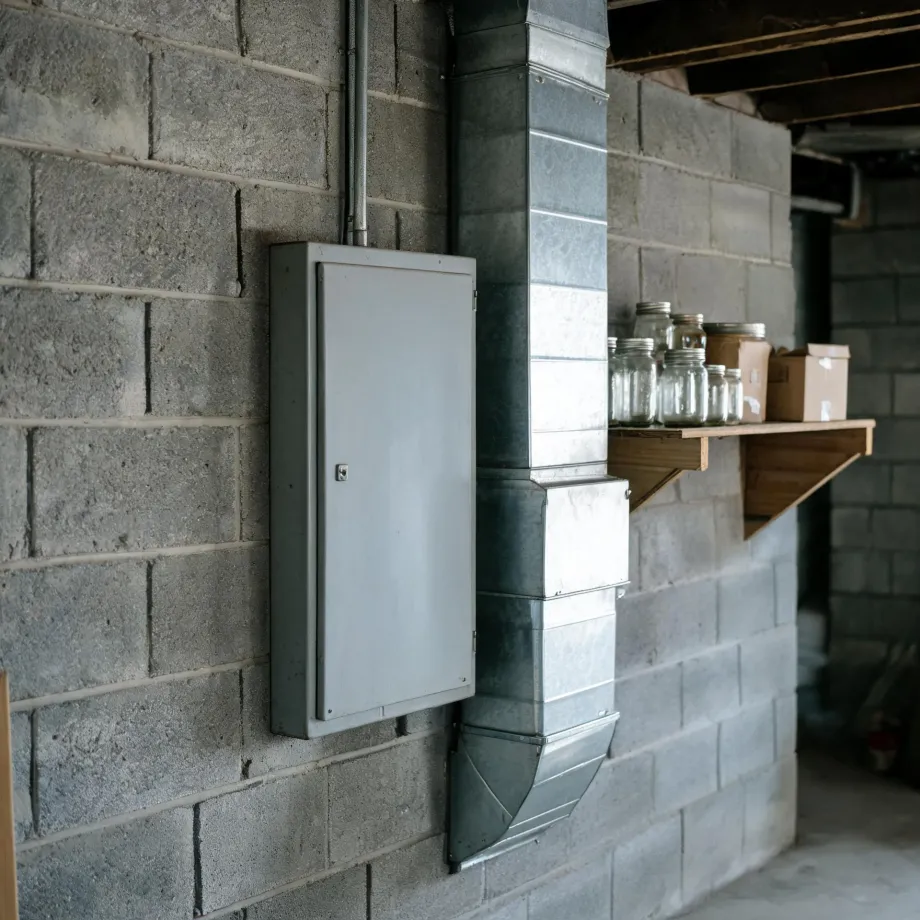
Electric water heaters draw a dedicated circuit, and the service panel has to carry it. Electricity heats more occupied homes in Rolette County, North Dakota than any other fuel, at 65.6% (2020-2024 ACS 5-year). That share means a contractor quoting a replacement starts at the breaker box, checking whether the existing panel can handle the load a new unit draws, especially if the homeowner is moving from a smaller tank to a larger one or stepping up to a heat pump water heater. A panel that was wired for older equipment may need an upgrade before the new heater can be installed correctly.
Older wiring sized for lighter loads is what a contractor runs into when quoting a water heater installation across much of this county. Half the homes in Rolette County, North Dakota were built in 1980 or earlier (2020-2024 ACS 5-year). That history shows up at the service panel: the amperage available in a house like this was calculated around equipment with a smaller draw than what a contractor is putting in today, which means the panel gets looked at before anything else gets priced or ordered.
What a Water Heater Installation Covers
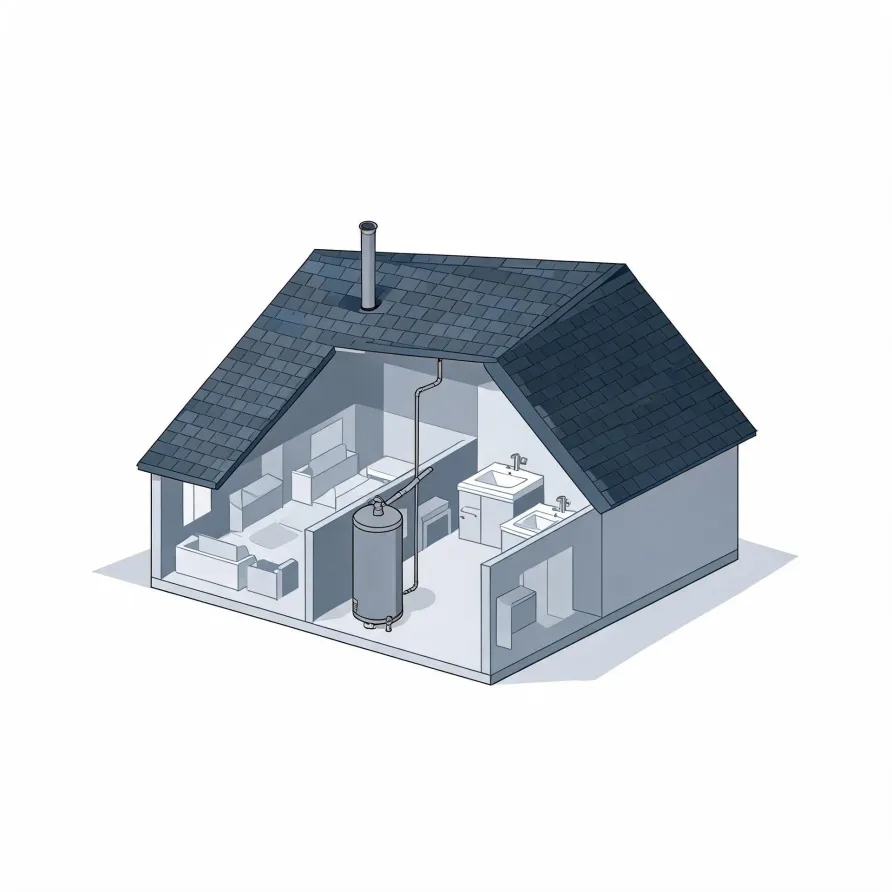
The tank or tankless unit is the centerpiece of the system, sitting in a utility room, basement, or closet and holding or heating water on demand. A contractor also sets the pressure-relief valve at the unit itself, a safety device that opens if internal pressure climbs too high.
Supply and discharge lines connect the unit to the home's cold water inlet and hot water outlet, while a flue or venting pipe runs from the top of gas-fired units to the outside, carrying combustion gases out of the house. An anode rod inside the tank protects the lining from corrosion and is fitted during installation.
The drawing shows a typical layout, and a licensed contractor determines exactly what applies to your home and its existing plumbing and venting configuration.
Find a contractor in Rolette CountyRolette County by the Numbers
93 severe weather events were recorded in Rolette County, North Dakota between 2015 and 2024.
NOAA National Centers for Environmental Information, Storm Events Database, bulk CSV export, events 2015-01-01 through 2024-12-31.Half the homes in Rolette County, North Dakota were built in 1980 or earlier (2020-2024 ACS 5-year).
U.S. Census Bureau, 2020-2024 American Community Survey 5-Year EstimatesRolette County, North Dakota holds 4,588 housing units (2020-2024 ACS 5-year).
U.S. Census Bureau, 2020-2024 American Community Survey 5-Year EstimatesOwners occupy 62.8% of the occupied homes in Rolette County, North Dakota (2020-2024 ACS 5-year).
U.S. Census Bureau, 2020-2024 American Community Survey 5-Year EstimatesSevere Weather Events in Rolette County, Year by Year
Extreme weather puts a measurable load on water heating equipment, shortening service life and pushing systems harder than mild-climate averages assume. How often that stress hits Rolette County is a local fact, and it shapes what a water heater installation here needs to handle.
93 severe weather events, 2015–2024. Source: NOAA National Centers for Environmental Information, Storm Events Database.