Tell us about the job
Takes about a minute. No obligation.
Gas-fired water heaters share their fuel source with furnaces, boilers, and ranges, and the venting each appliance needs is decided by what else in the house is drawing combustion air from the same space. Utility gas heats more occupied homes in Stark County, North Dakota than any other fuel, at 51.4% (2020-2024 ACS 5-year). A contractor quoting a replacement here works out the venting category the new unit demands, checks that the existing flue can handle it, and confirms the combustion air supply is adequate for the full appliance load in that mechanical room. Get that sequence wrong and the new heater runs in a starved environment, which shortens the heat exchanger and drives up the cost of the next service call.
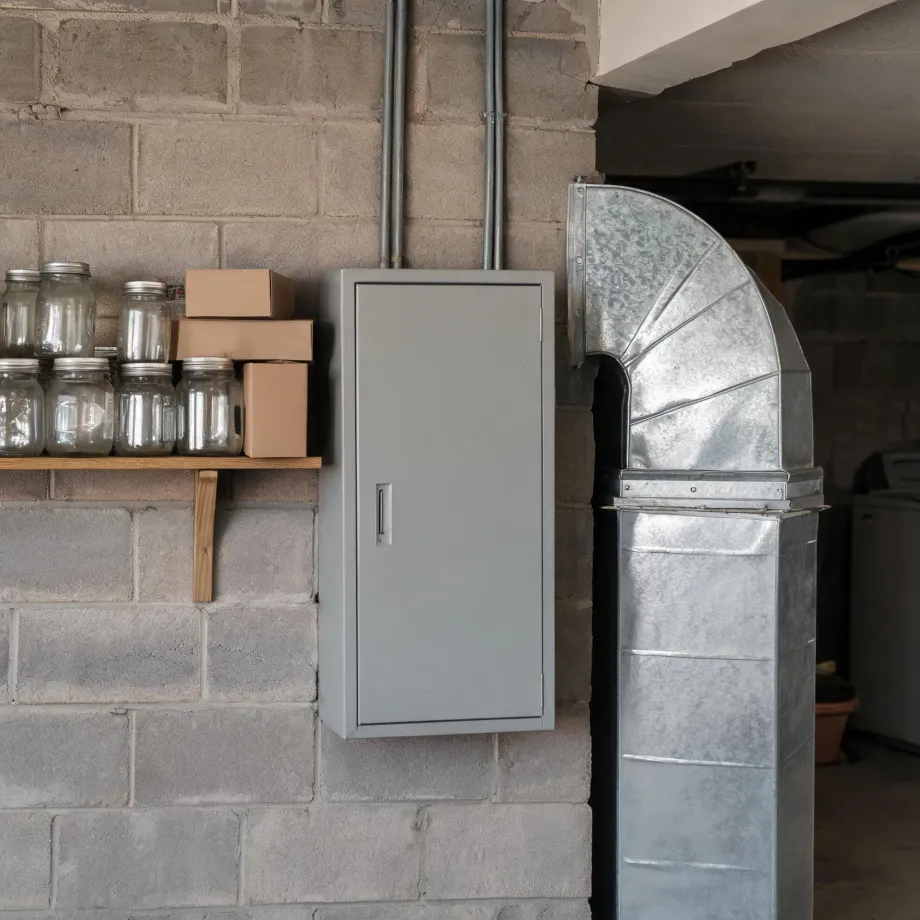
Electrical service in many Stark County homes was put in for equipment that drew far less than what a current water heater demands, and that gap shows up when a contractor opens the panel to see what is actually there. Half the homes in Stark County, North Dakota were built in 1986 or earlier (2020-2024 ACS 5-year). A modern unit may need a circuit the existing service cannot spare, which means the electrical work shapes the scope of the job before the heater itself is ever priced. What the panel contains decides whether a water heater installation is straightforward or whether the electrical has to come first.
What a Water Heater Installation Covers
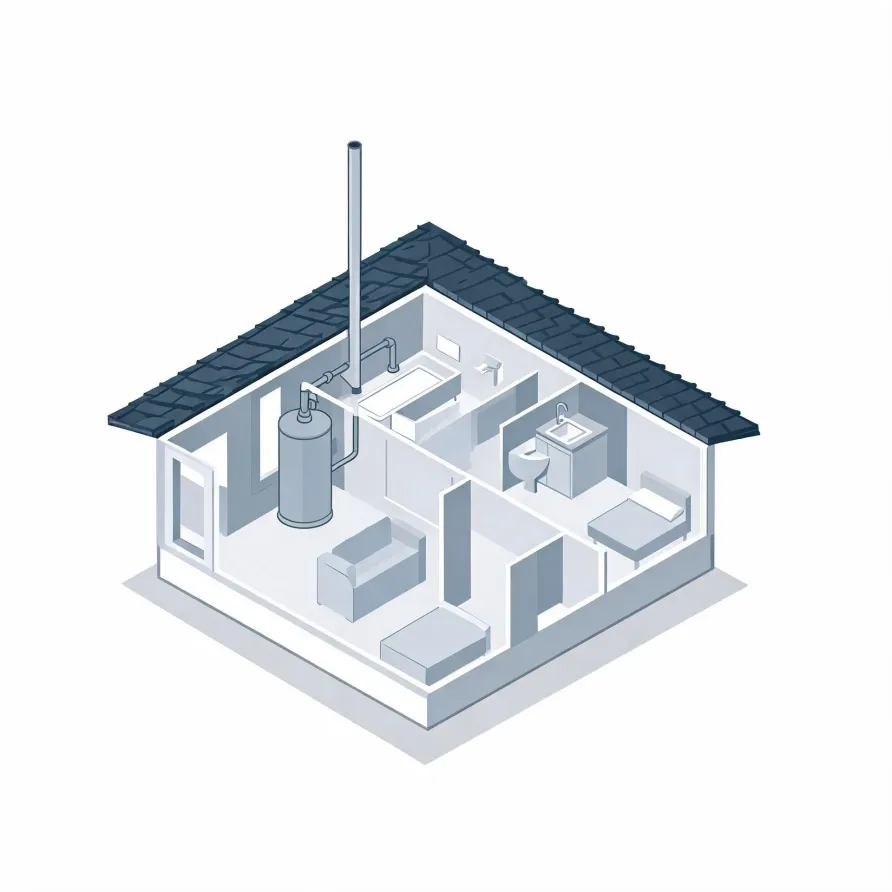
The tank or tankless unit is the piece a homeowner sees first, usually standing in a utility room, basement, or mechanical closet. That unit is where cold water enters, gets heated, and waits or moves on demand. A contractor also installs the pressure relief valve, which mounts directly on the unit and opens if pressure builds beyond a safe point.
The supply and cold-water lines connect the unit to the house plumbing, running in or along walls to reach every fixture. A dedicated shutoff valve sits on the cold-water inlet so the unit can be isolated without cutting water to the whole house. A flue or venting pipe exits through the wall or roof to carry combustion gases out, depending on the fuel type.
The drawing shows a general layout of these components, and a licensed contractor determines exactly what applies to your home and its existing setup.
Find a contractor in Stark CountyStark County by the Numbers
185 severe weather events were recorded in Stark County, North Dakota between 2015 and 2024.
NOAA National Centers for Environmental Information, Storm Events Database, bulk CSV export, events 2015-01-01 through 2024-12-31.Half the homes in Stark County, North Dakota were built in 1986 or earlier (2020-2024 ACS 5-year).
U.S. Census Bureau, 2020-2024 American Community Survey 5-Year EstimatesStark County, North Dakota holds 15,514 housing units (2020-2024 ACS 5-year).
U.S. Census Bureau, 2020-2024 American Community Survey 5-Year EstimatesOwners occupy 66.8% of the occupied homes in Stark County, North Dakota (2020-2024 ACS 5-year).
U.S. Census Bureau, 2020-2024 American Community Survey 5-Year EstimatesSevere Weather Events in Stark County
Stark County's climate puts real pressure on water heating equipment, driving demand that varies with what the weather does each year. How hard your system works is a local fact, and installation decisions here reflect that.
185 severe weather events, 2015–2024. Source: NOAA National Centers for Environmental Information, Storm Events Database.