Tell us about the job
Takes about a minute. No obligation.
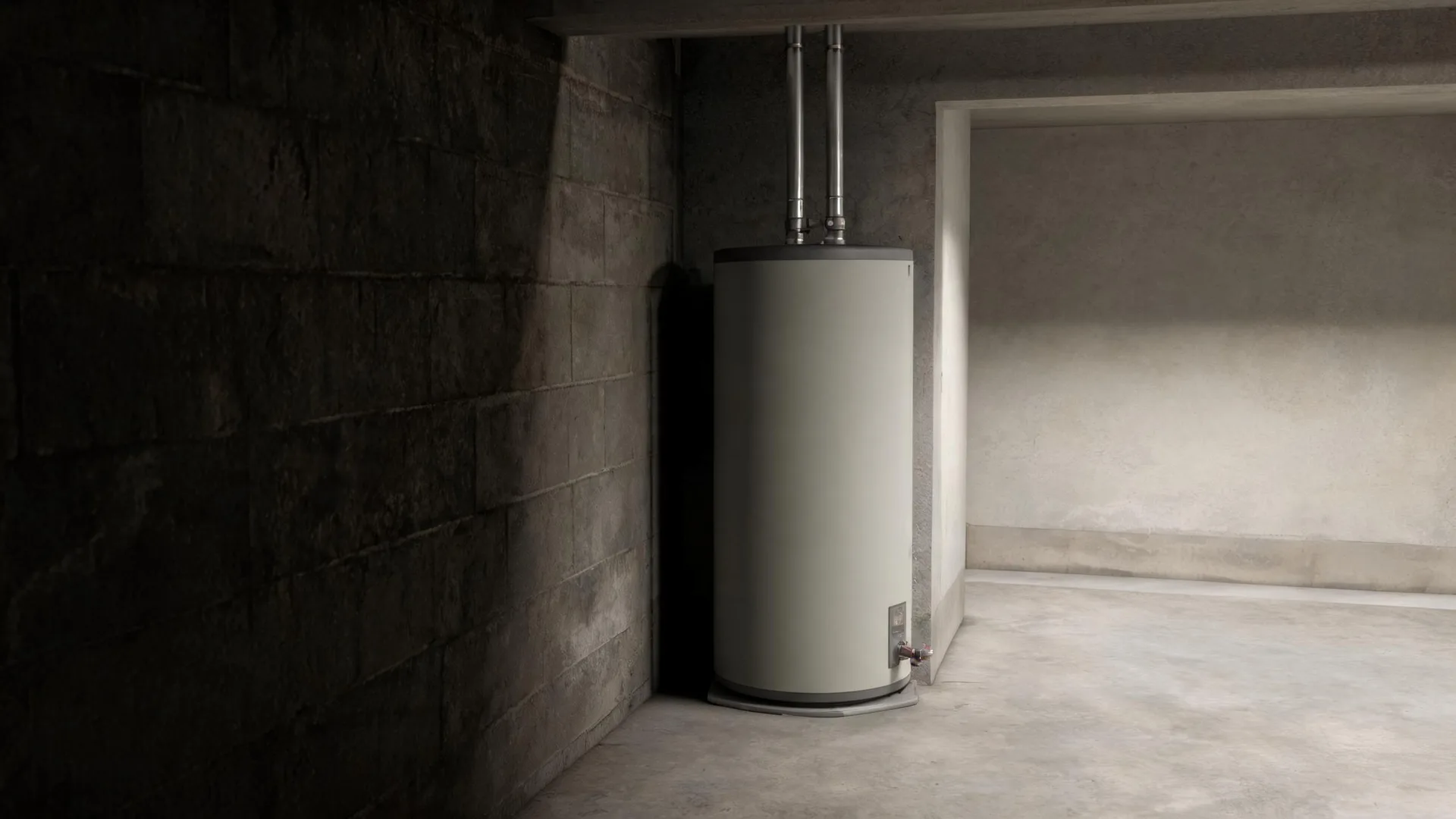
Gas water heaters depend on three things working together: a clean burner, a functioning ignition system, and a flue that moves combustion byproducts out of the house. Utility gas heats more occupied homes in Burleigh County, North Dakota than any other fuel, at 63.6% (2020-2024 ACS 5-year). With that many homes on the same fuel, contractors repairing water heaters here see the same failure patterns repeatedly: burner assemblies coked with residue, thermocouple leads that have weakened from years of cycling, and venting runs that have corroded or separated at a joint. A technician checking a unit that will not fire looks at combustion air supply and flue integrity before touching the gas valve, because a gas valve swap on a unit with a blocked vent solves nothing.
Half the homes in Burleigh County, North Dakota were built in 1988 or earlier (2020-2024 ACS 5-year). A water heater in a house that age sits at the end of supply lines, venting runs, and connection points that were sized and selected for different equipment. When a contractor opens the job, the repair question often shifts: the heater itself may be the straightforward part, while corroded fittings, undersized venting, or deteriorated pipe connections are what determine the scope. Parts for the unit get priced after the contractor has seen what surrounds it.
The Parts of a Water Heater a Contractor Checks During a Repair
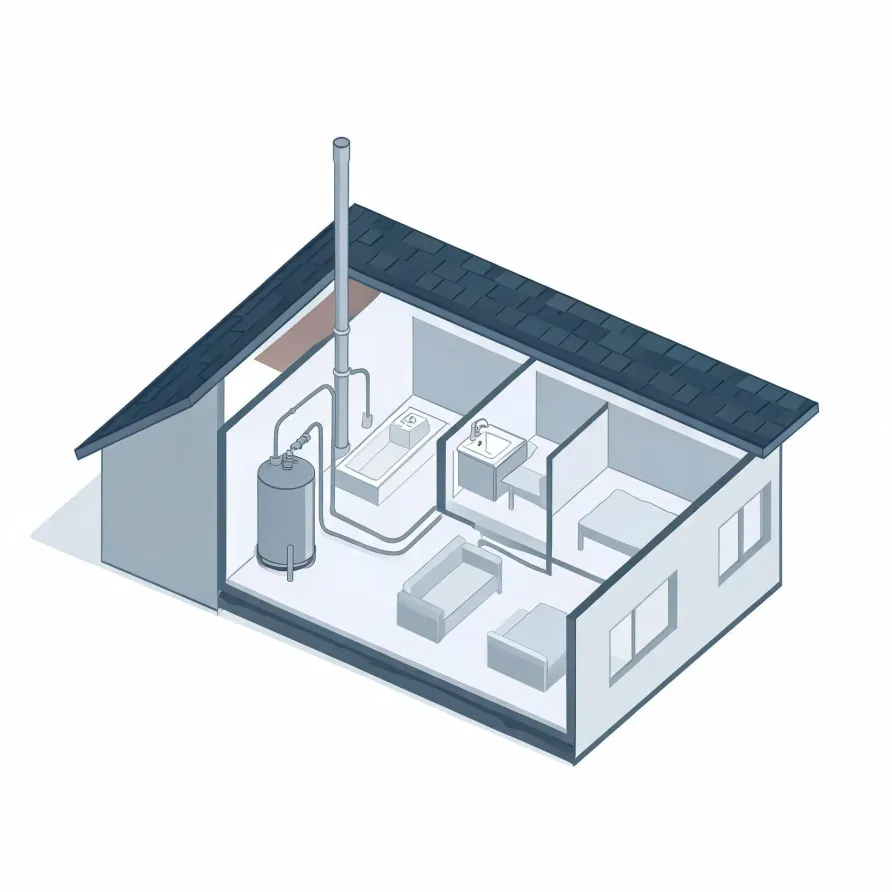
The tank itself is the center of the system, sitting in a utility room, basement, or closet, and its job is to hold and heat water until a tap calls for it. The burner or heating element sits at the bottom or inside the tank, and when it fails, hot water runs out faster than it should or stops arriving altogether. The thermostat controls the target temperature, and a faulty one produces water that is scalding, lukewarm, or nothing at all.
The pressure relief valve mounts on the side of the tank and opens automatically if pressure inside climbs too high. The anode rod hangs inside the tank and slows corrosion; when it wears out, the tank wall takes the damage instead. The inlet and outlet connections at the top of the tank are where cold water enters and hot water leaves, and loose or corroded fittings there show up as drips or pressure loss at the fixture.
The drawing shows a general layout of these components, and a licensed contractor will determine which parts apply to the specific unit and installation in your home.
Find a contractor in Burleigh CountyBurleigh County, by the numbers
199 severe weather events were recorded in Burleigh County, North Dakota between 2015 and 2024.
NOAA National Centers for Environmental Information, Storm Events Database, bulk CSV export, events 2015-01-01 through 2024-12-31.Half the homes in Burleigh County, North Dakota were built in 1988 or earlier (2020-2024 ACS 5-year).
U.S. Census Bureau, 2020-2024 American Community Survey 5-Year EstimatesBurleigh County, North Dakota holds 43,779 housing units (2020-2024 ACS 5-year).
U.S. Census Bureau, 2020-2024 American Community Survey 5-Year EstimatesOwners occupy 71.2% of the occupied homes in Burleigh County, North Dakota (2020-2024 ACS 5-year).
U.S. Census Bureau, 2020-2024 American Community Survey 5-Year EstimatesSevere Weather Events in Burleigh County
Extreme weather puts real strain on water heaters, which cycle harder and fail sooner when conditions outside are punishing. How often that happens in Burleigh County shapes what repair contractors see and what parts they keep on hand.
199 severe weather events, 2015–2024. Source: NOAA National Centers for Environmental Information, Storm Events Database.