Tell us about the job
Takes about a minute. No obligation.
A gas water heater replacement starts with what is already in the walls. Utility gas heats more occupied homes in Ward County, North Dakota than any other fuel, at 56.7% (2020-2024 ACS 5-year). That share means most homes here have an existing gas flue, a gas supply line, and a venting arrangement that was built around the old unit. A contractor has to check whether that flue is sized for a direct-vent or power-vent model before quoting a replacement, because swapping in a higher-efficiency unit often changes the exhaust diameter and the combustion air demand. Get that wrong and the new heater runs poorly from day one.
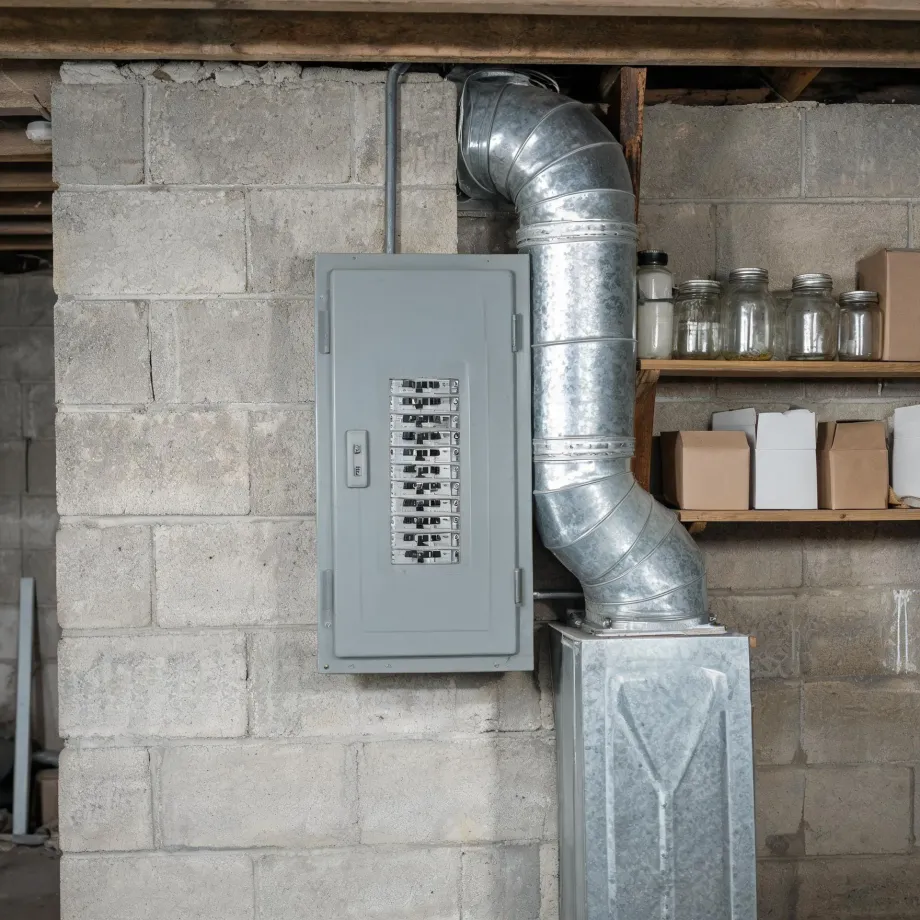
Ductwork sized for an older system and service panels wired for a smaller load are what a contractor finds in a substantial share of Ward County homes. Half the homes in Ward County, North Dakota were built in 1984 or earlier (2020-2024 ACS 5-year). That history means the existing infrastructure, not the new equipment, is what sets the scope and the price of an installation job here. A contractor has to open walls, check amperage, and measure airflow before anything else on the quote is settled.
What a Water Heater Installation Covers
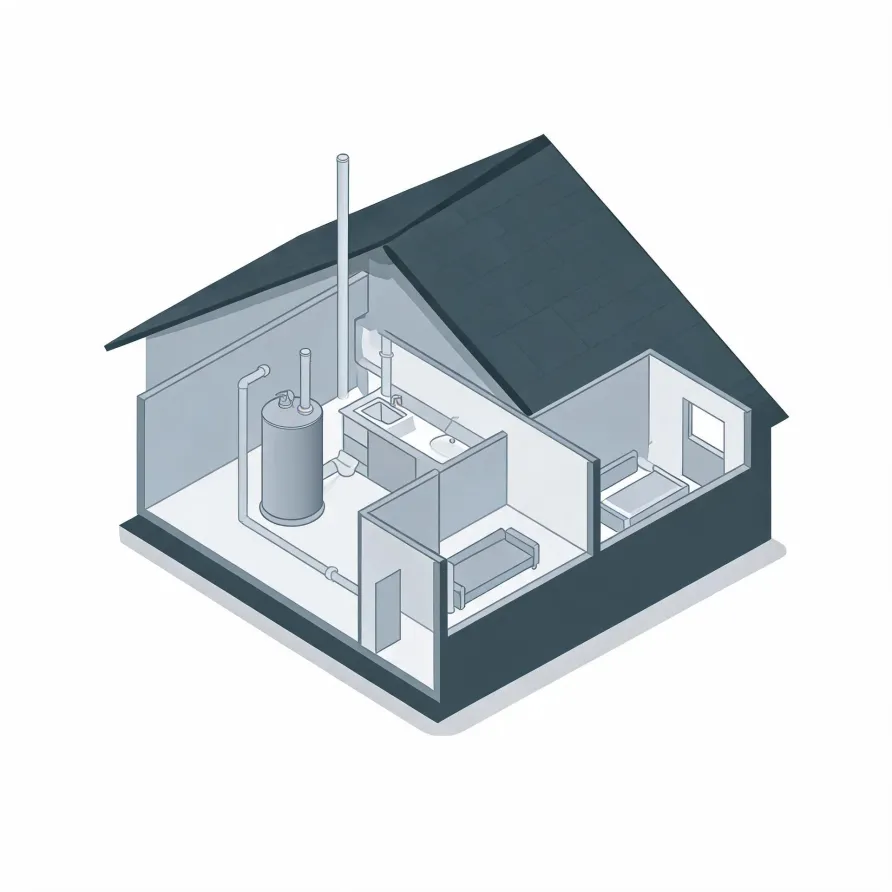
The tank is the piece a homeowner sees first, usually standing in a utility room, basement, or garage. It holds and heats the water supply for the whole house. A gas unit has a burner assembly at the base and a flue running up through or out the side of the tank; an electric unit carries heating elements inside the tank wall.
The pressure relief valve mounts directly on the tank and opens automatically if pressure inside climbs too high. A discharge pipe runs from that valve down toward the floor. The cold-water inlet and hot-water outlet connections sit at the top of the tank, where the supply and distribution lines meet the unit.
The drawing shows a typical layout, and a licensed contractor determines what applies to your specific home and setup.
Find a contractor in Ward CountyWard County, by the numbers
148 severe weather events were recorded in Ward County, North Dakota between 2015 and 2024.
NOAA National Centers for Environmental Information, Storm Events Database, bulk CSV export, events 2015-01-01 through 2024-12-31.Half the homes in Ward County, North Dakota were built in 1984 or earlier (2020-2024 ACS 5-year).
U.S. Census Bureau, 2020-2024 American Community Survey 5-Year EstimatesWard County, North Dakota holds 32,487 housing units (2020-2024 ACS 5-year).
U.S. Census Bureau, 2020-2024 American Community Survey 5-Year EstimatesOwners occupy 60.8% of the occupied homes in Ward County, North Dakota (2020-2024 ACS 5-year).
U.S. Census Bureau, 2020-2024 American Community Survey 5-Year EstimatesSevere Weather Events in Ward County
North Dakota weather puts real stress on water heating equipment, and Ward County's conditions are a local variable that affects how hard any installed unit works. A water heater sized and installed without that context is one that may underperform when the conditions demand most.
148 severe weather events, 2015–2024. Source: NOAA National Centers for Environmental Information, Storm Events Database.