Tell us about the job
Takes about a minute. No obligation.
A contractor quoting a water heater installation in Burke County has to know what the home's electrical panel can actually support before they price the unit. Electricity heats more occupied homes in Burke County, North Dakota than any other fuel, at 47.9% (2020-2024 ACS 5-year). With electricity running the water heaters in close to half the county's occupied homes, the local grid and the condition of each home's service panel are the starting point of every job. A unit that outpaces its circuit will trip breakers under peak demand, and in a place where electricity is the dominant fuel, undersizing the wiring is the part of the install that fails first.
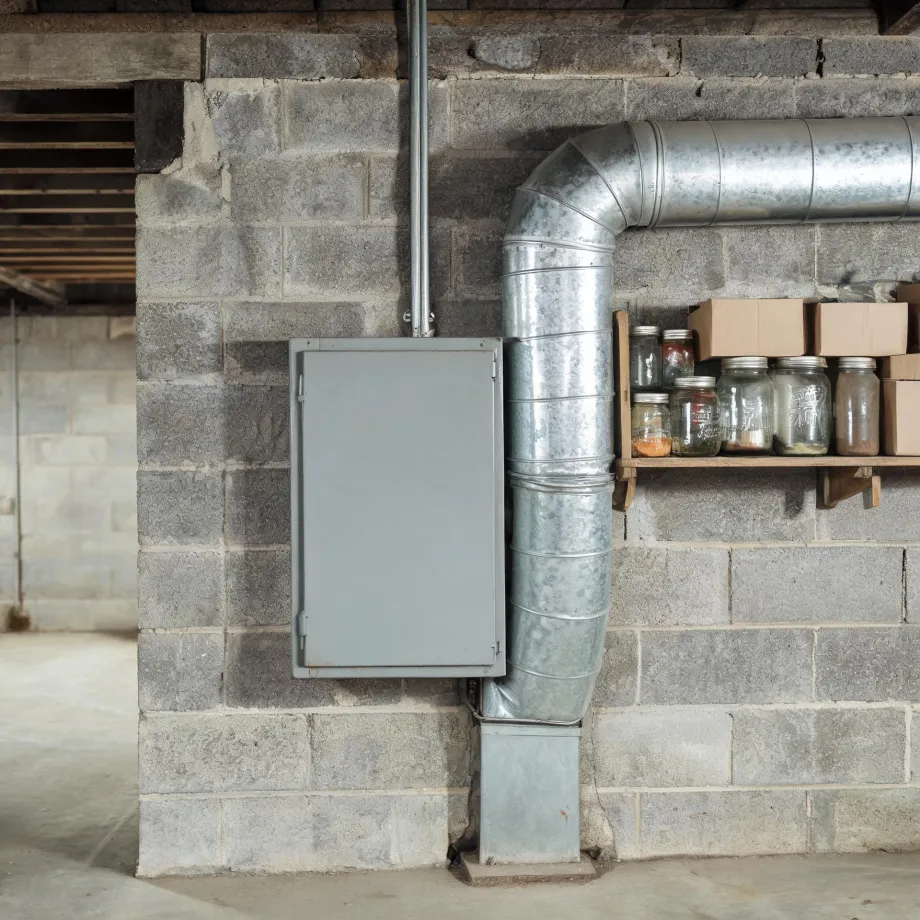
Ductwork and electrical service in houses this old were sized for equipment that is no longer in them. Half the homes in Burke County, North Dakota were built in 1969 or earlier (2020-2024 ACS 5-year). What that means for a water heater installation is that a contractor cannot assume the existing infrastructure fits what a new unit requires. The supply lines, venting path, and panel capacity all get checked before anything is priced, because that is where the real variables in the job live.
What a Water Heater Installation Covers
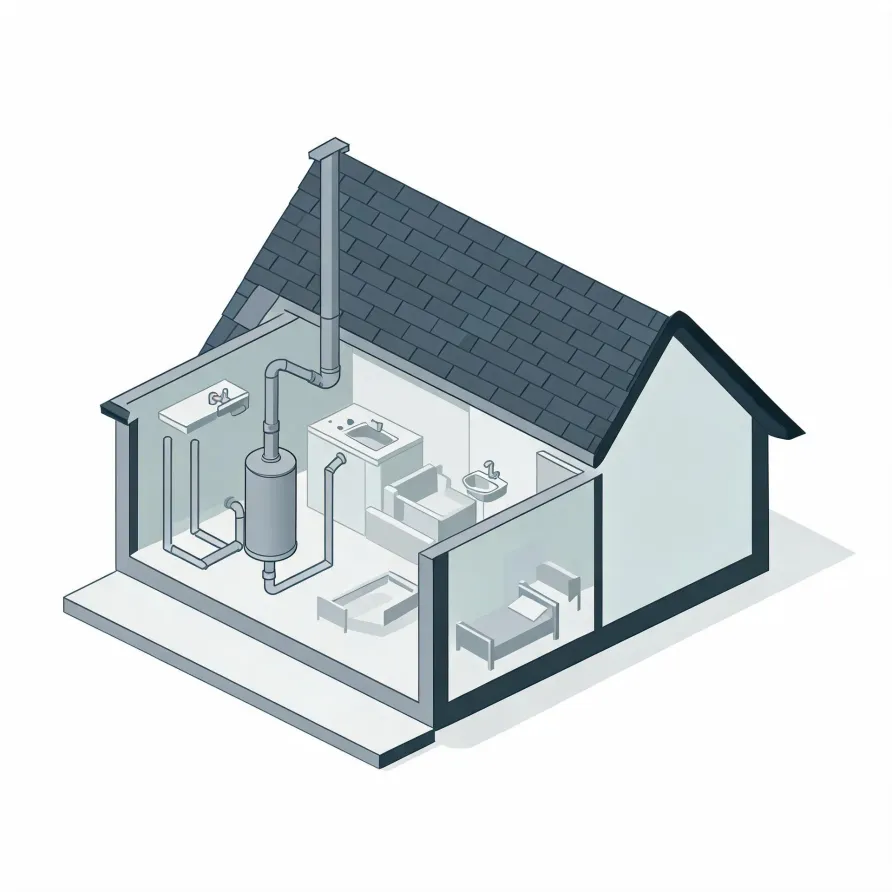
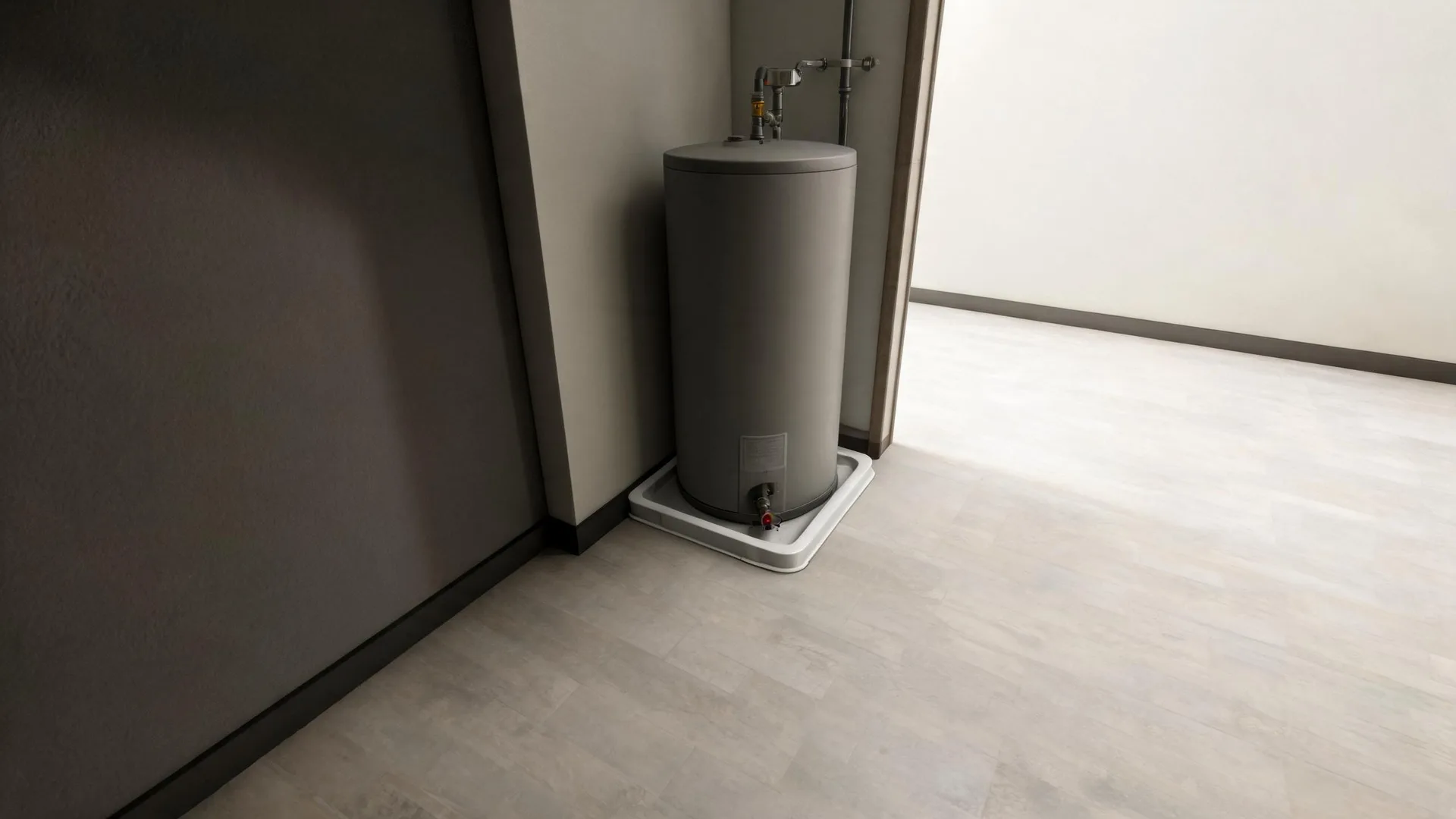
The tank is the piece most homeowners recognize first. It sits in a utility room, basement, or garage and holds the water that gets heated for the whole house. A gas unit has a burner at its base and a flue that vents combustion gases up and out; an electric unit carries heating elements inside the tank itself.
The temperature and pressure relief valve mounts on the side of the tank and opens if either reading climbs too high. The cold supply line feeds into the top of the tank, the hot outlet carries heated water out to the rest of the house, and a drain valve near the base lets a contractor flush sediment from the bottom.
The drawing shows a typical layout, and a licensed contractor determines exactly what applies to your home.
Find a contractor in Burke CountyBurke County, North Dakota, by the numbers
76 severe weather events were recorded in Burke County, North Dakota between 2015 and 2024.
NOAA National Centers for Environmental Information, Storm Events Database, bulk CSV export, events 2015-01-01 through 2024-12-31.Half the homes in Burke County, North Dakota were built in 1969 or earlier (2020-2024 ACS 5-year).
U.S. Census Bureau, 2020-2024 American Community Survey 5-Year EstimatesBurke County, North Dakota holds 1,362 housing units (2020-2024 ACS 5-year).
U.S. Census Bureau, 2020-2024 American Community Survey 5-Year EstimatesOwners occupy 75.1% of the occupied homes in Burke County, North Dakota (2020-2024 ACS 5-year).
U.S. Census Bureau, 2020-2024 American Community Survey 5-Year EstimatesSevere Weather Events in Burke County
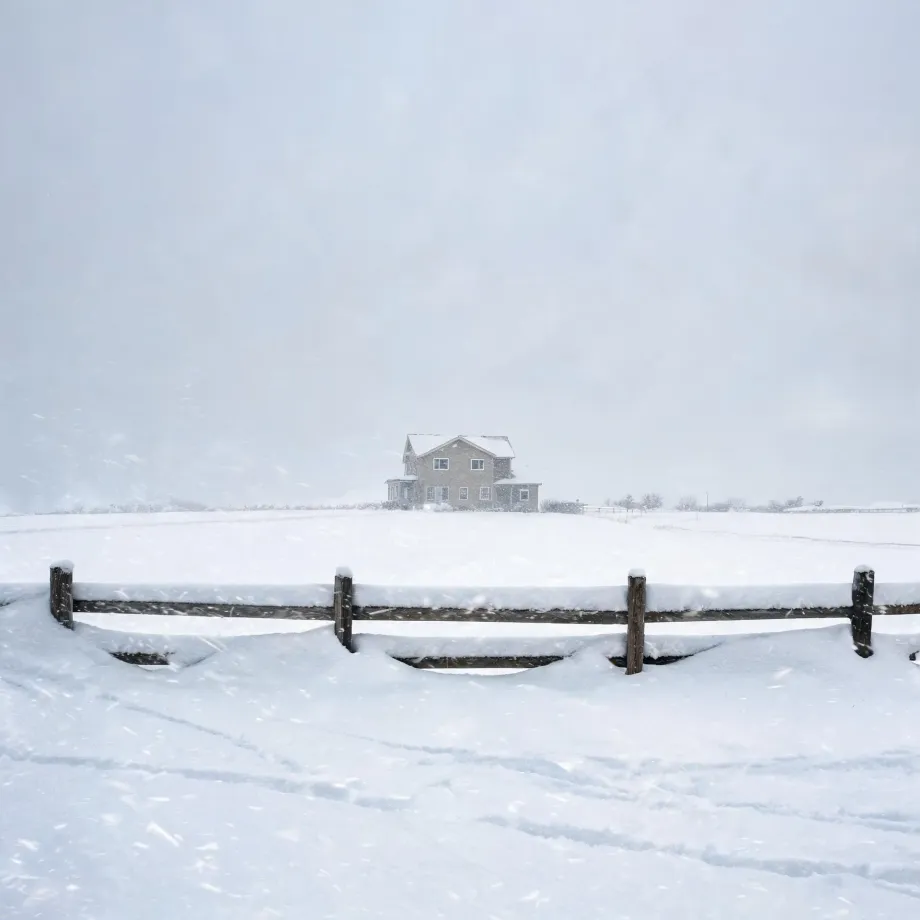
Extreme weather puts real load on water heating equipment, and Burke County's climate is a local variable no generic spec sheet accounts for. How hard a unit works over its life depends in part on what the weather here actually does.
76 severe weather events, 2015–2024. Source: NOAA National Centers for Environmental Information, Storm Events Database.